Neuronal coordination of cilia in marine zooplankton in moving and sensing
University of Regensburg
7 October 2026
Centre for Organismal Studies, Heidelberg University
@jekely@biologists.social

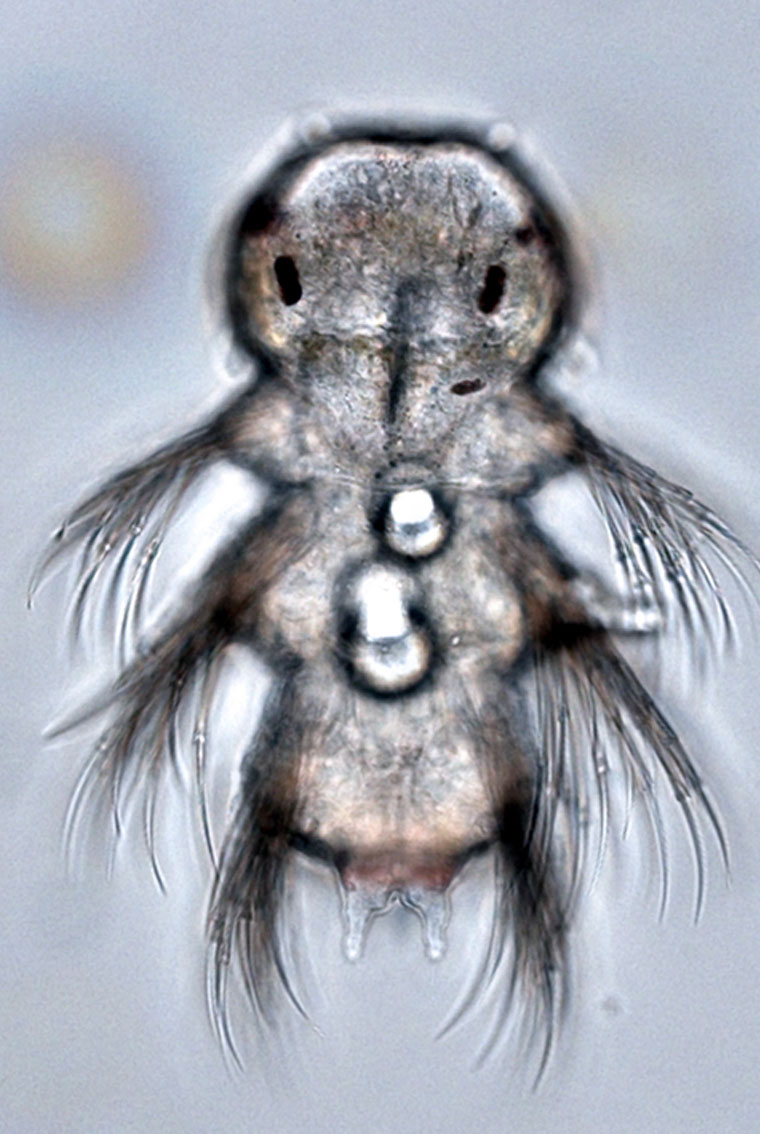
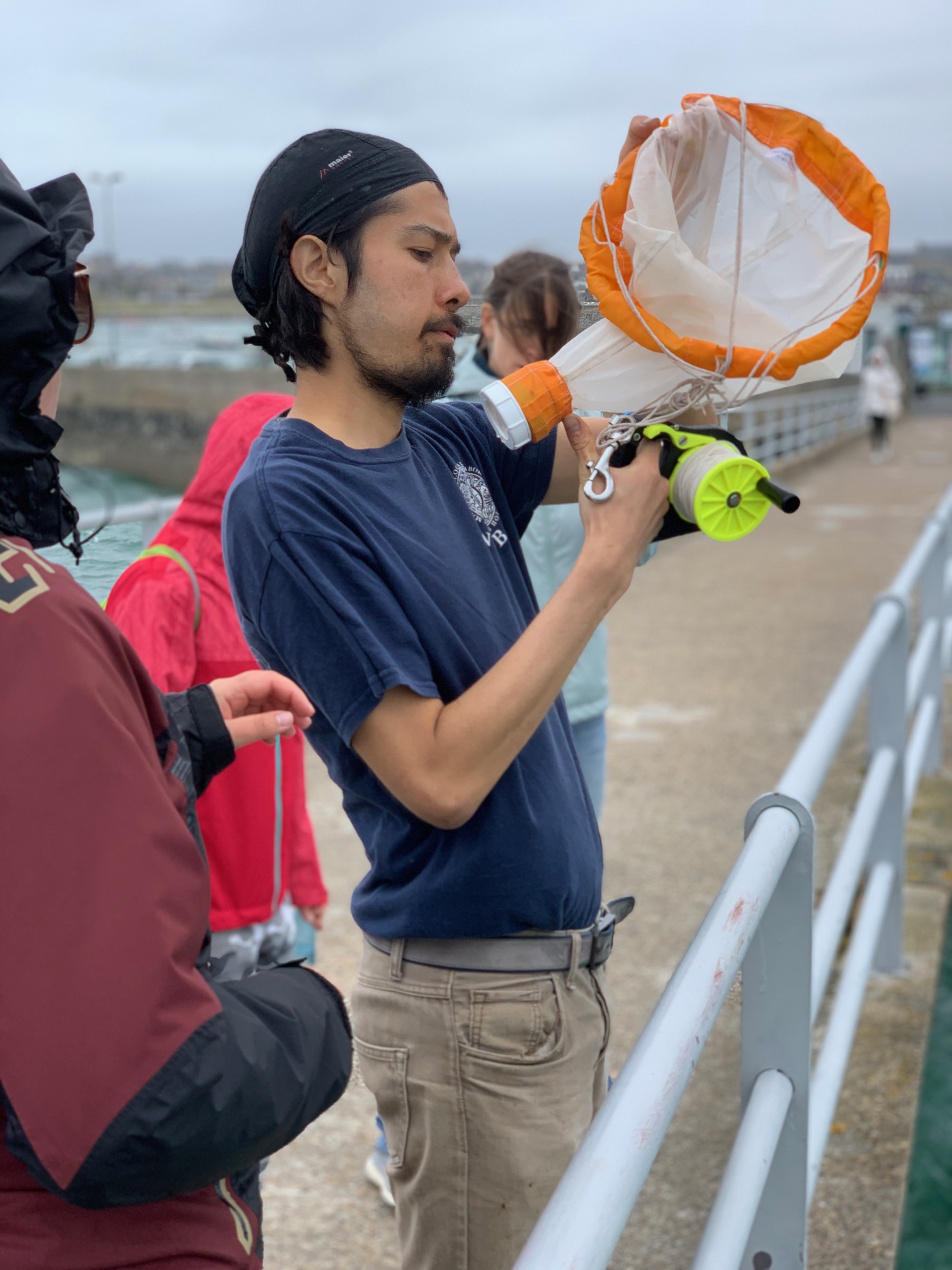
Ciliated zooplankton larvae
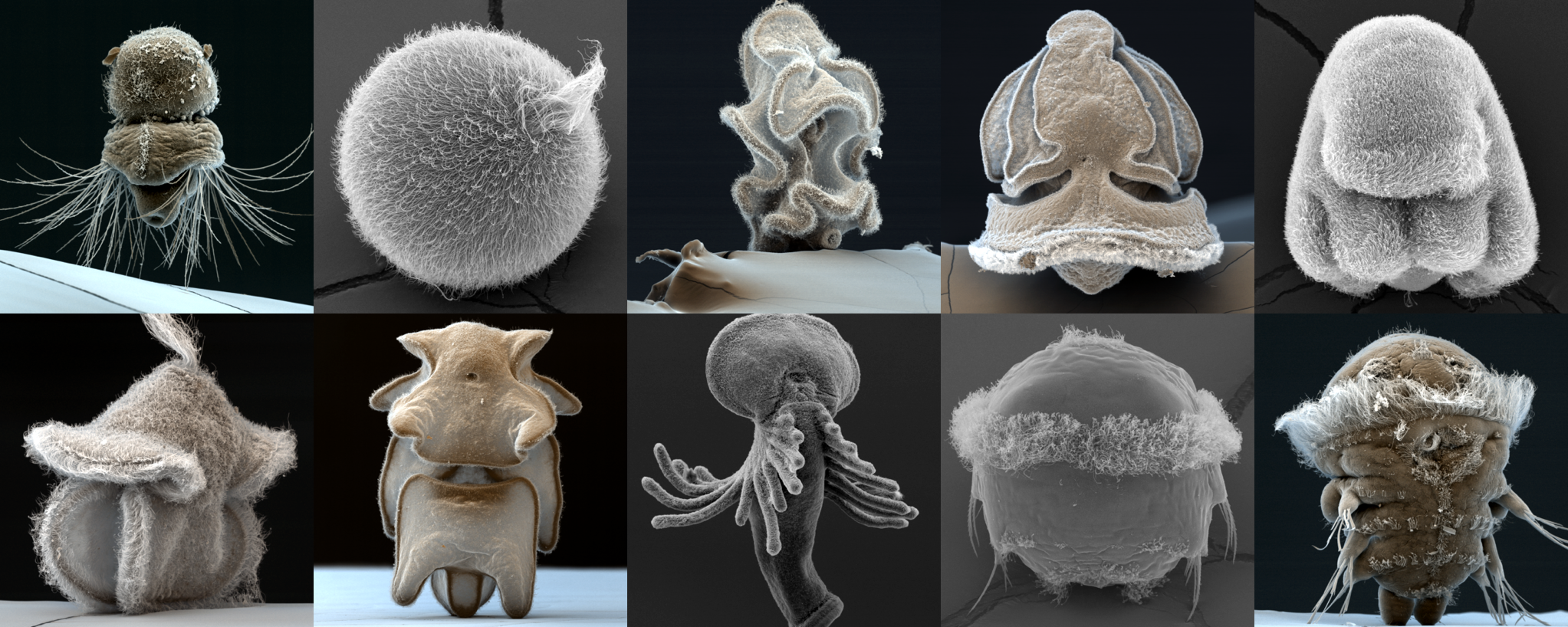
Coral larvae
 Emelie Brodrick
Hannah Laeverenz
Rebecca Poon & Kirsty Wan
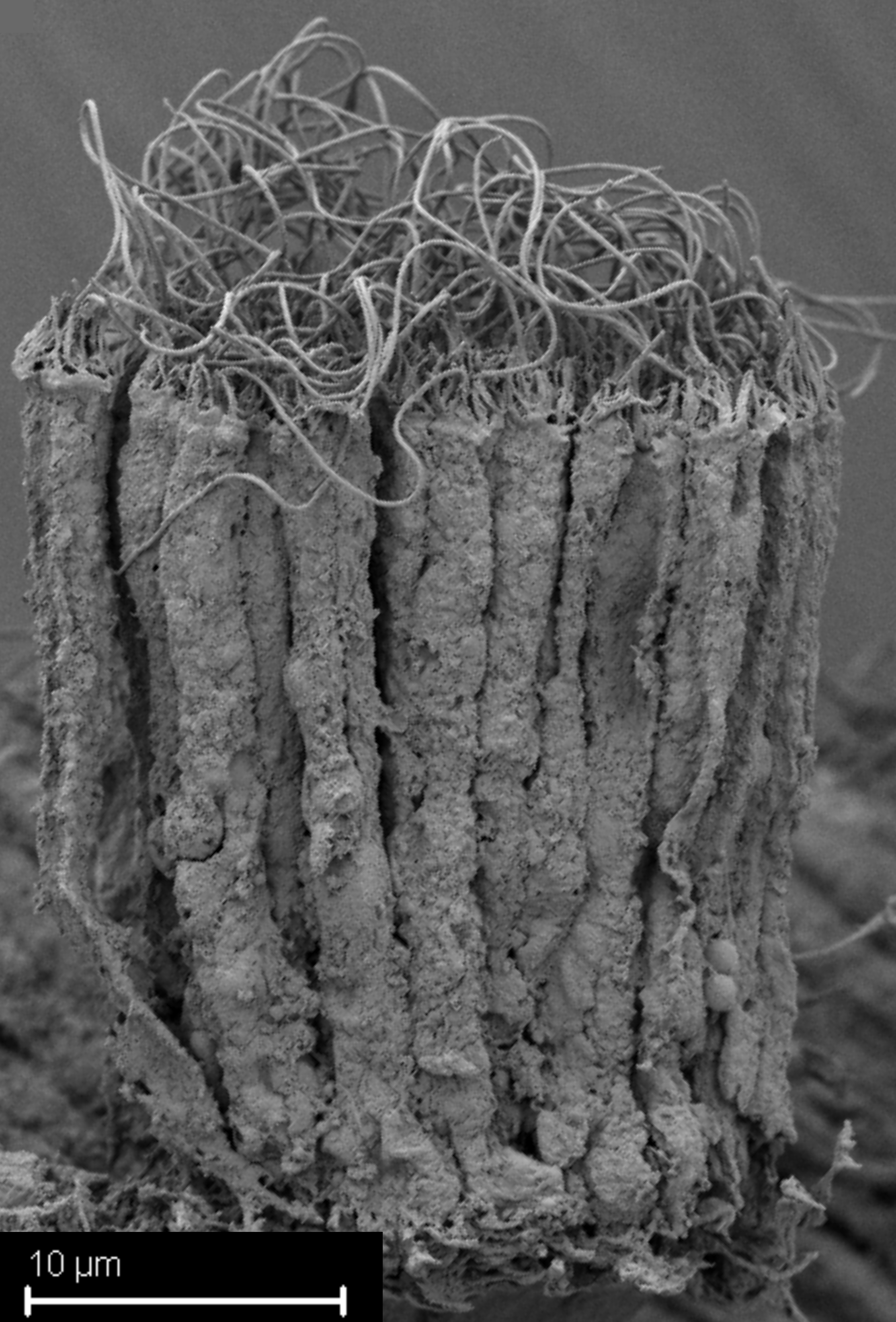
Platynereis dumerilii
- breeding culture
- genome sequence
- microinjection, transgenesis
- neuron-specific promoters
- knock-out lines
- neuronal connectome
- neuronal activity imaging
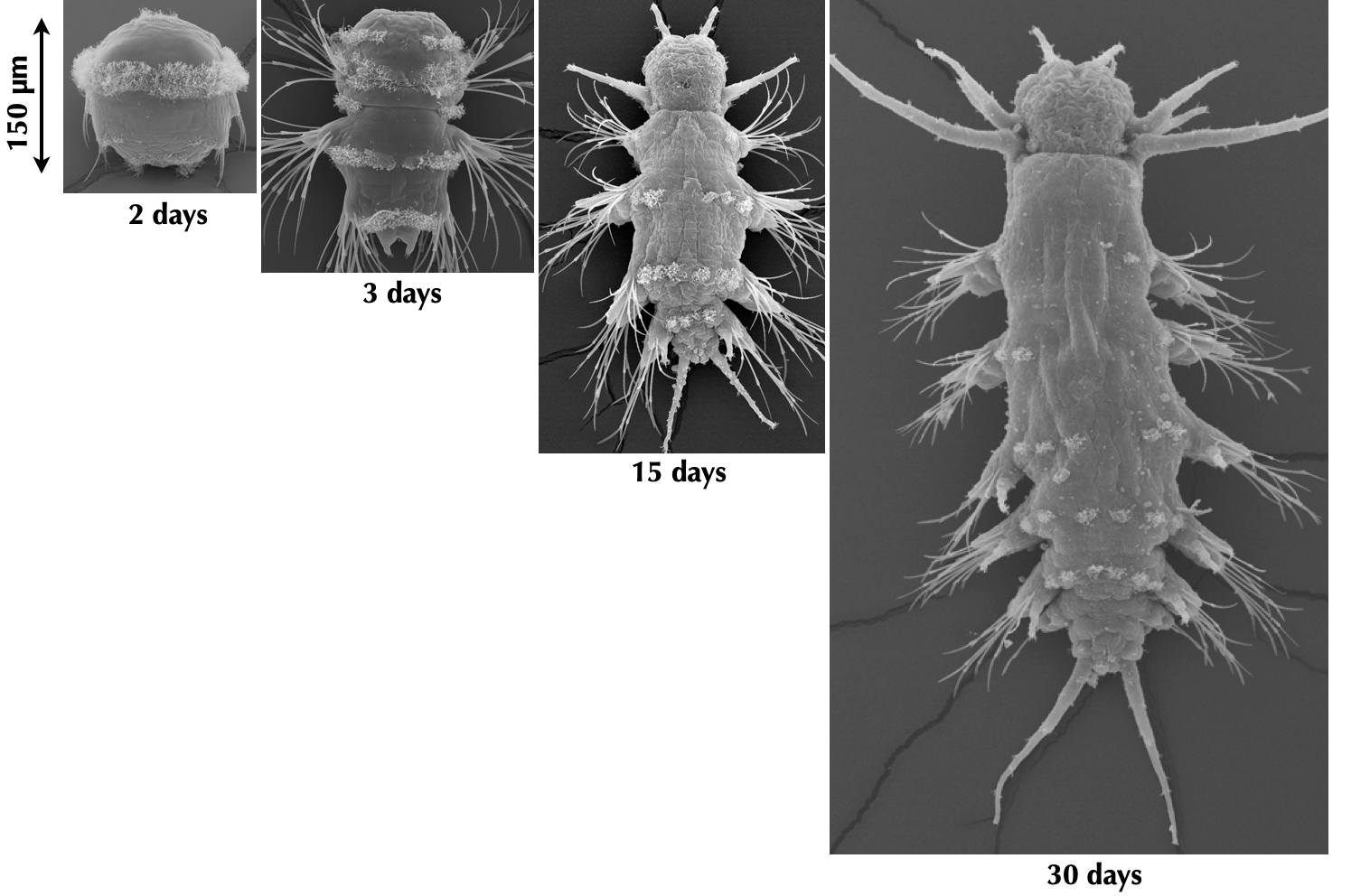
Multiciliary bands form metachronal waves
with Kirsty Wan, LSI Exeter
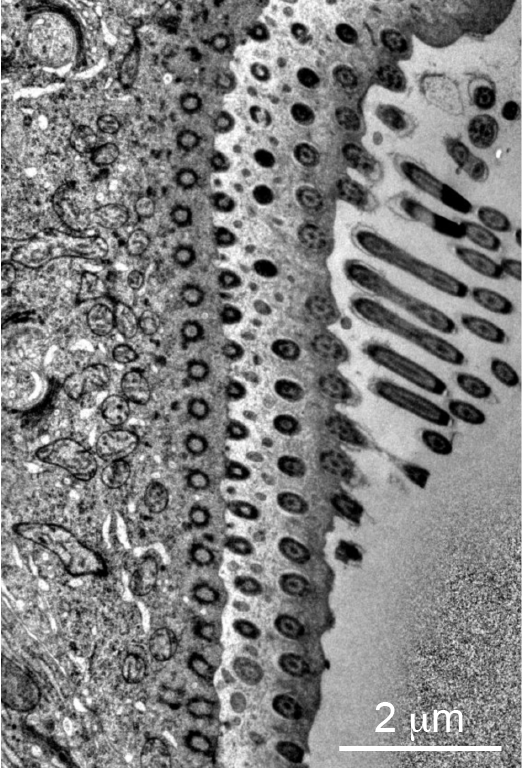
- basal-body spacing: 0.35-0.55 μm
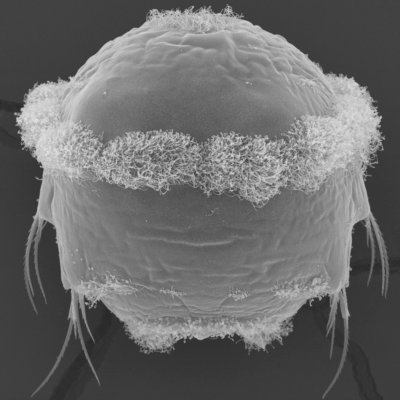
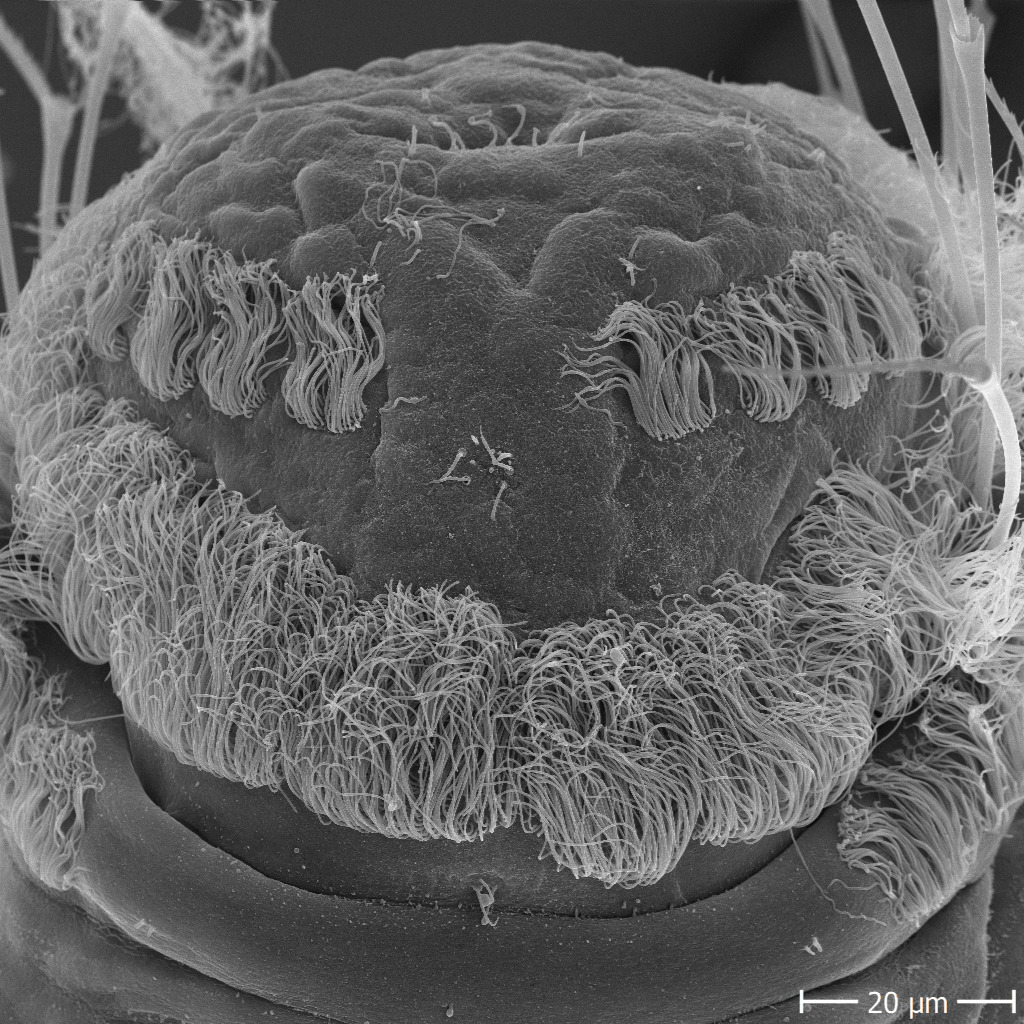
Precise orientation of multiciliary arrays
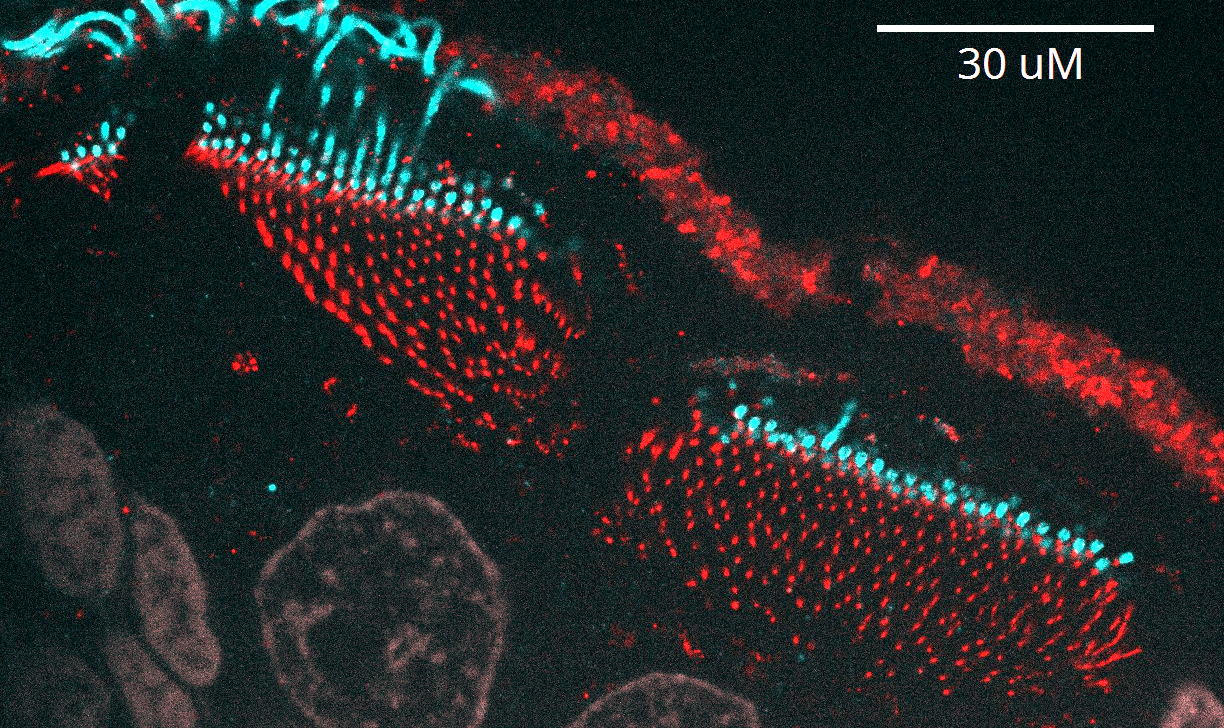
expansion microscopy
Phototaxis

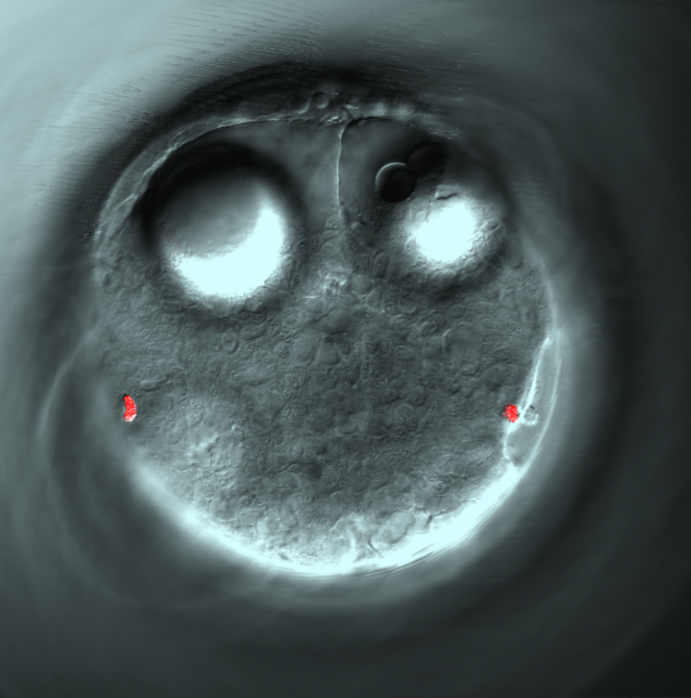
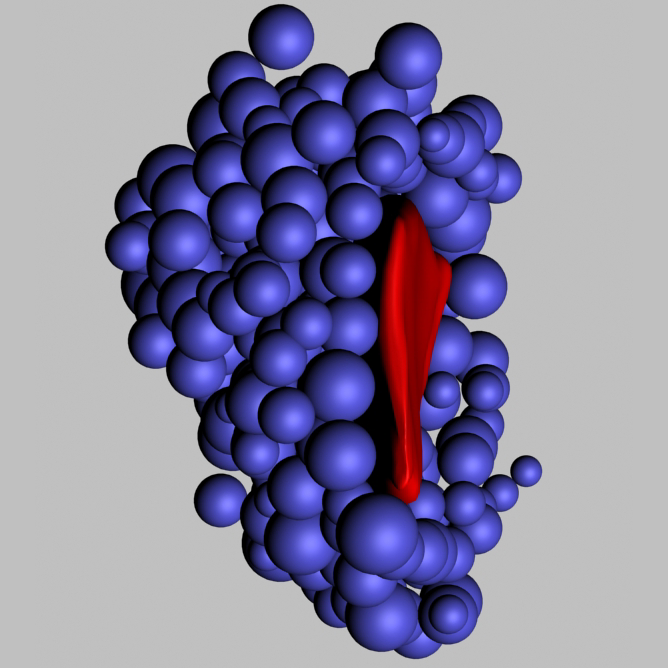
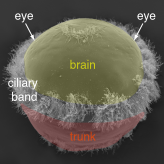
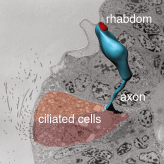
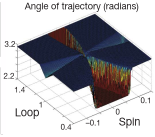
Helical swimming, sensing and turning are tightly linked

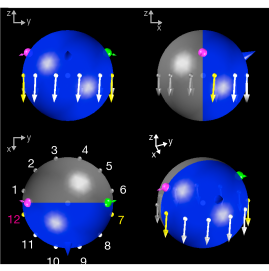
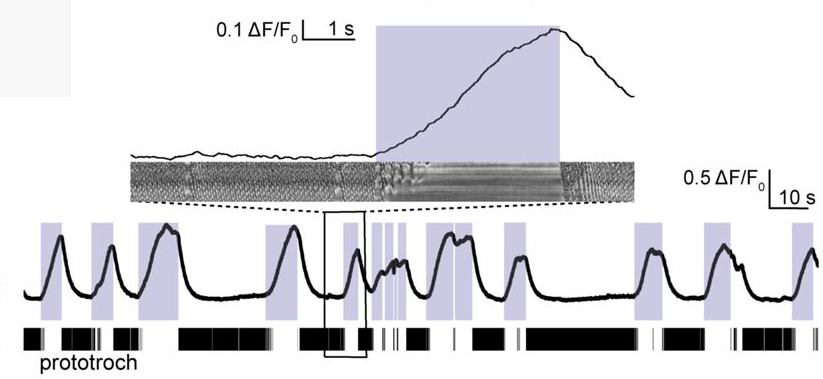
Calcium increase induces closures
Array tomography for vEM and connectomics
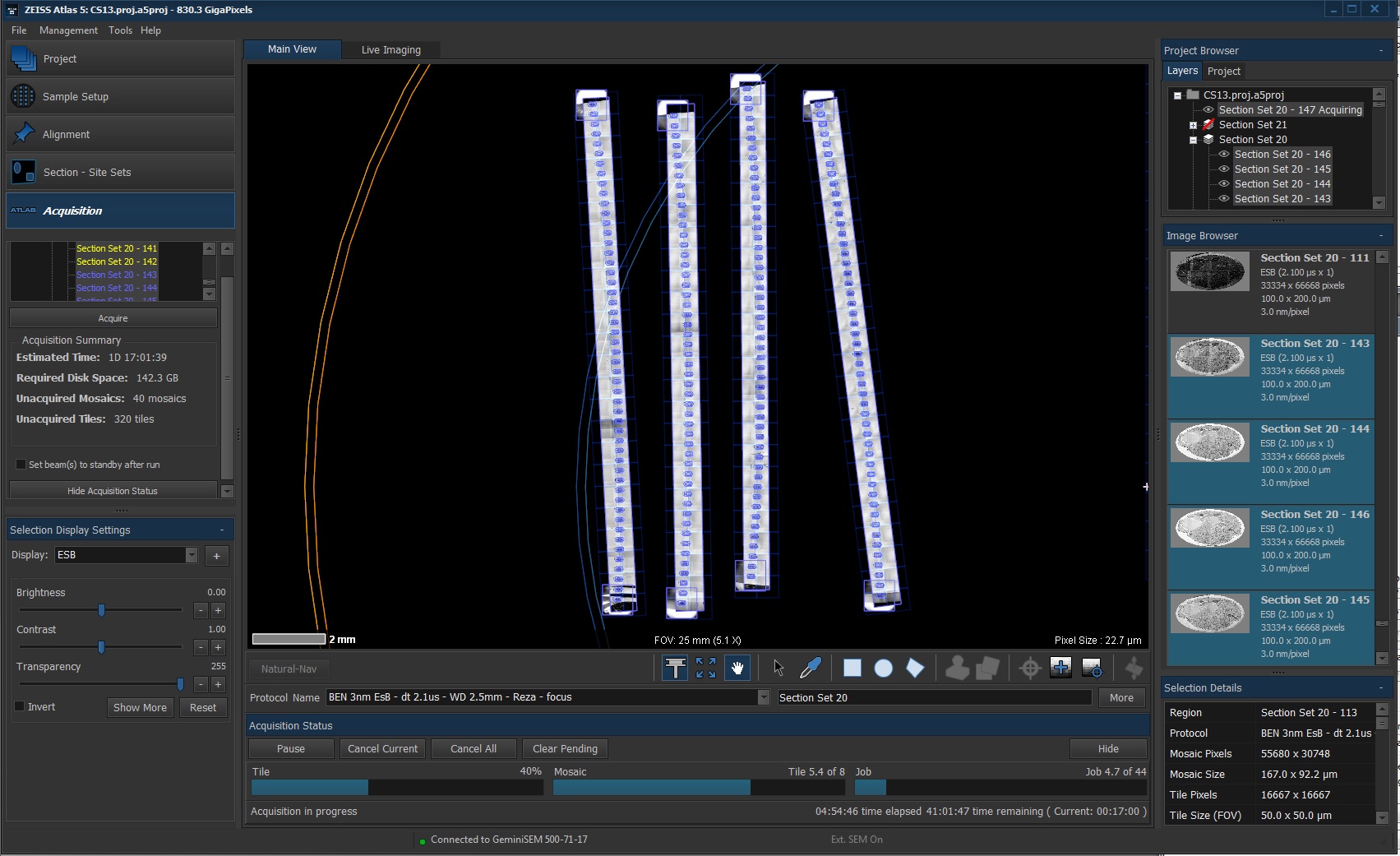
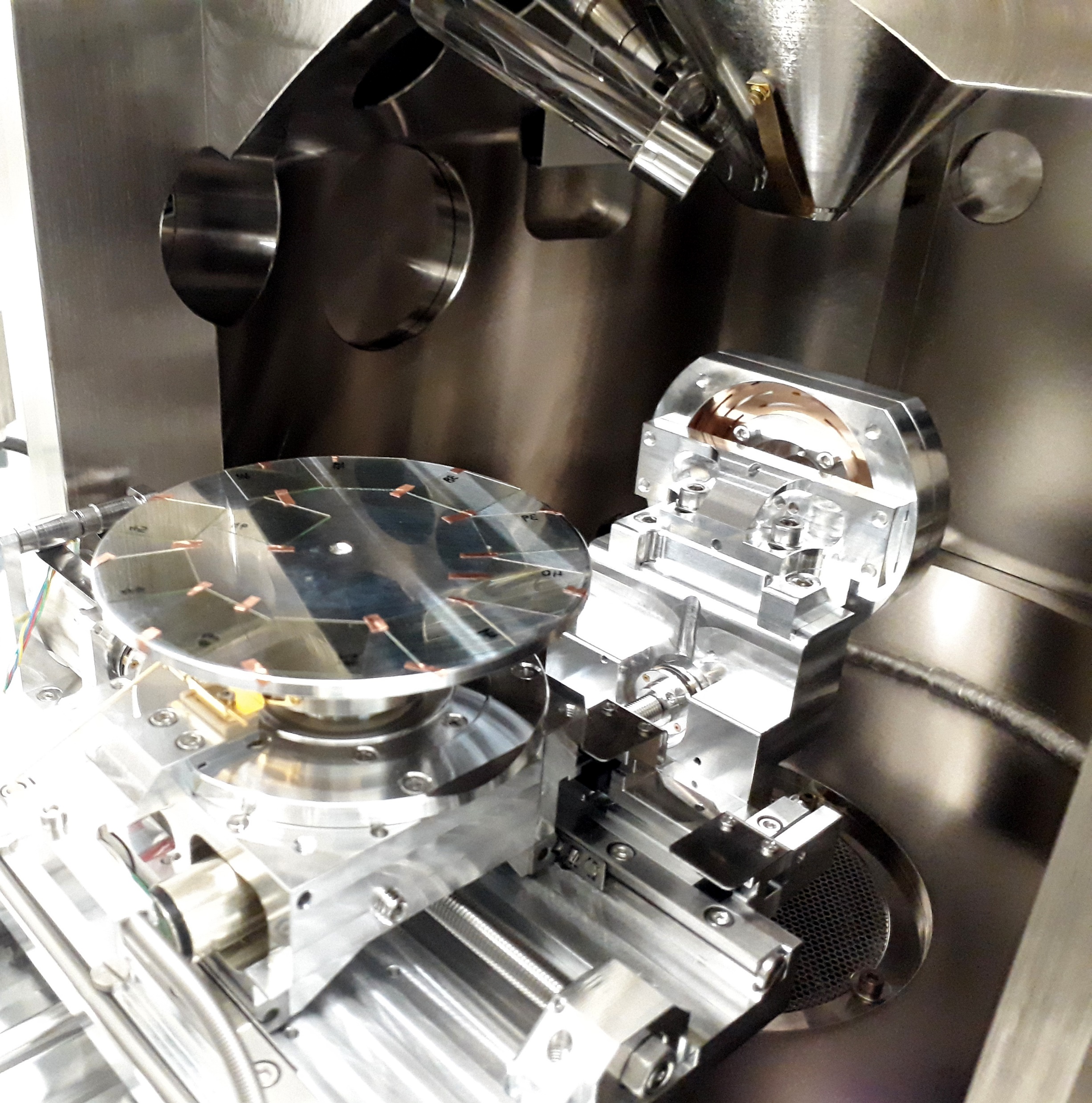
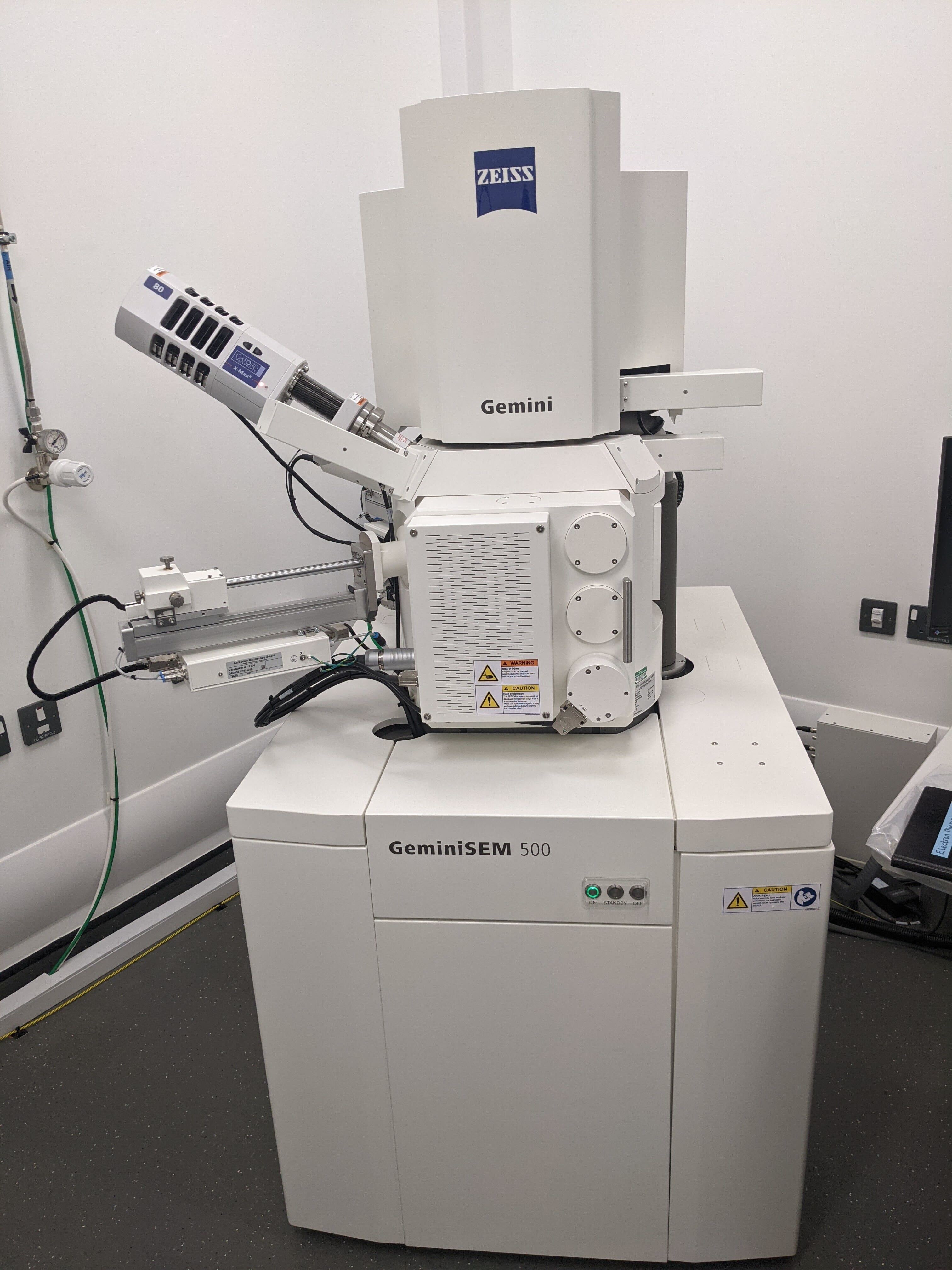
- serial ultrathin sectioning (~5000 sections)
- serial imaging by TEM or SEM
- alignment of sections, tracing and annotation of neurons
- whole-body reconstruction of all cells and the synaptic connectome
Whole-body annotation of all ciliary basal bodies
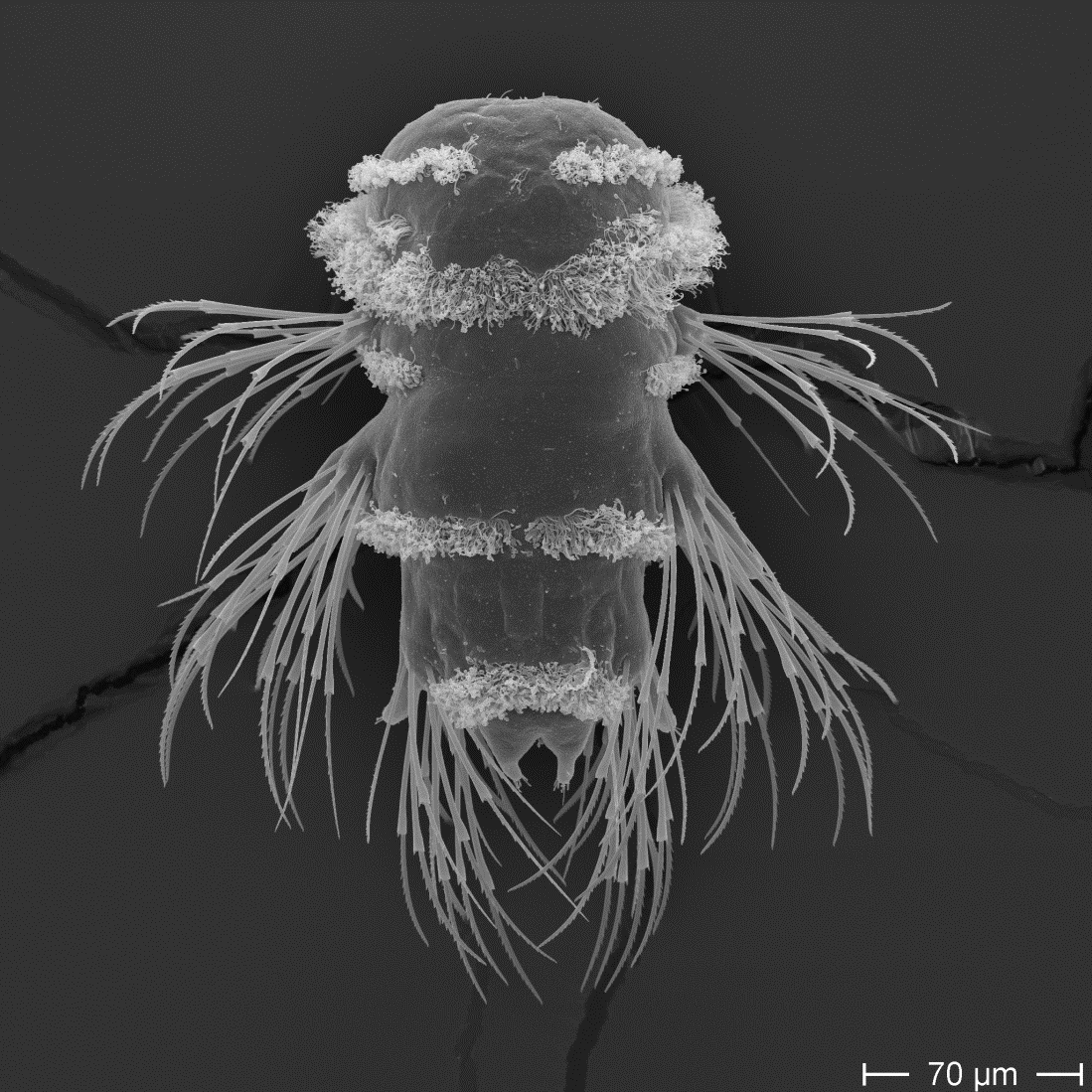
A pacemaker system for ciliary closures
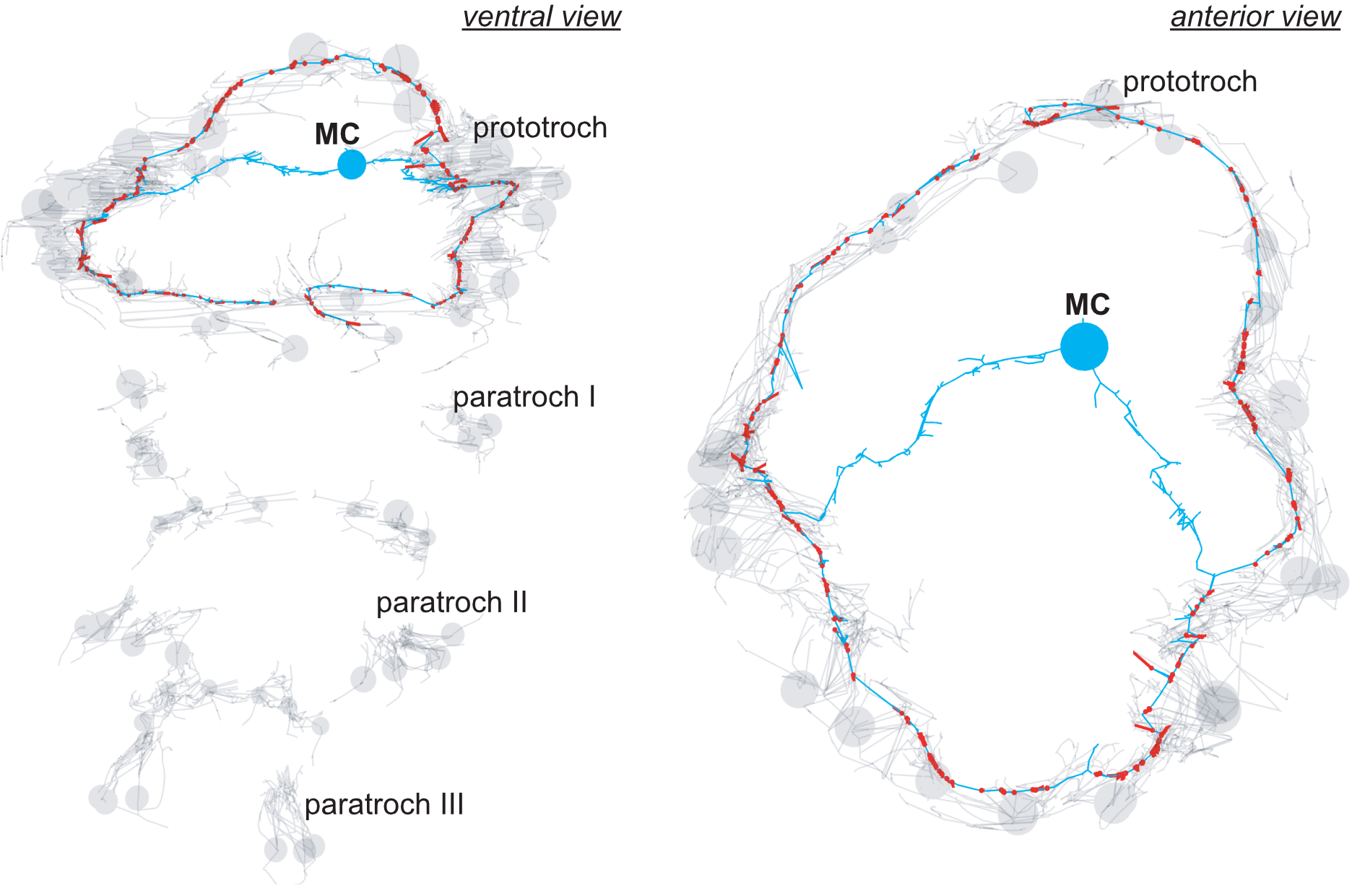
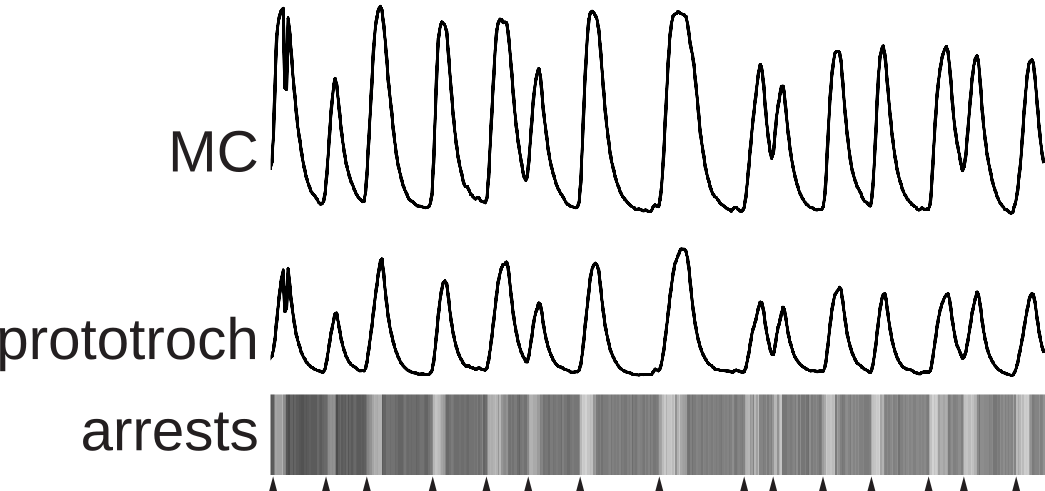
Whole-body coordination of ciliary closures
Whole-body coordination of ciliary closures
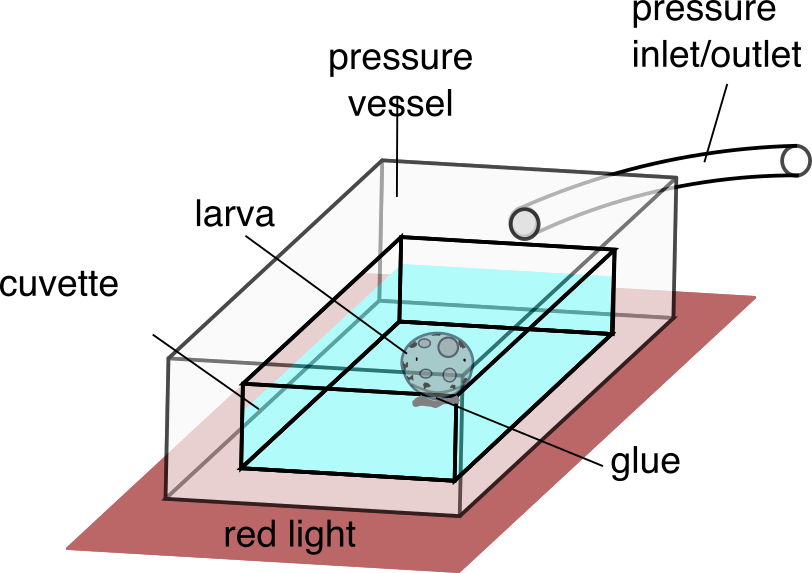
Pressure response in Platynereis larvae
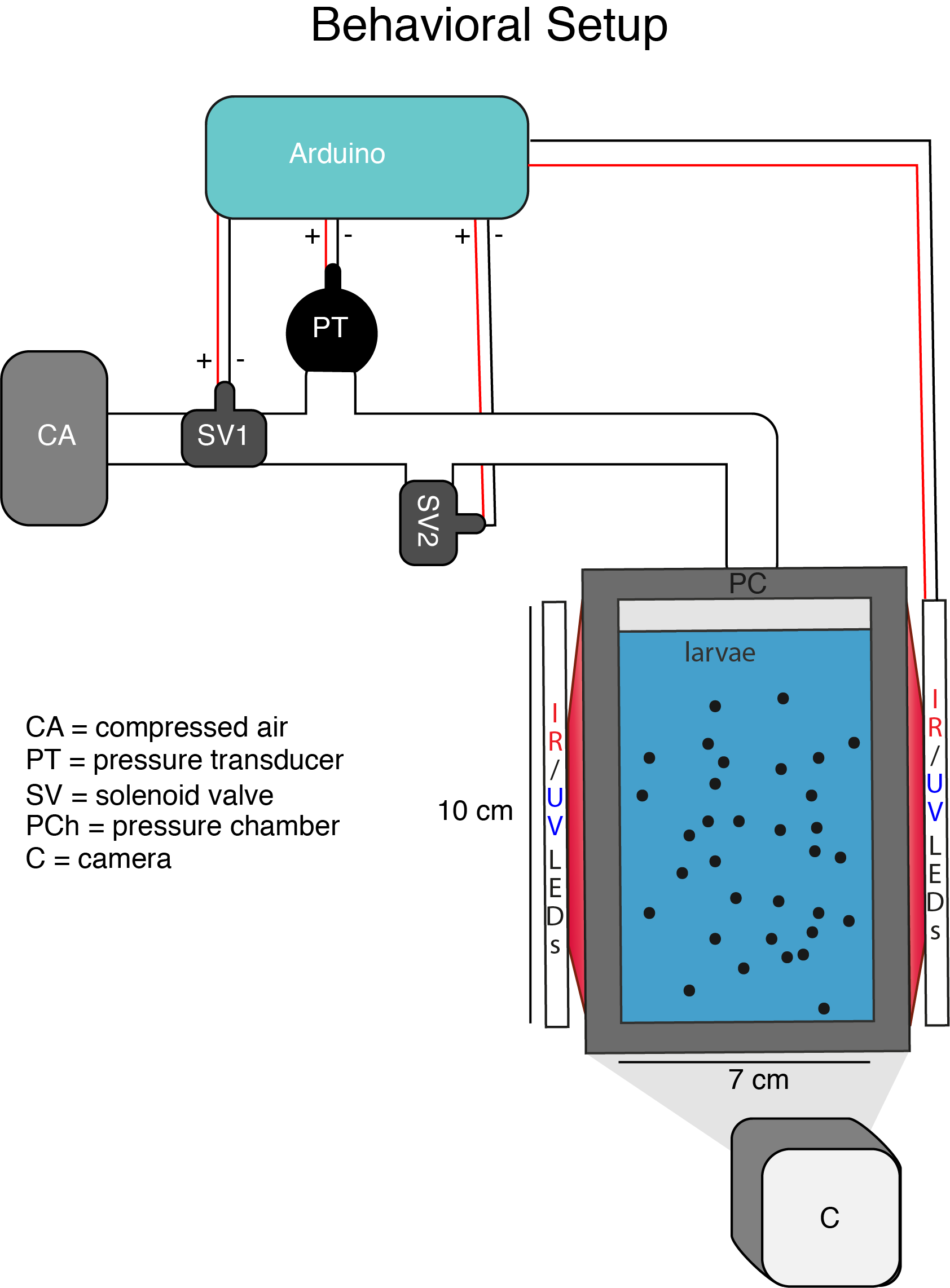
Precise control of pressure in the pressure chamber
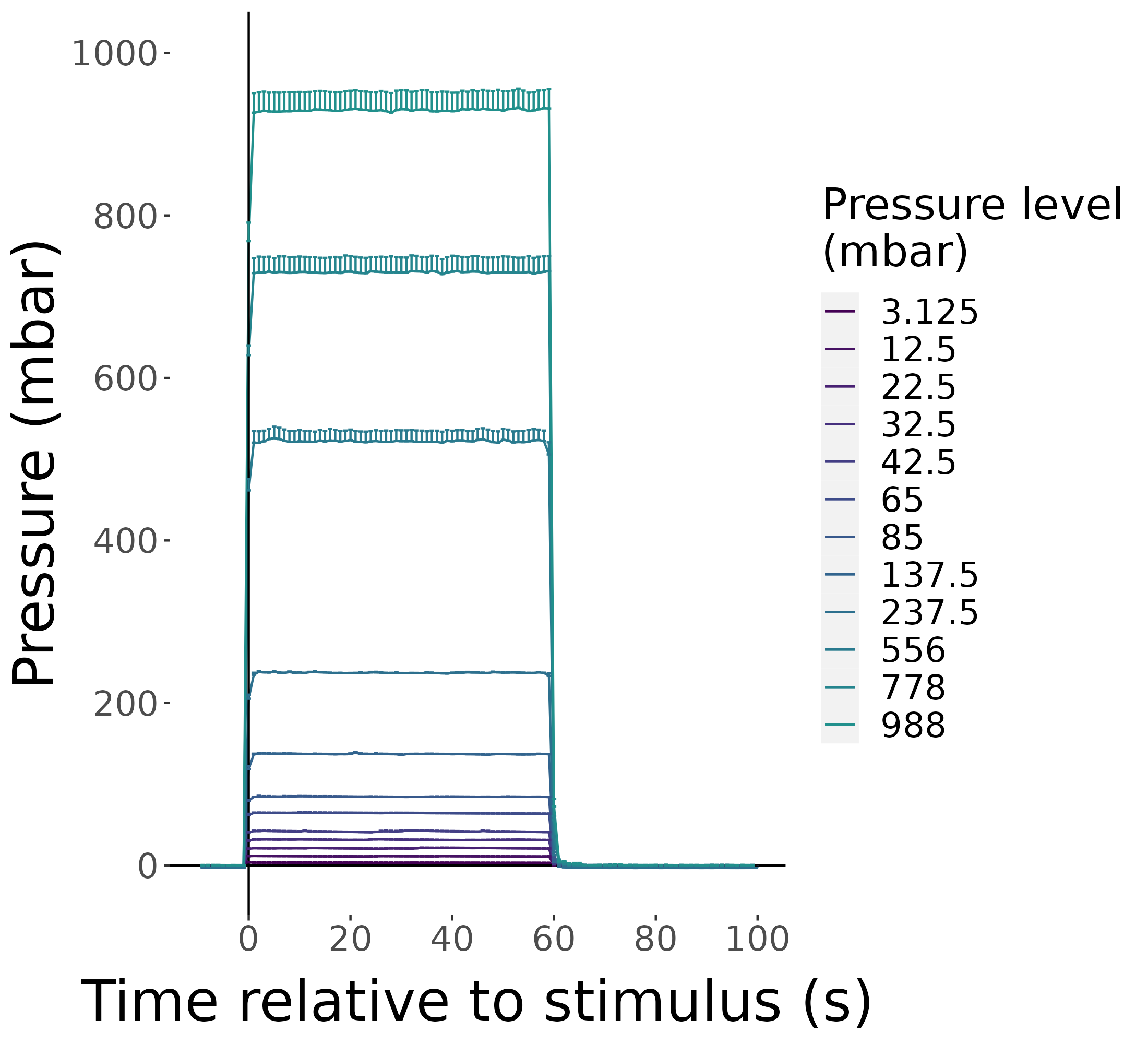
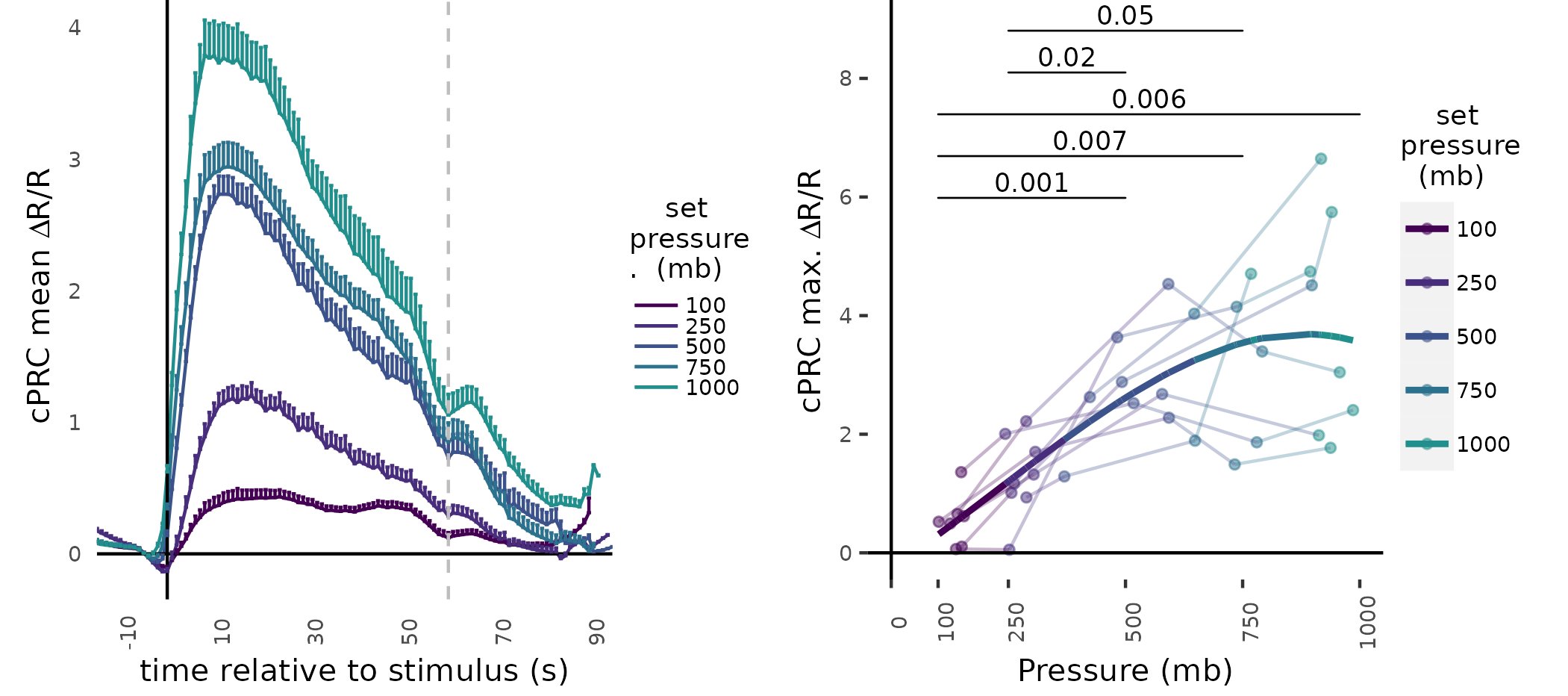
Pressure response is graded
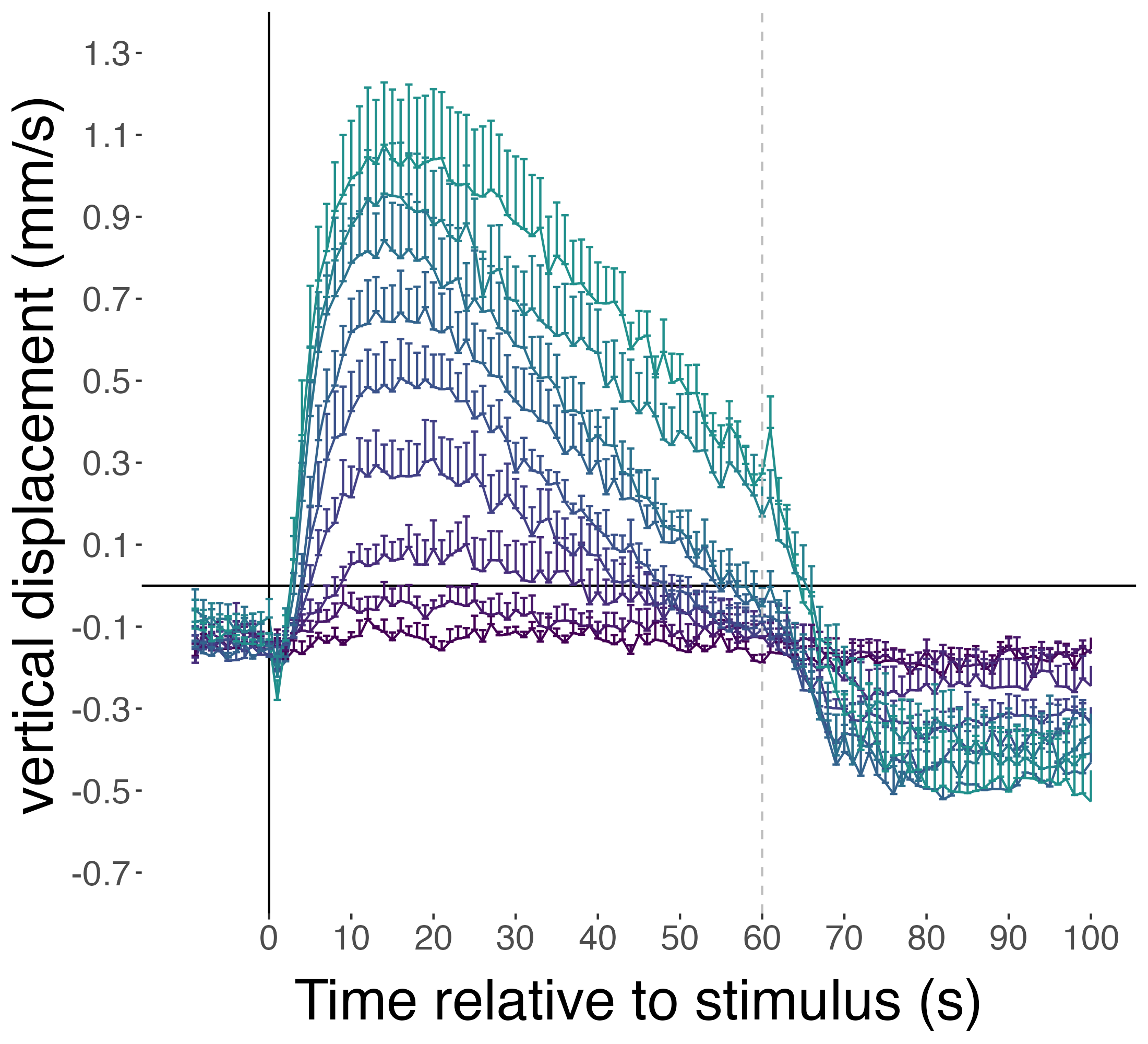
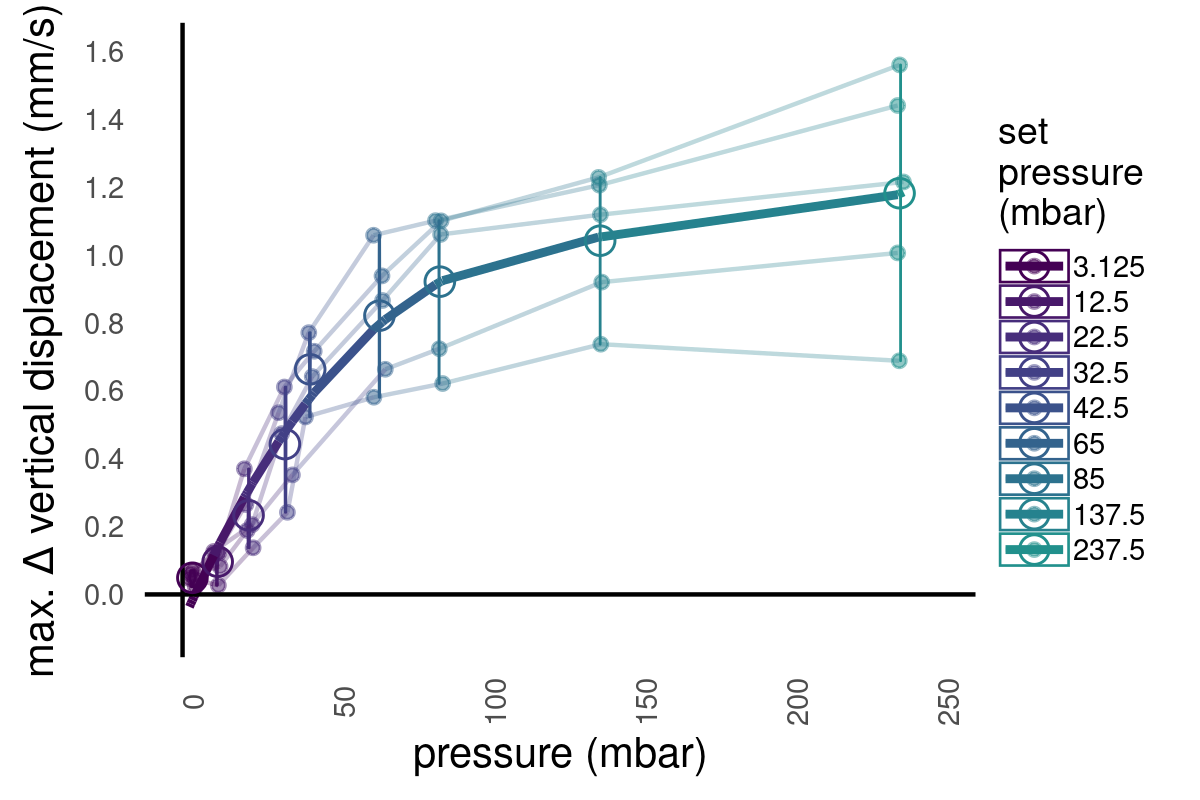
Ciliary beating increases under pressure
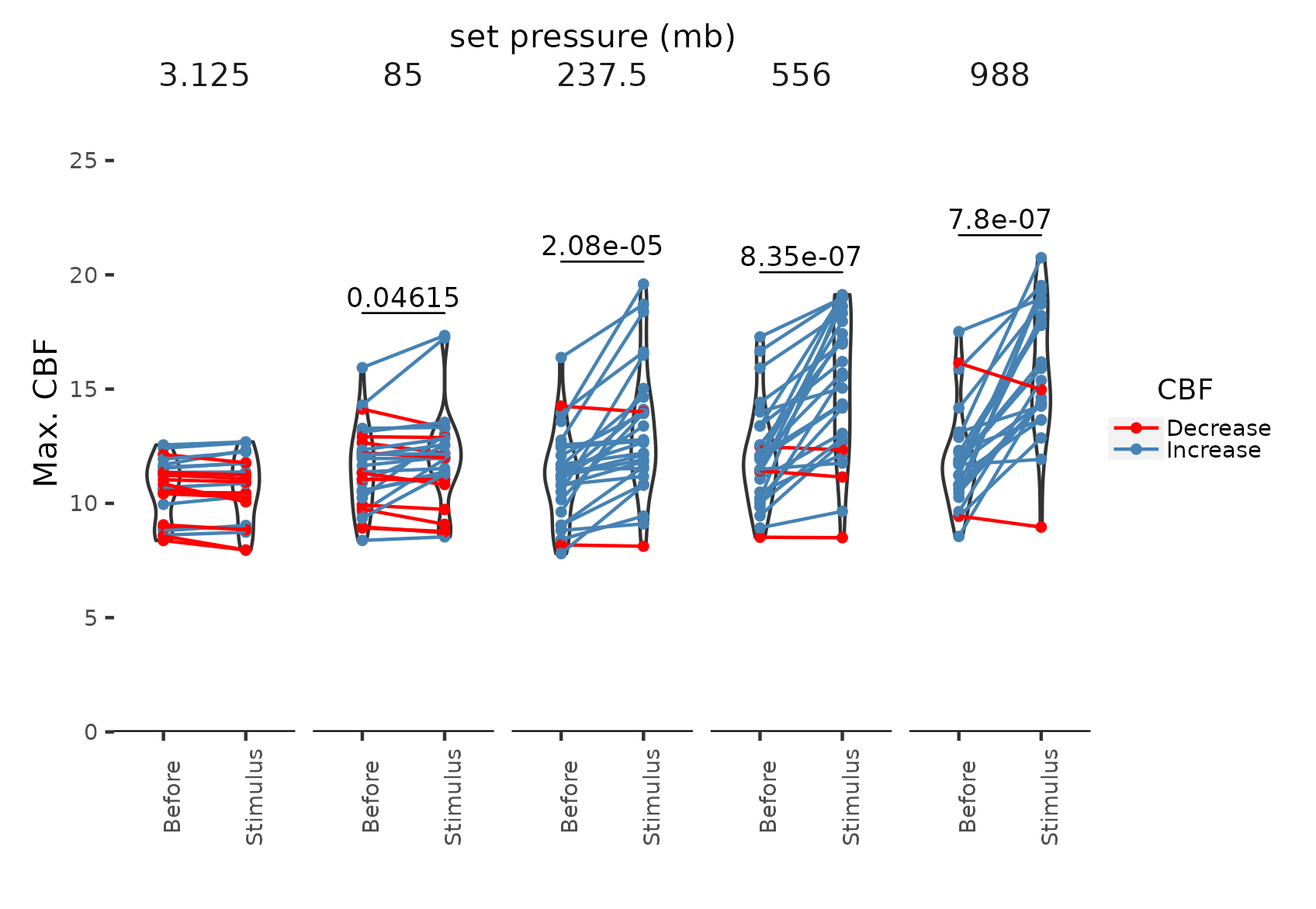
Pressure is sensed by photoreceptors with ramified cilia
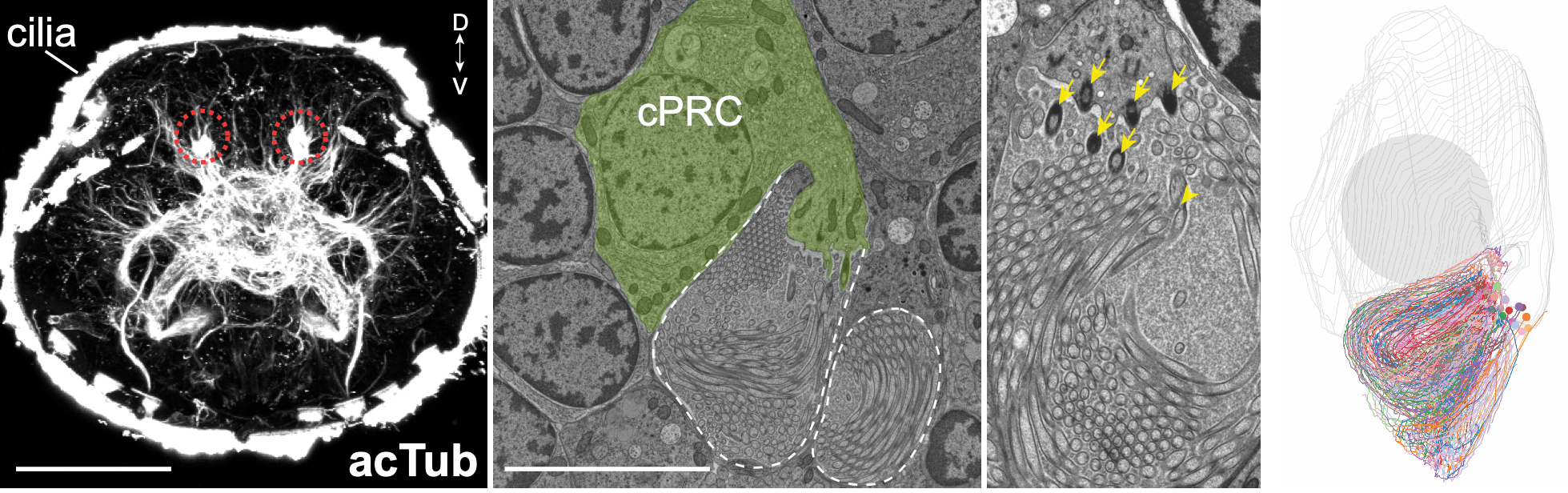
Photoreceptor responses to pressure are graded
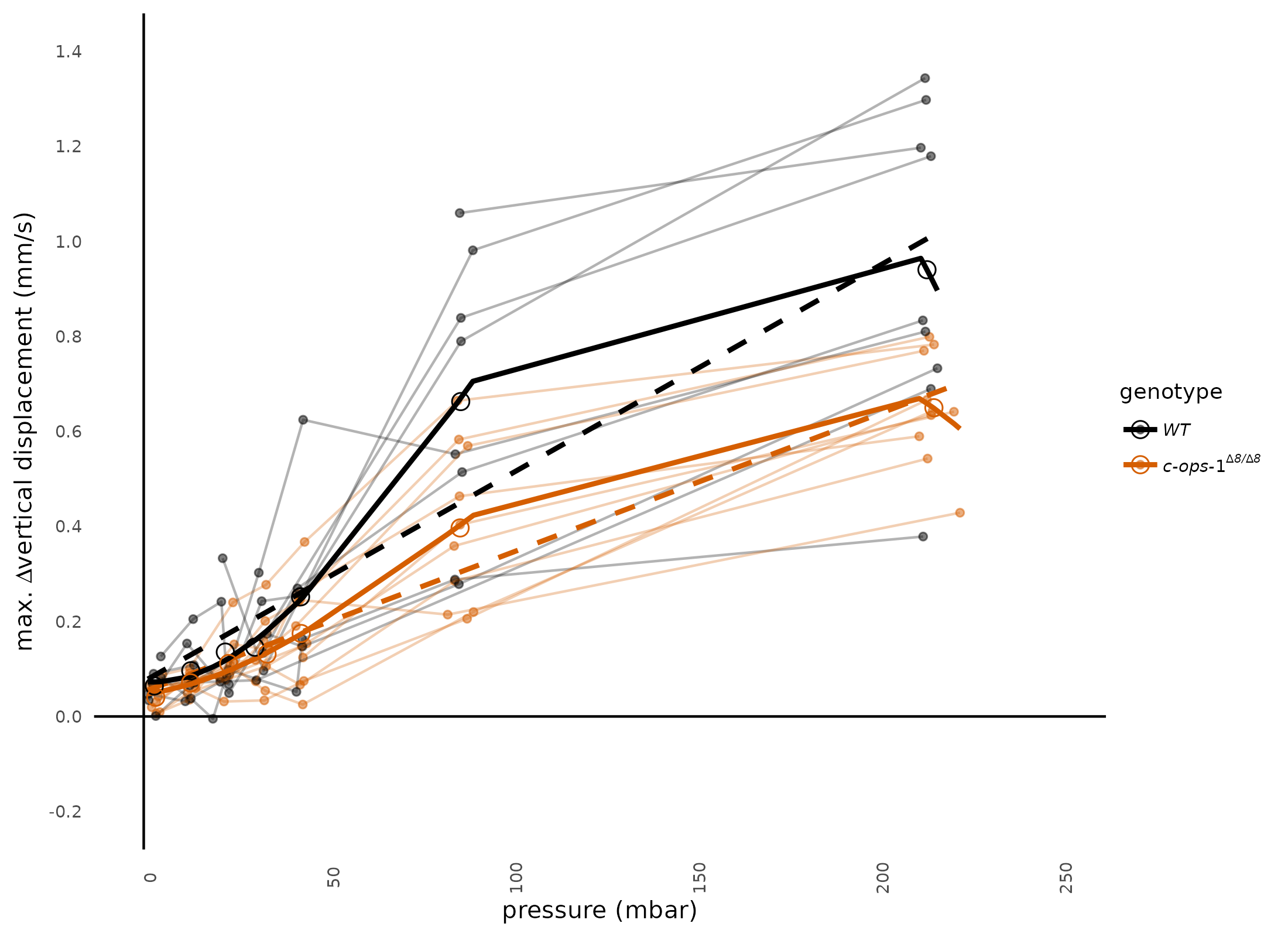
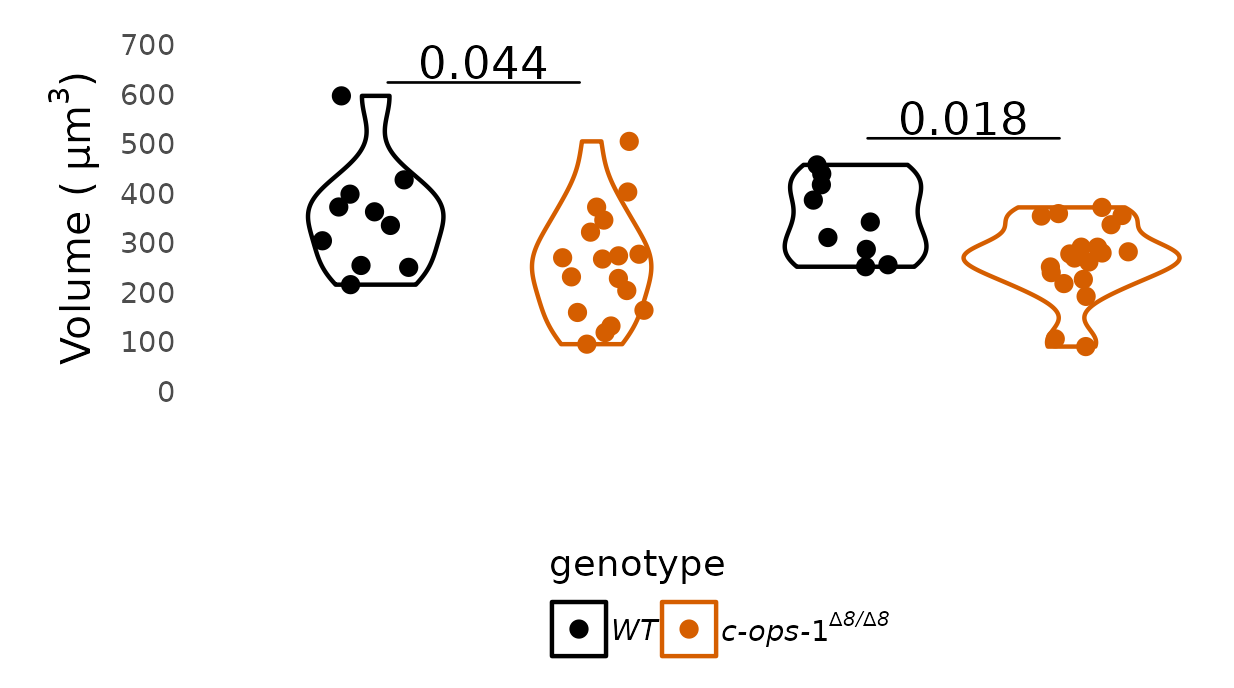
Defects of pressure response in c-opsin1 mutants
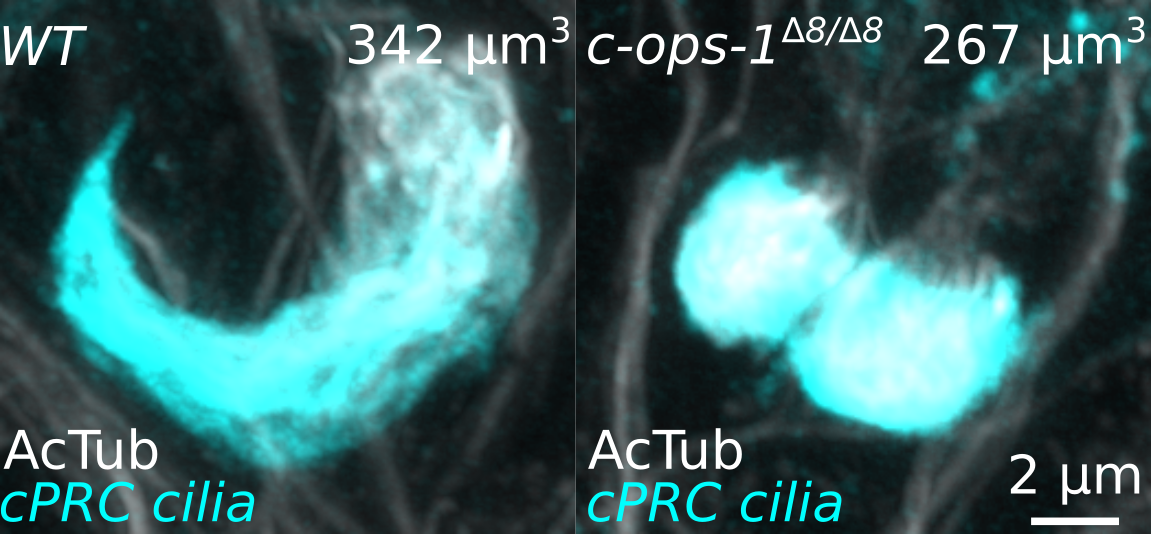
Reduced ciliary compartment in c-opsin1 mutants
Control of ciliary swimming in zooplankton
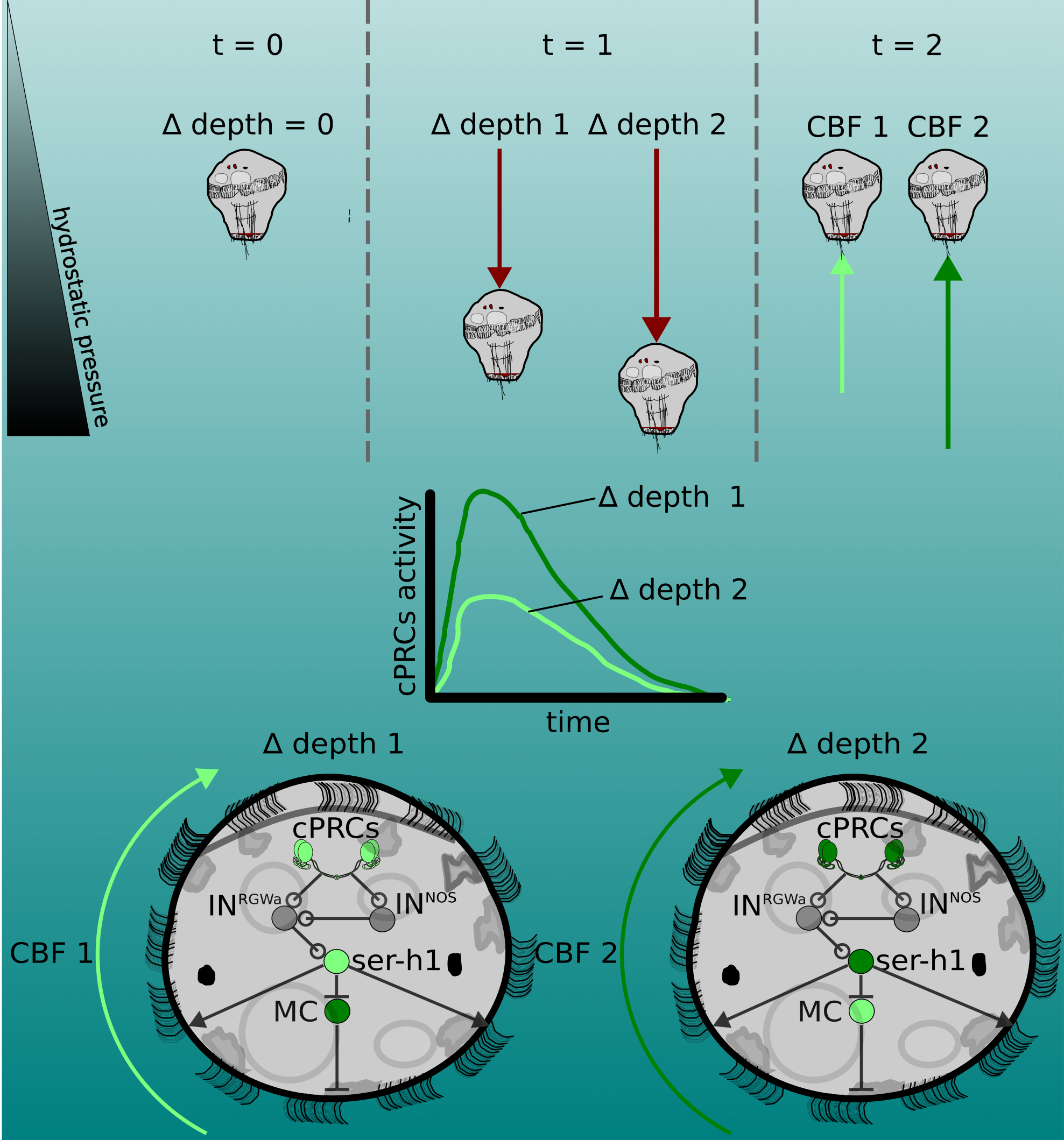
- ongoing activity of cilia
- ongoing activity of ciliomotor pacemaker system
- modified by sensory cues (light, vibrations, pressure etc.)
- motion as part of sensing (phototaxis, rheotaxis)
- there are no ‘reflexes’
- ongoing behaviour affects the senses – reafference
The non-bilaterian Metazoa
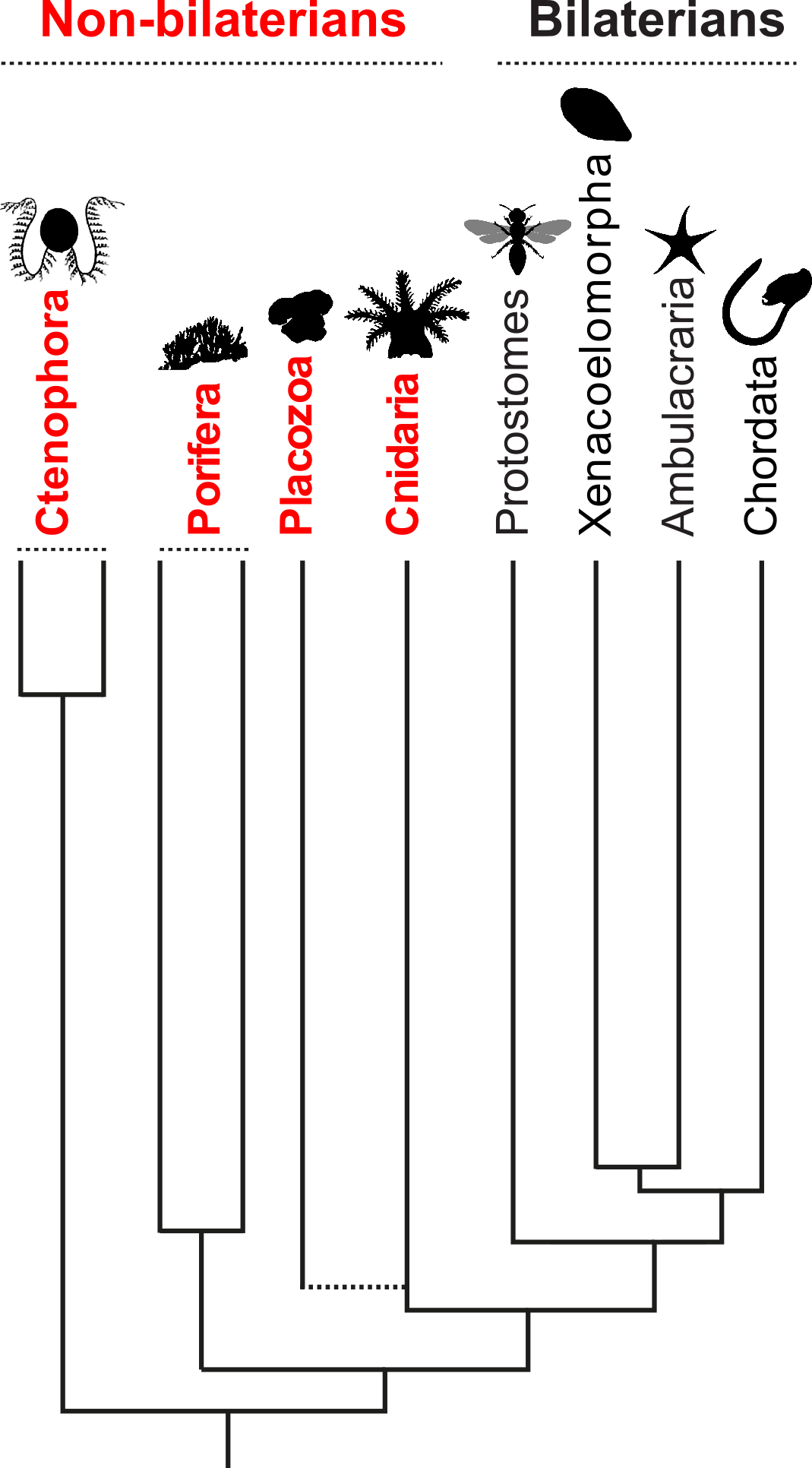
Ctenophora
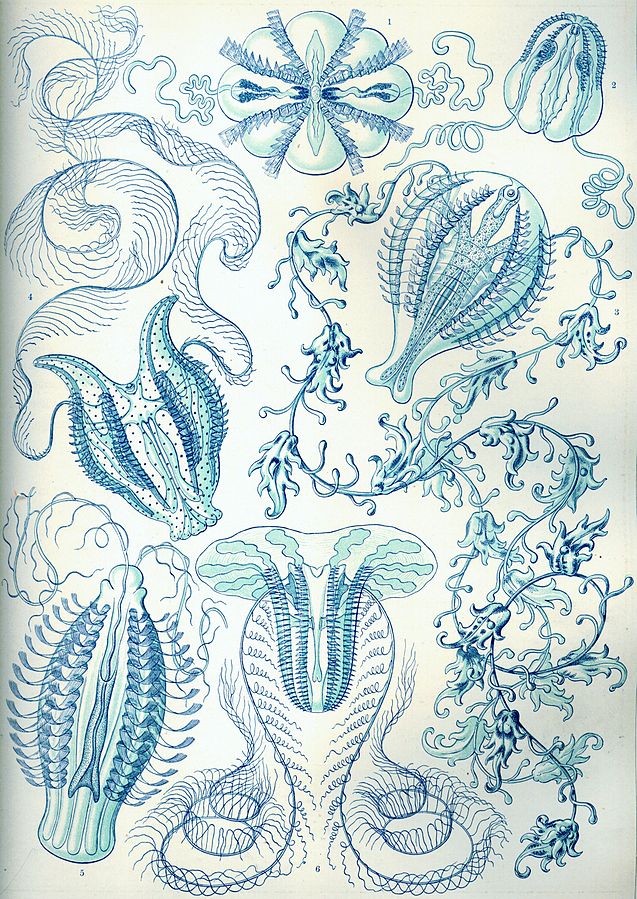
Ernst Haeckel, Kunstformen der Natur (1904), plate 27: Ctenophorae
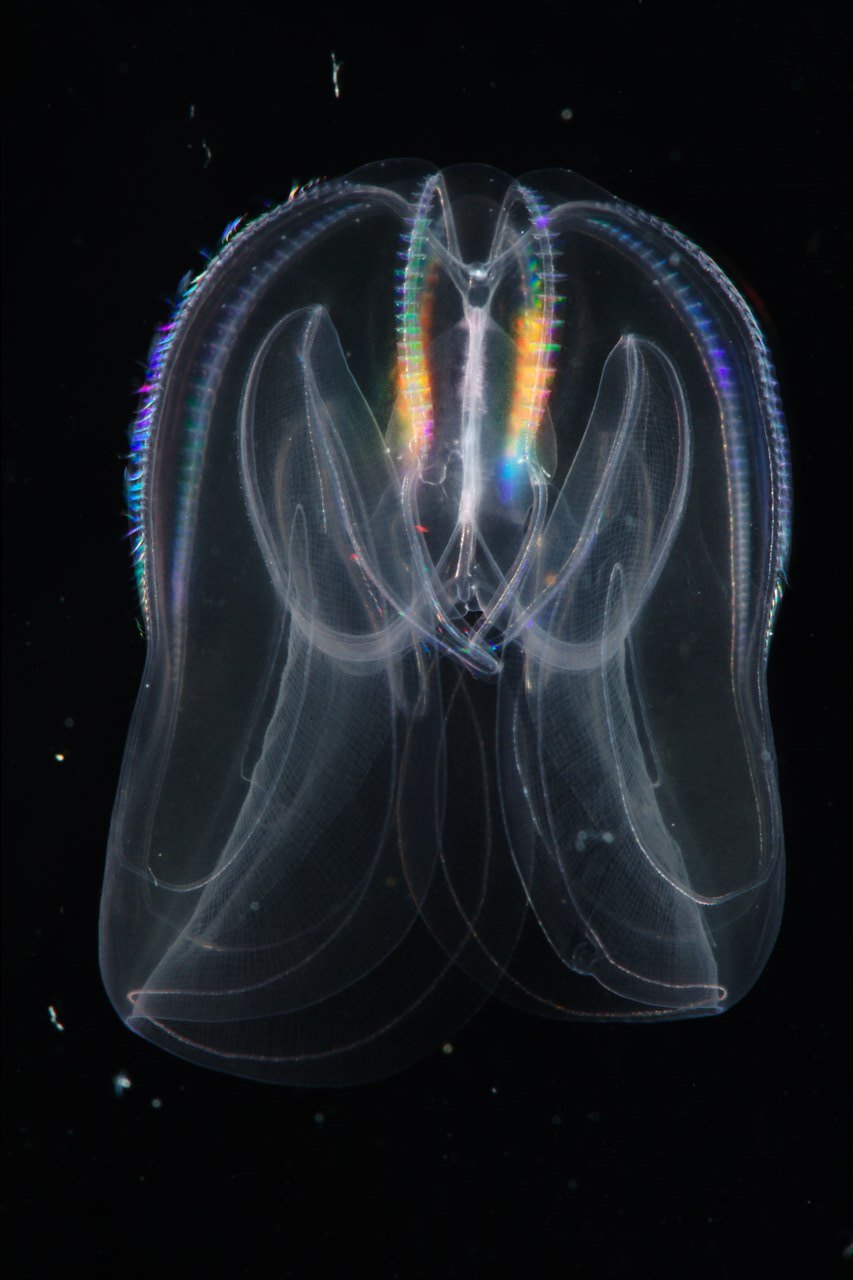
Ctenophora (Rippenquallen)
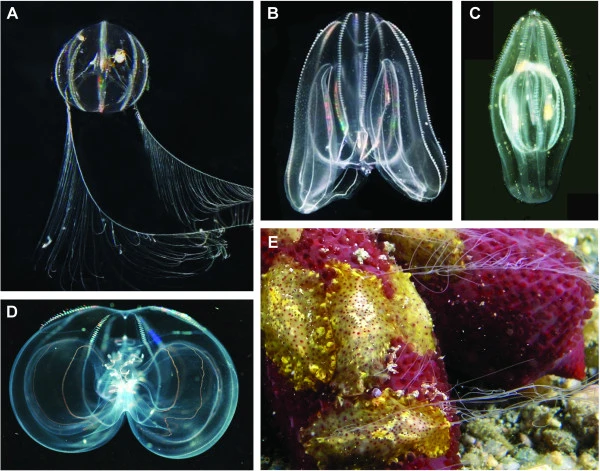
- Pleurobrachia bachei
- Mnemiopsis leidyi
- Beroe gracilis mit Pleurobrachia pileus im Magen
- Thalassocalyce inconstans
- Coeloplana astericola (yellow-brown, on a starfish)
- Traditinally part of Coelenterata
- Cteno-phora: from kteis = Comb [Genitiv ktenos] and pherein = carry
Ctenophora
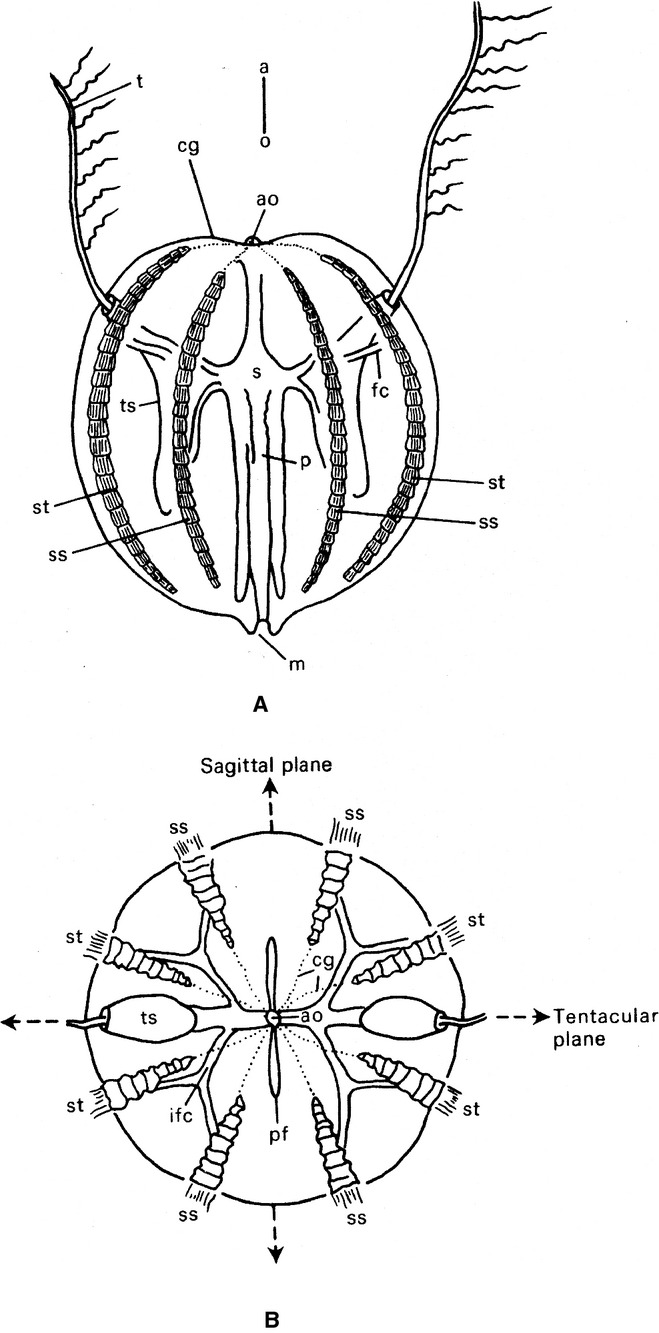
Pleurobrachia Cydippea
- marine hermaphrodites
- develop through a freely-swimming cydippid larval stage
- 8 comb rows
- colloblasts (from collo = glue, blastos = bud), no stinging cells
- subepithelial, syncytial nerve net
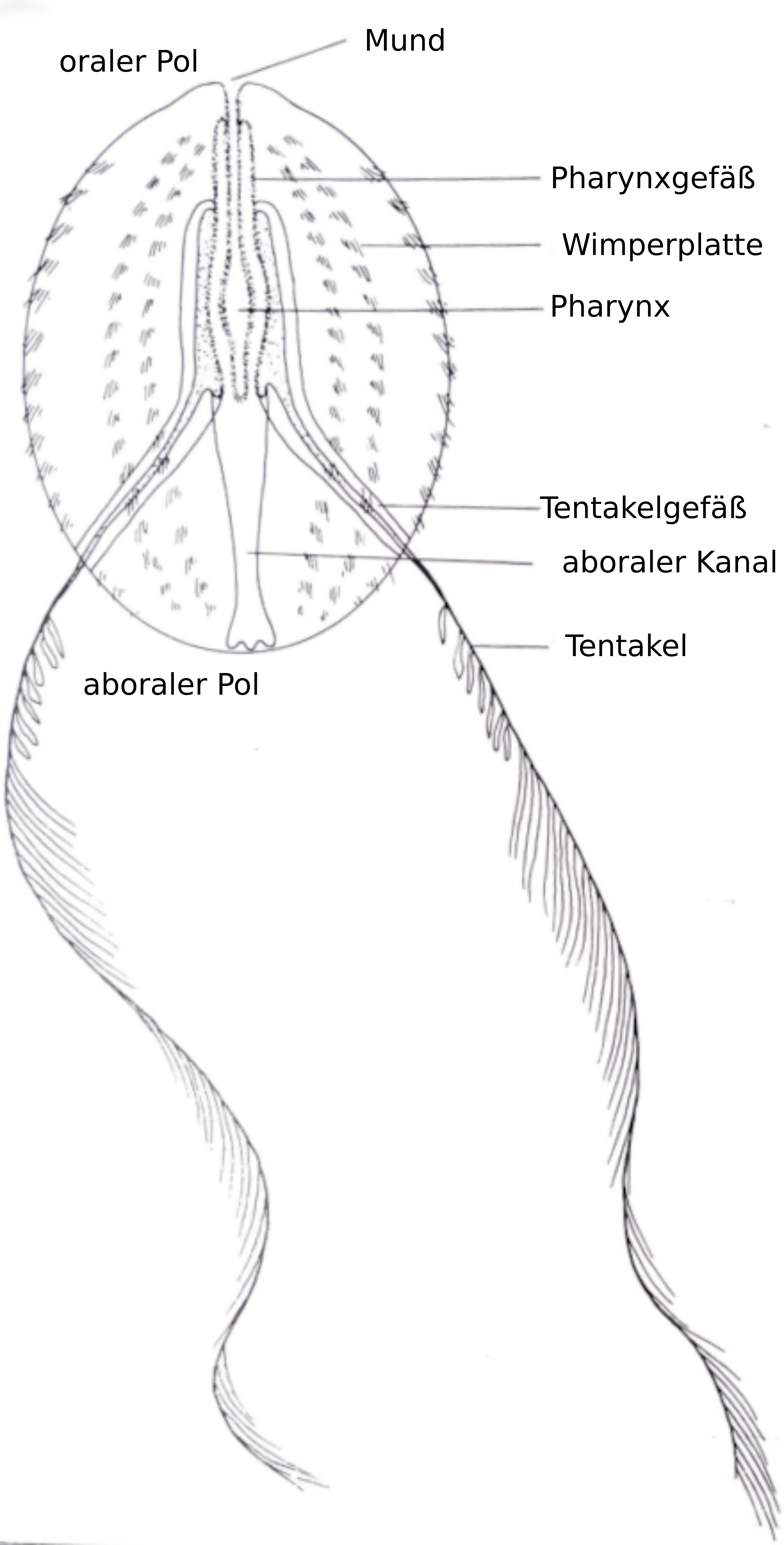
Ctenophora - Pleurobrachia
- oral-aboral axis
- two tentacles with side branches (Tentilla), with colloblasts
- canal system for the spread of digested food
- comb plates
Ctenophores - biradial symmetry
- two orthogonal symmetry planes: sagittal and tentacular plane
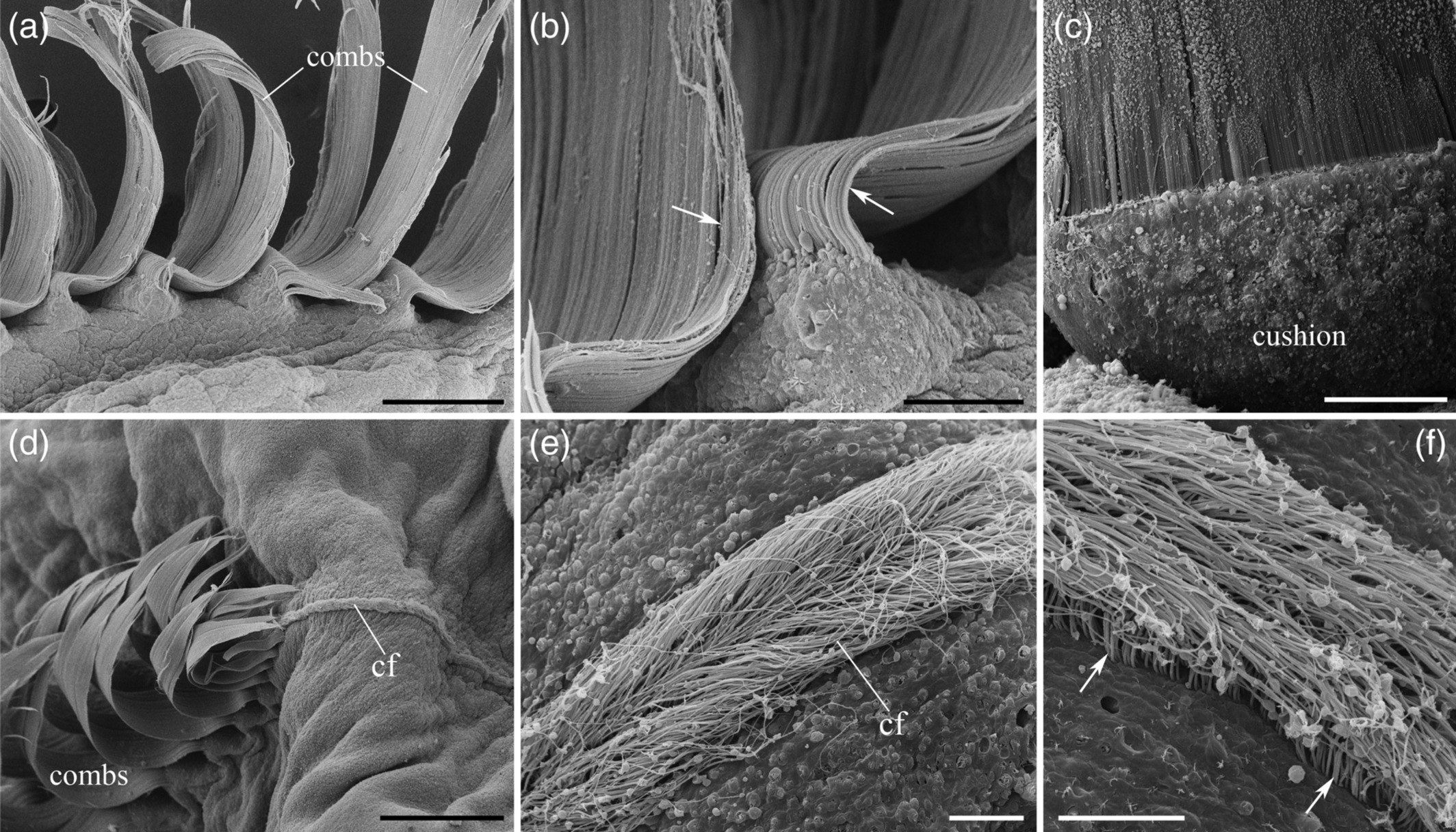
Ctenophores - Comb plates
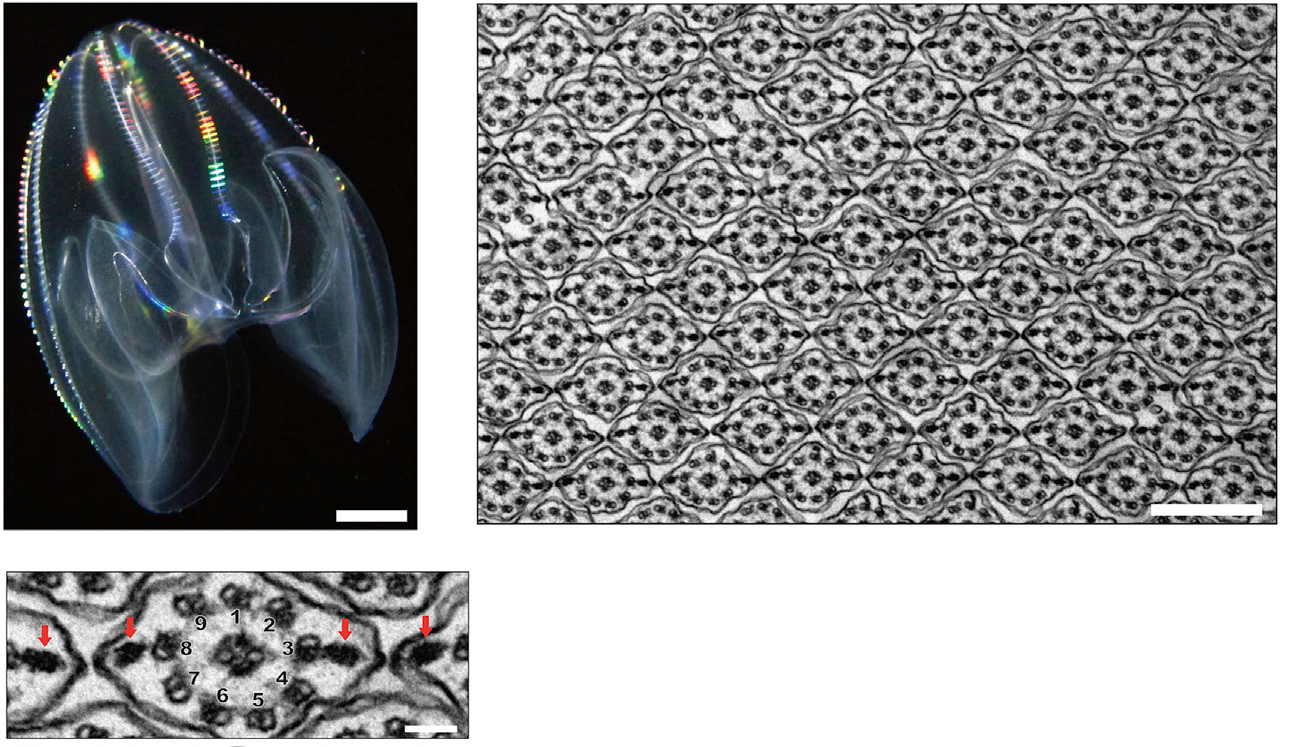
- comb plates formed by hundreds of cilia glued together
- “compartmenting lamellae” - protein complex to hold cilia together
- individual cilia beat as a single unit - comb plate
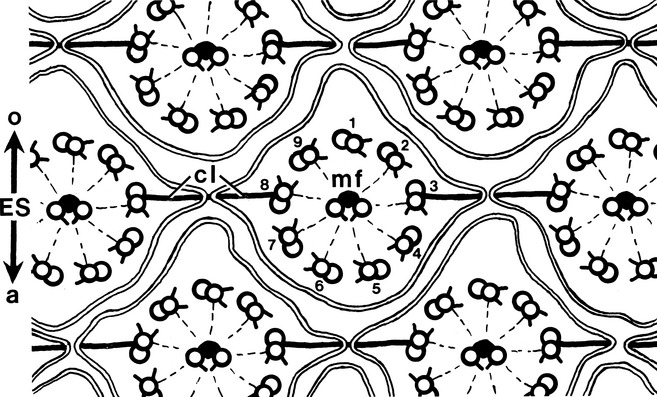
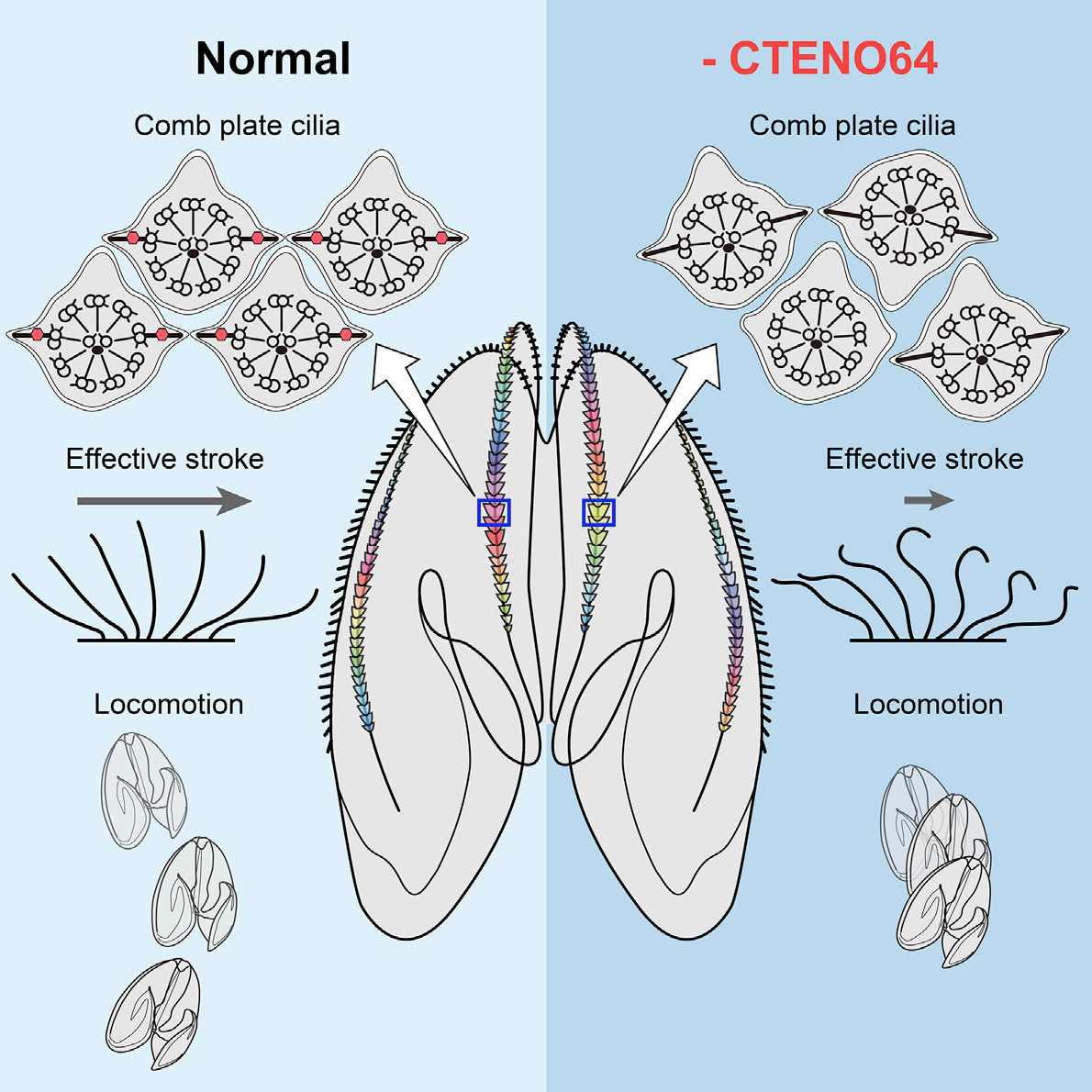
- efficient swimming
- the largest organisms that can move with cilia (broke the low-Reynolds limit)
- a ctneophore-specific protein complex glues the cilia together (e.g. CTENO64)
Ctenophores - Comb plates
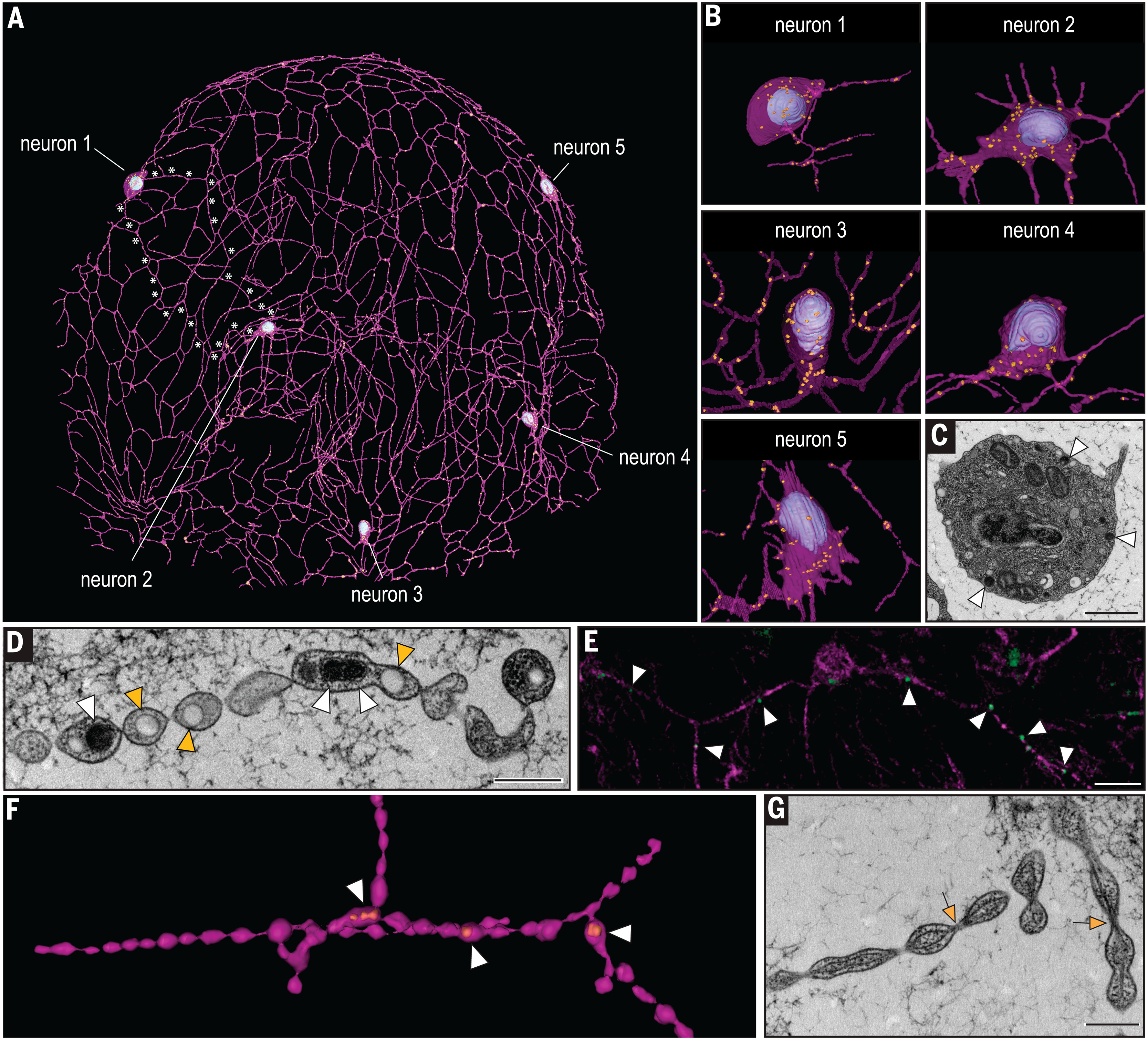
Ctenophores - Nervous system
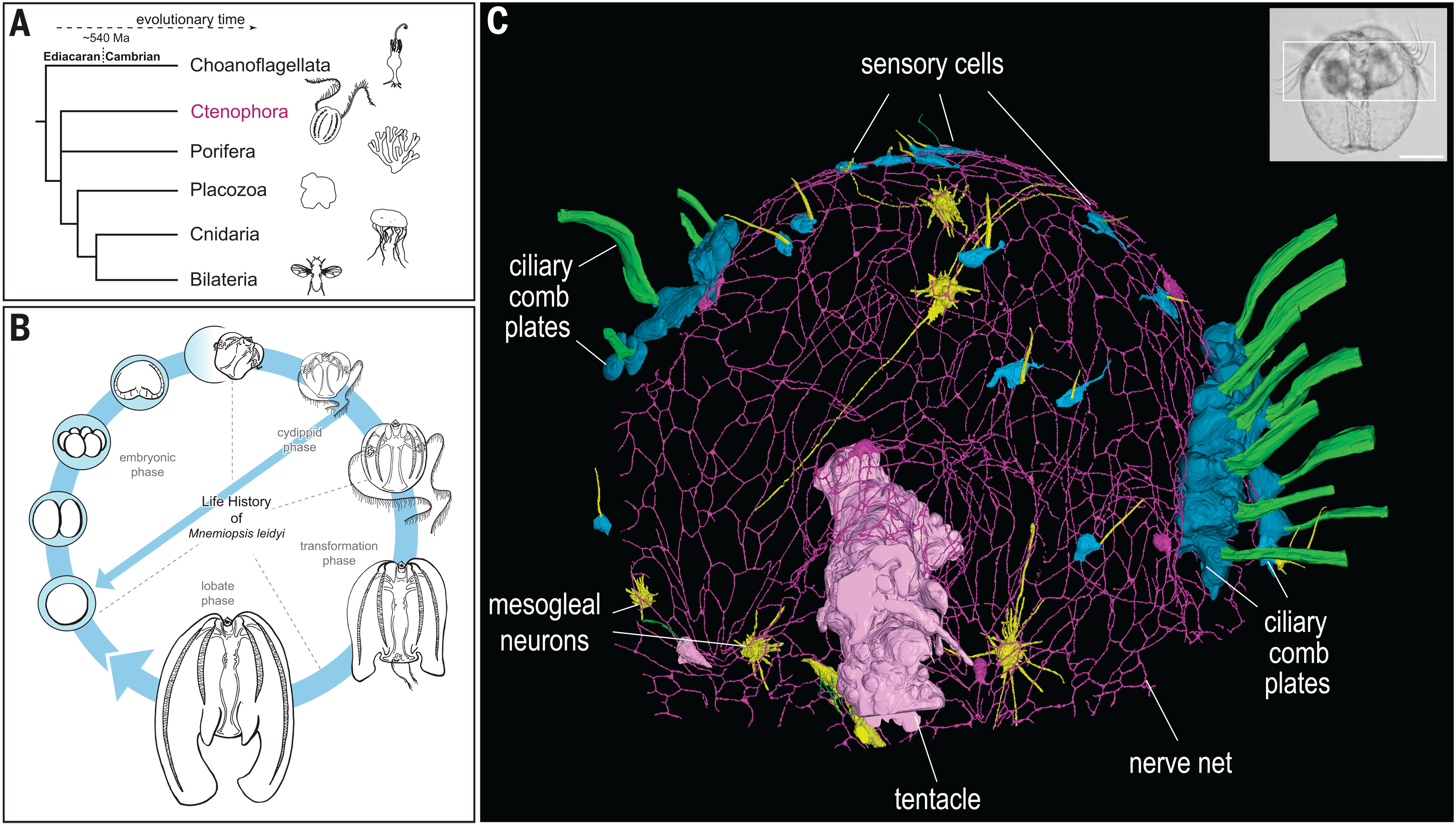
- neurons in the subepithelial nerve net form a syncytium
- also synapses between sensory cells and the nerve net and the nerve net and comb-row cells
Ctenophores – Statocyst (balancer organ)
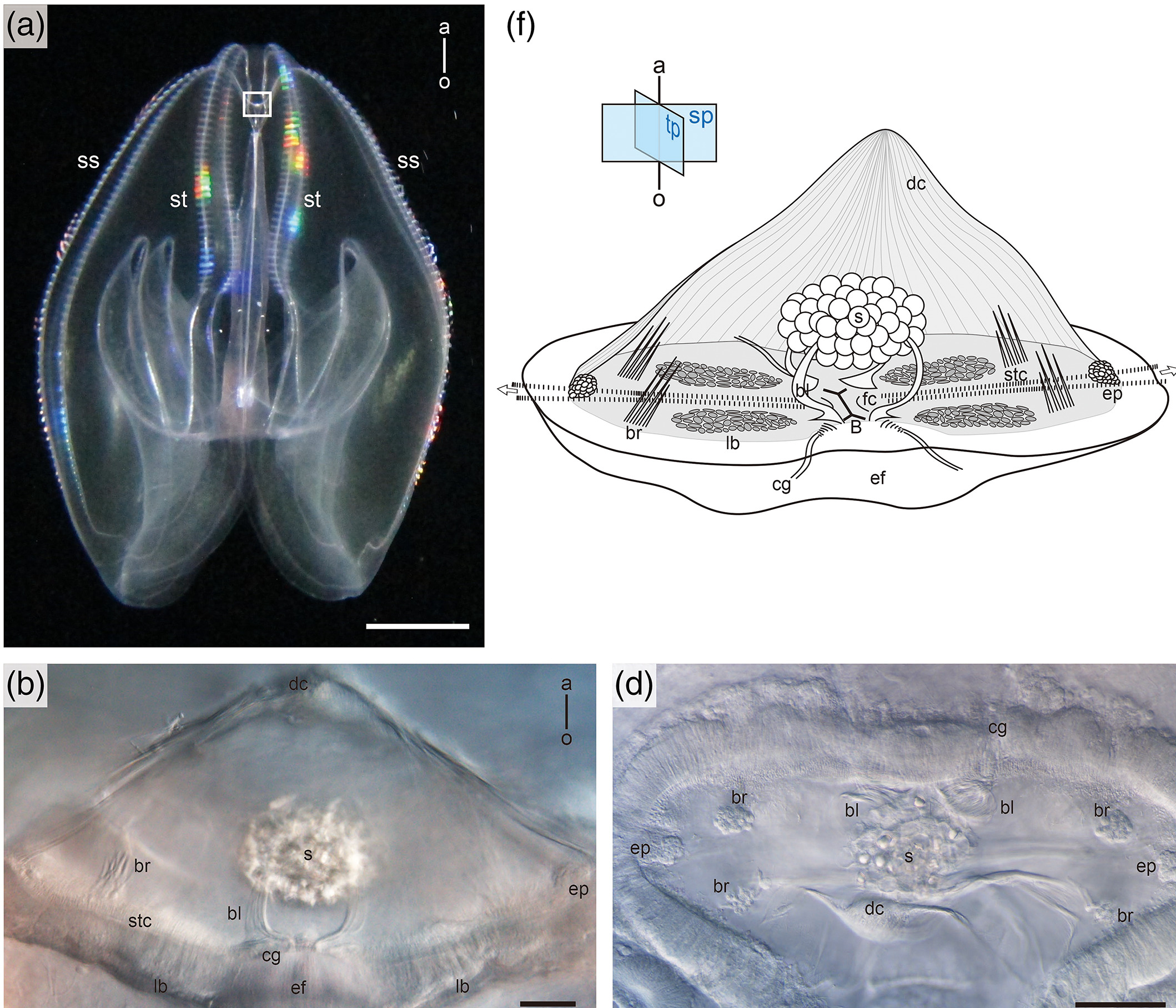
- Statocyst - balancer organ for graviorientation in the aboral organ
- Statolith held by four bundles of balancer cilia
Balancer – four bundles of cilia supporting a statolyth
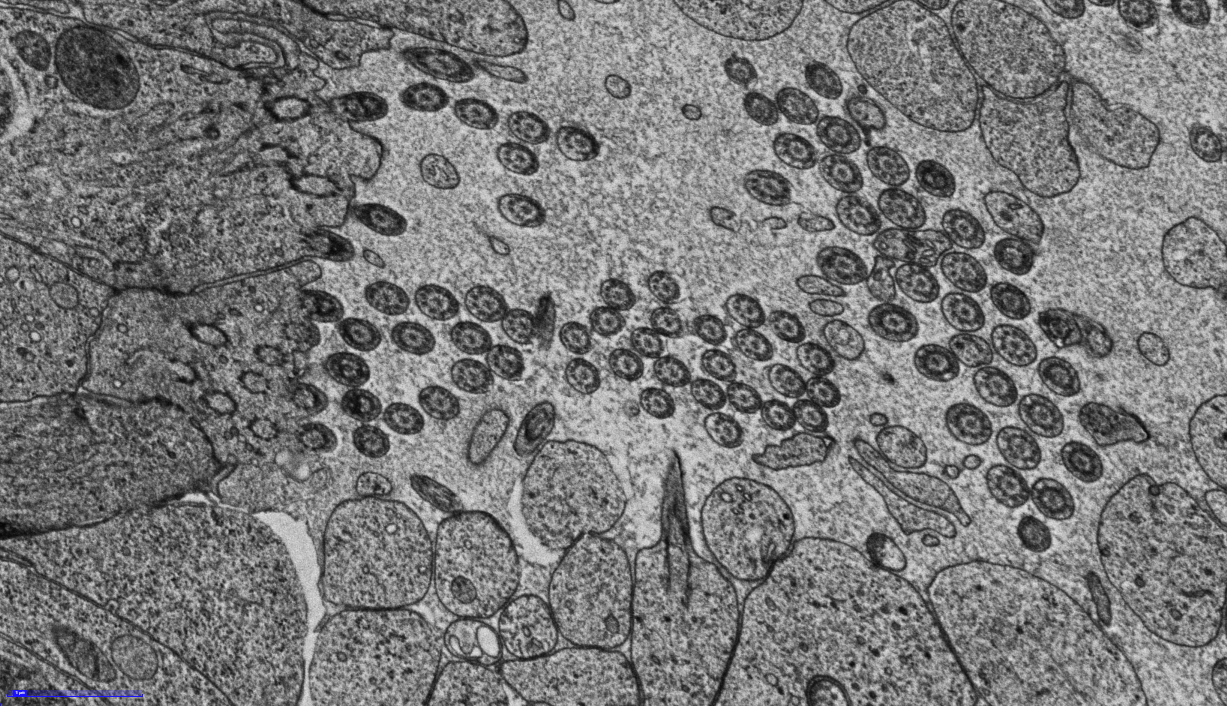
Balancer organ – reorientation after tilt
Kei Jokura
Sydney Tamm – balancer activity and graviorientation
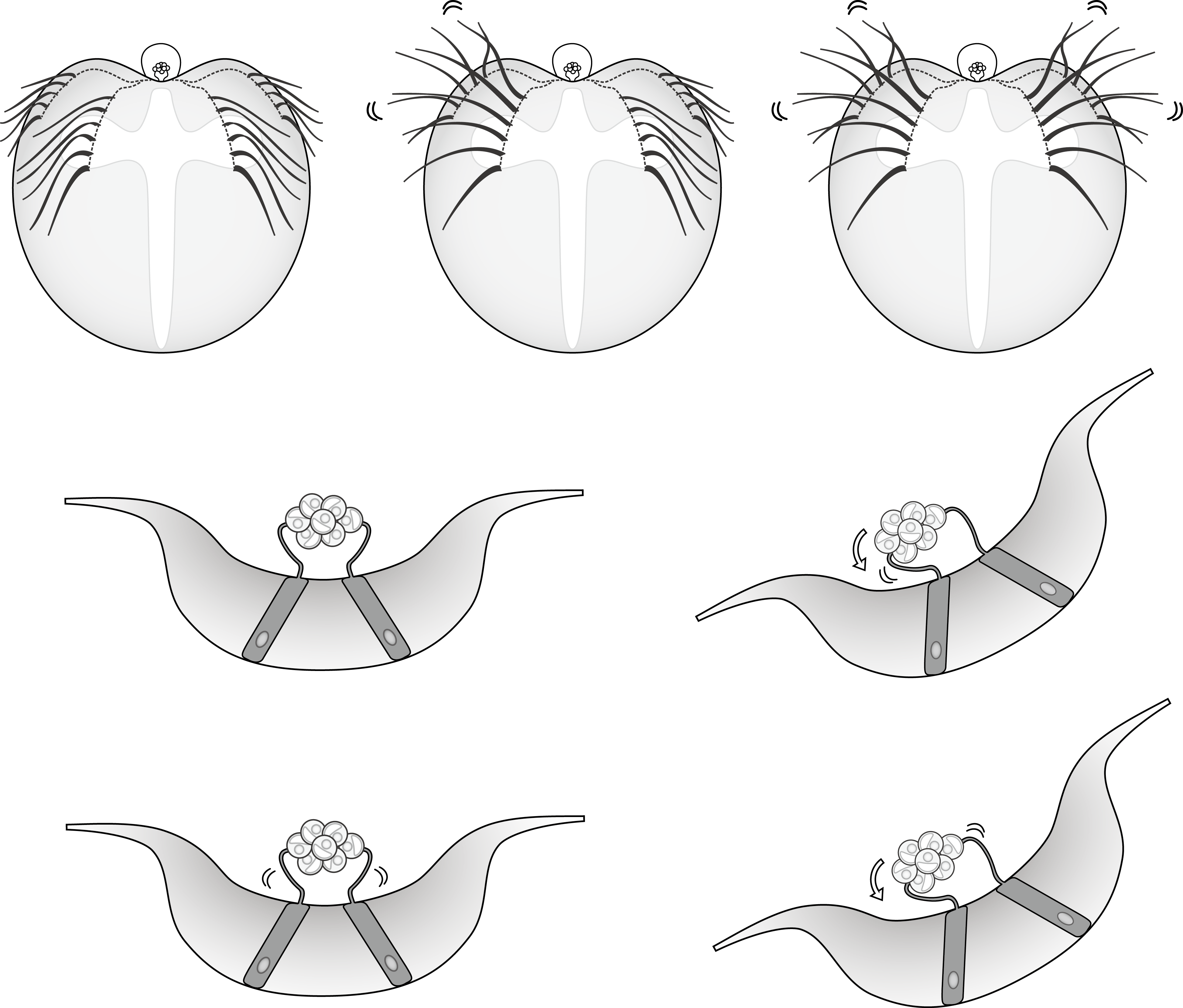
- differential load when body orientation changes
- change in the beating of balancer cilia
- pacemaker system for comb rows
Volume EM reconstruction of the aboral organ
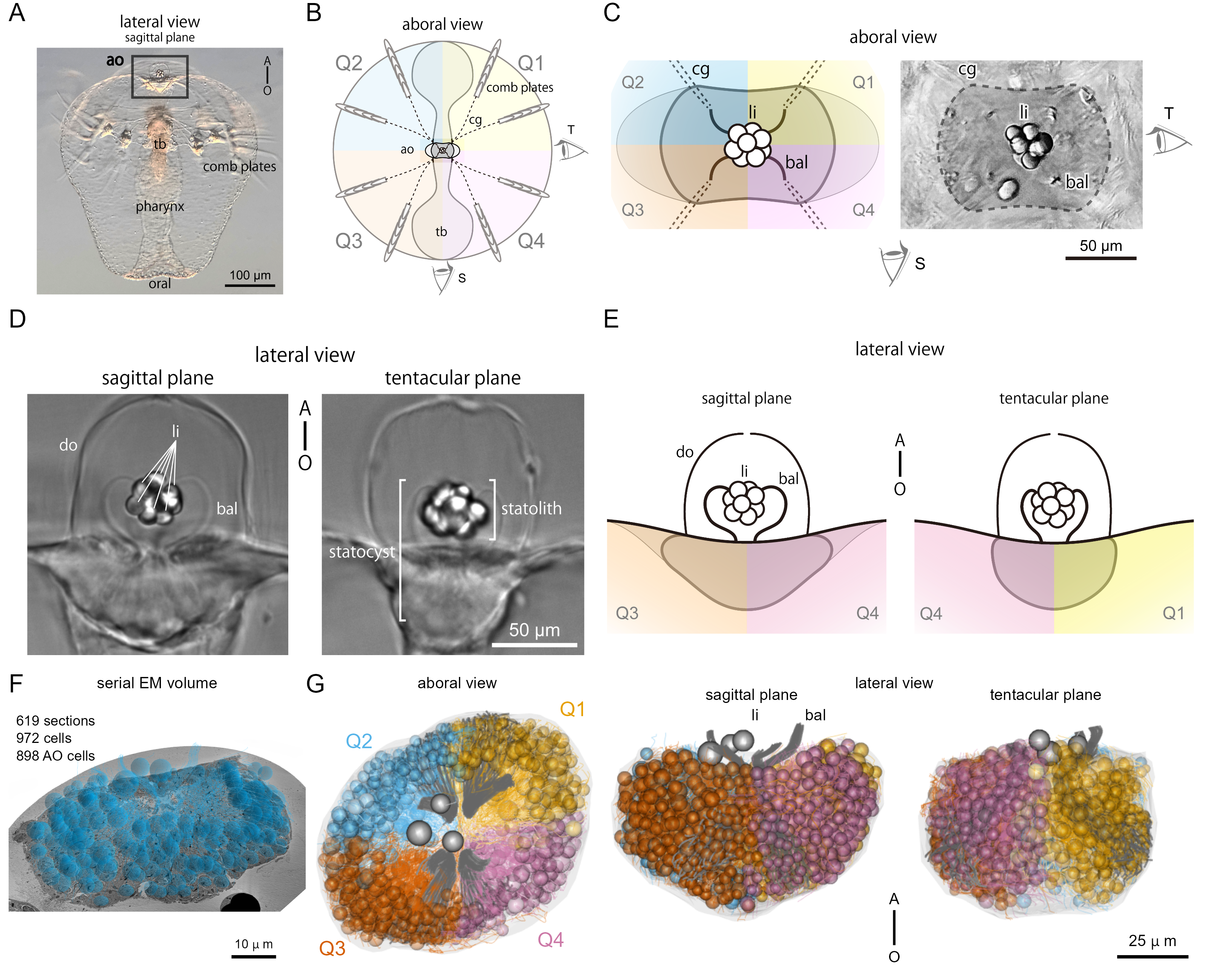
- 1011 cells
- four quadrants
- two symmetry planes
Kei Jokura
There syncytial nerve-net neurons
- one large nerve net (all 4 quadrants)
- two small nerve nets (two by two quadrants in sagittal plane)
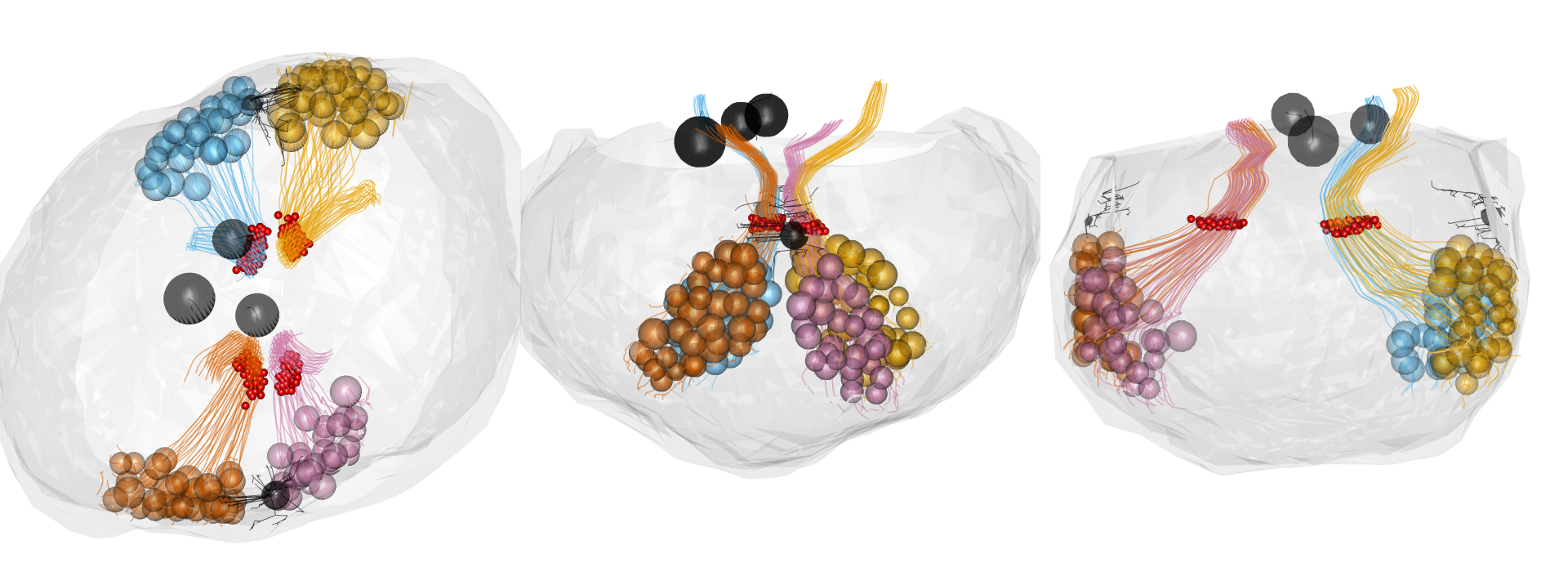
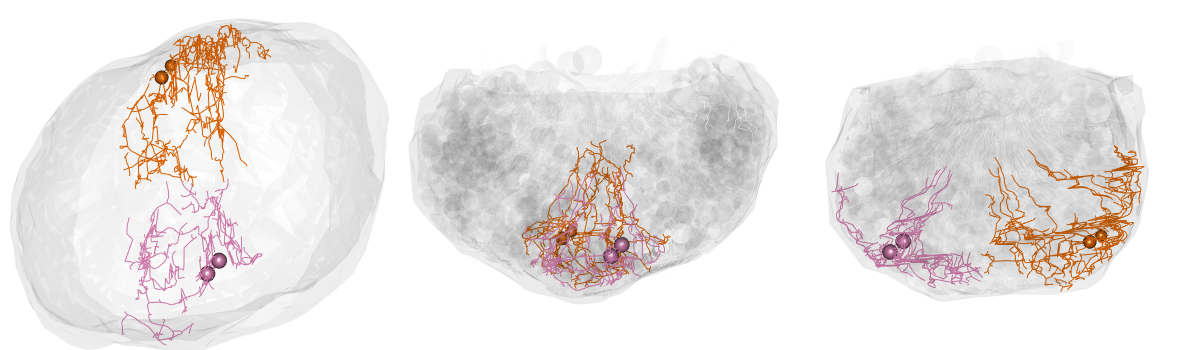
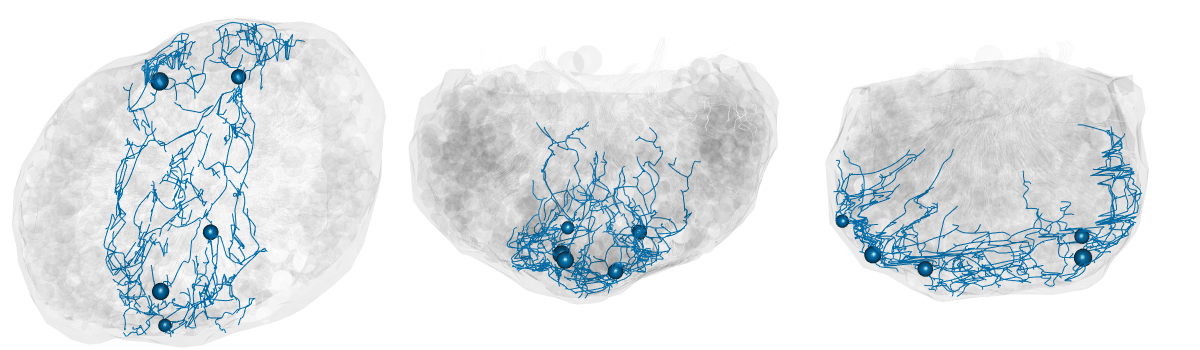
Synaptic connectome of the aboral organ

- synapses from nerve net to balancer cells
- no synapses from balancer or other sensory cells to the nerve net
- not a ‘reflex-like’ organisation
- if not input-output, then what is the function of the nerve net?
Synchronisation of balancer cilia
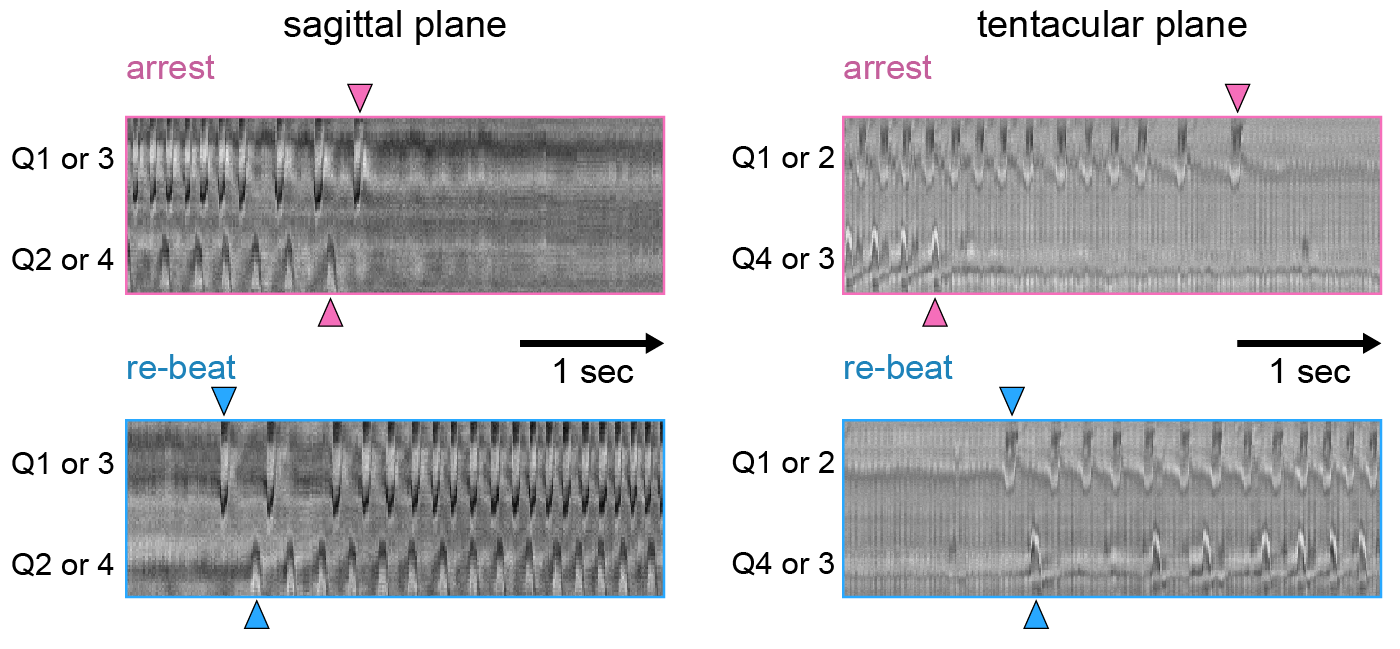
- arrests only synchronised across 2 balancers in the sagittal plane
- re-beats are synchronised across all 4 balancers
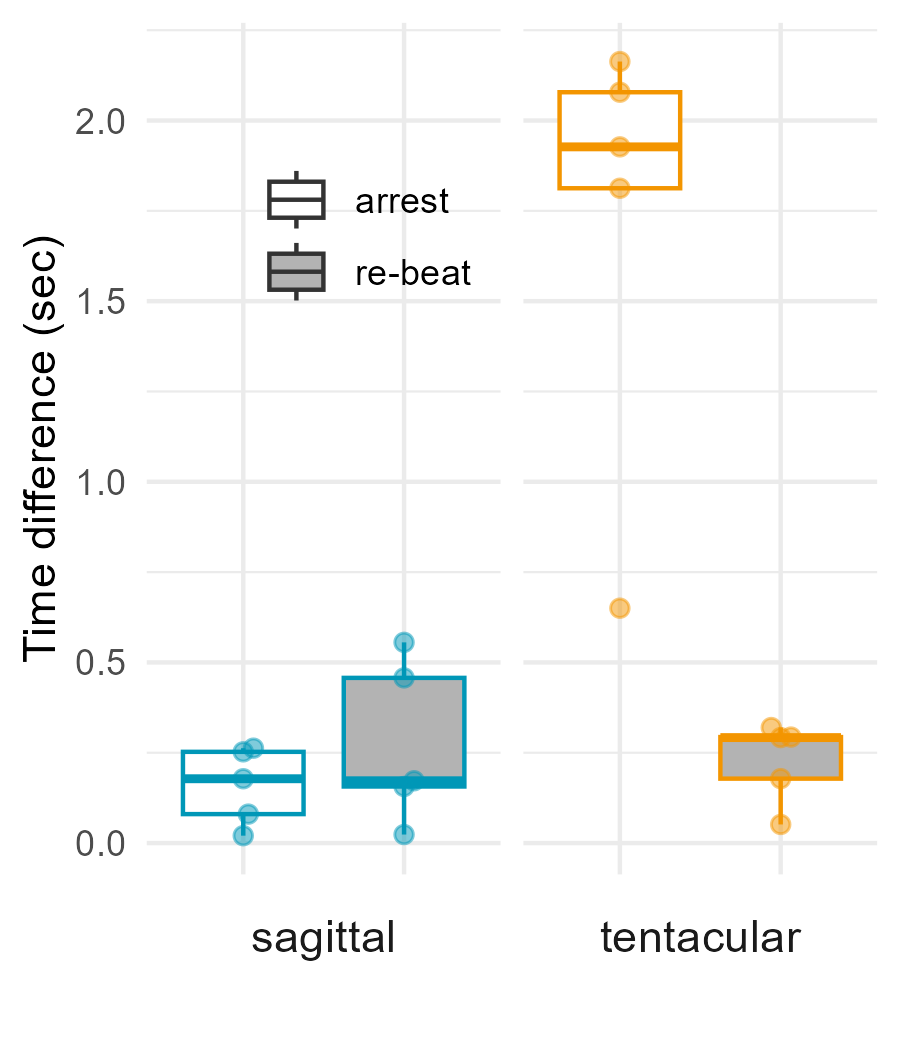
Synchronisation of balancer cilia
- frequency of ciliary beating is synchronised across balancers
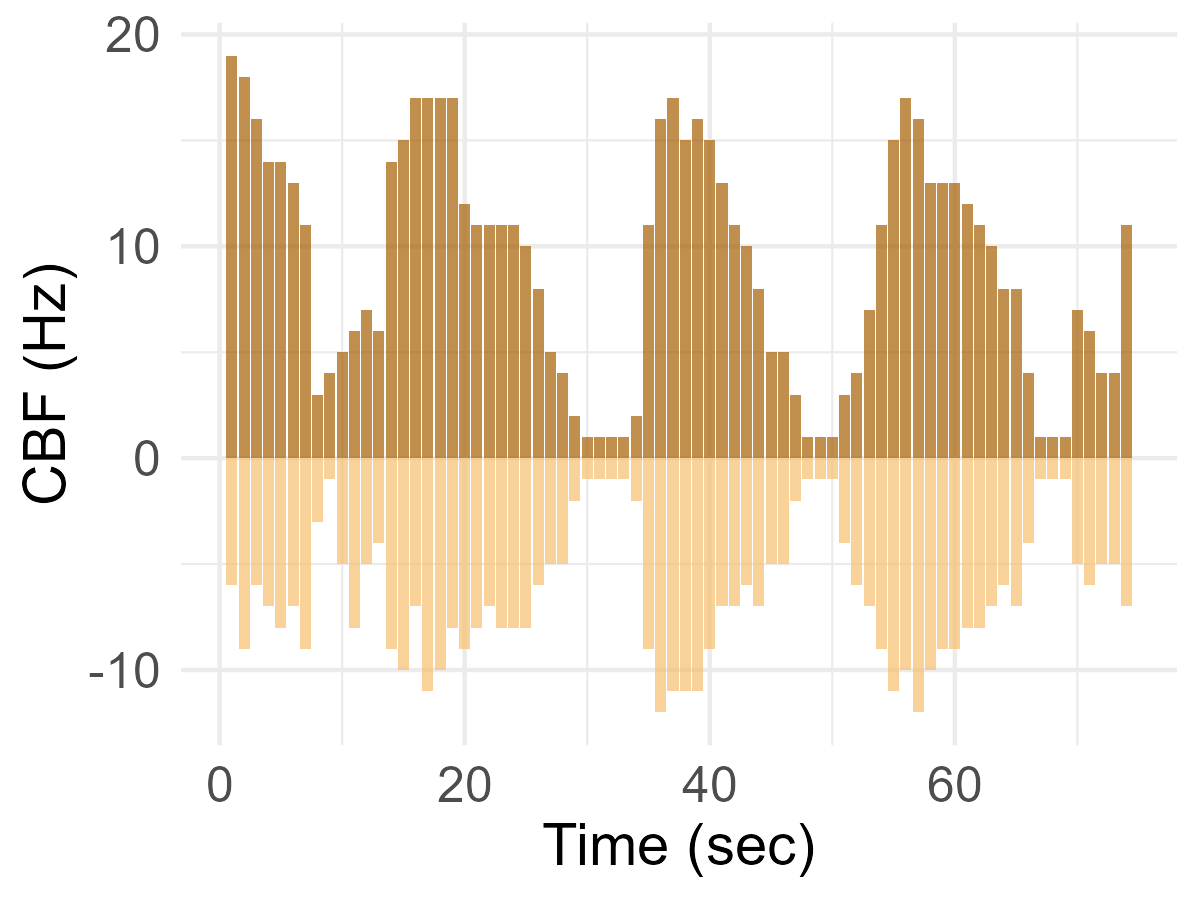
Connectome of the ctenophore balancer
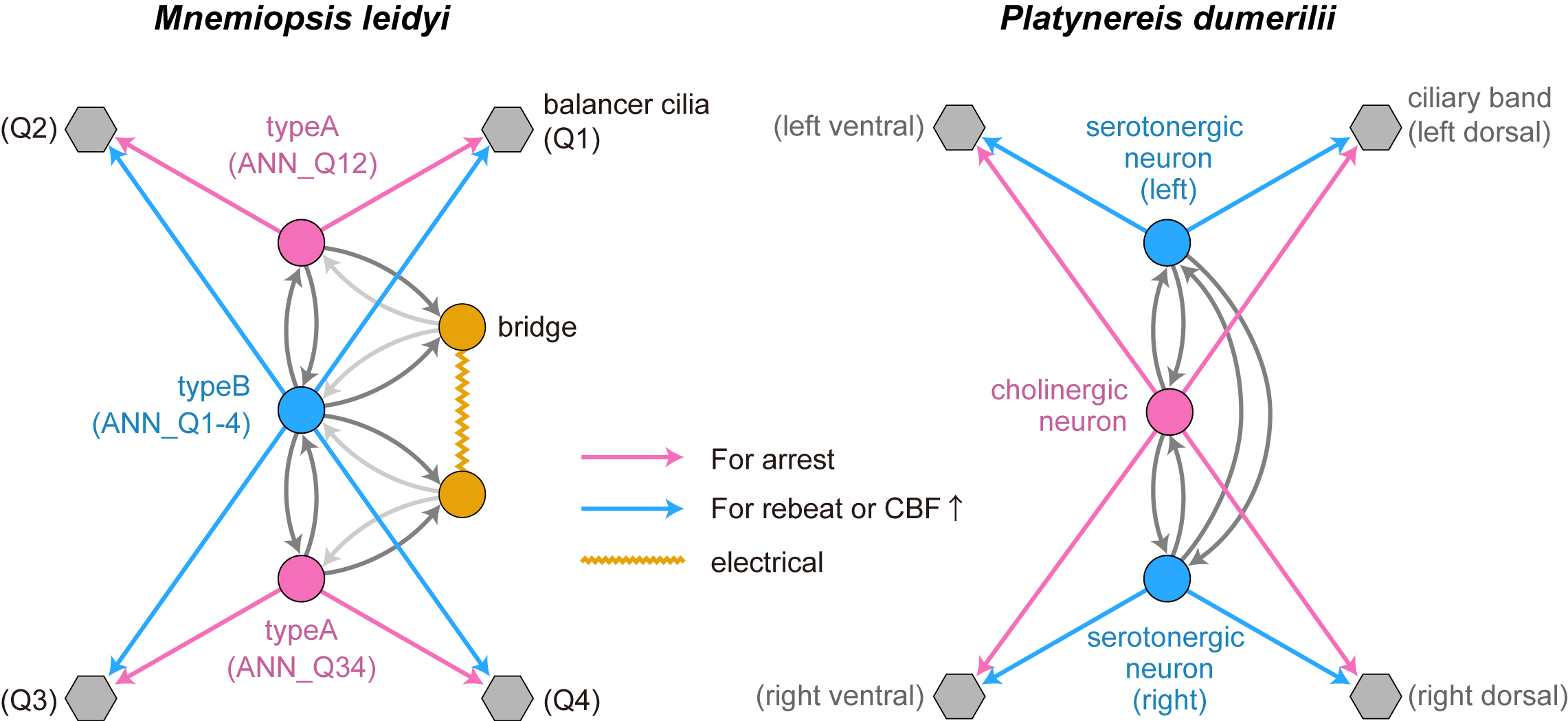
- ongoing ciliary activity
- global neuronal coordination
- synchronisation of arrests
- synchronisation of re-beat
- synchronisation of beat frequency
- sensing and movement intimately linked
Acknowledgements
- Alexandra Kerbl
- Karel Mocaer
- Sanja Jasek
- David Hug
- Jules Duruz
- Mateusz Kostecki
- Benedikt Dürr
- Kata Szabó
- Emily Savage
- Simone Wolters
- Anja Ciprianidis
- Kevin Urbansky

Alumni
- Kei Jokura (NIBB, Okazaki)
- Luis Bezares (LBDV, Villefranche-sur-mer)
- Luis Yanez-Guerra (Uni Sussex)
- Emelie Brodrick (Sussex)
- Csaba Verasztó (EPFL)
Facilities
- Réza Shahidi
- Charlotta Funaya
- Ulrike Engel