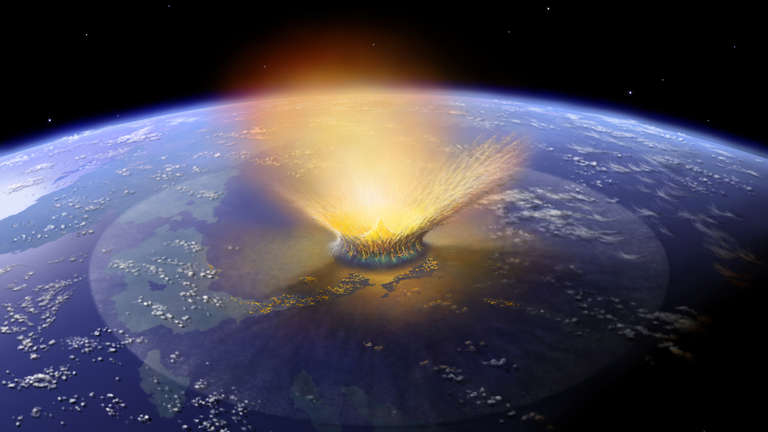
Mass Extinctions and Doomsdays
13 November 2026 Doomsday Conference – On the Sense and Nonsense of End-of-the-World Predictions (12-13 Nov 2026)
Centre for Organismal Studies, Heidelberg University
@jekely@biologists.social

The Blue Anchor Fault – Somerset coast, England
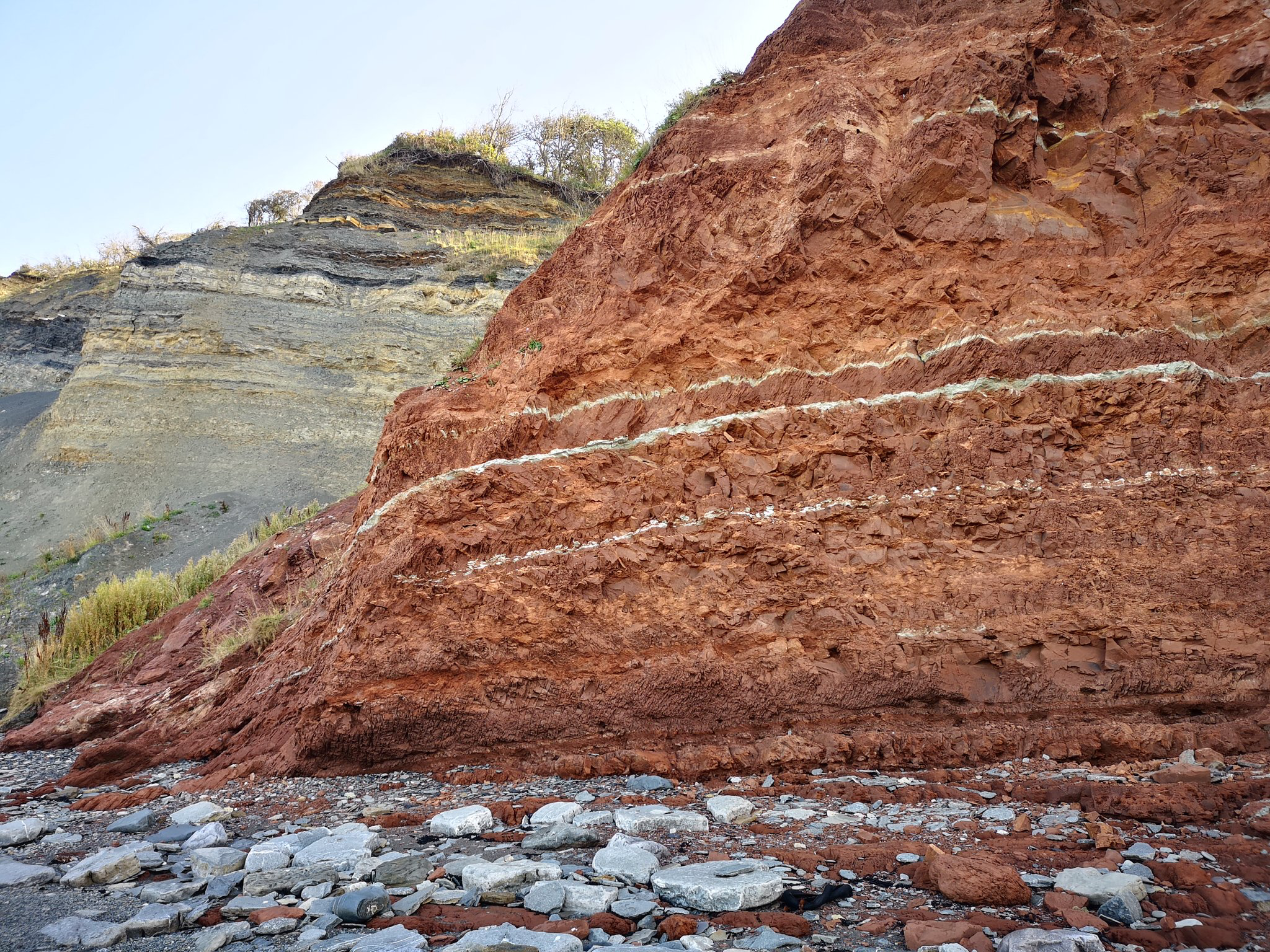
- Triassic Merica mudstone (red) and Jurassic interbedded marls and muds
The geological time scale
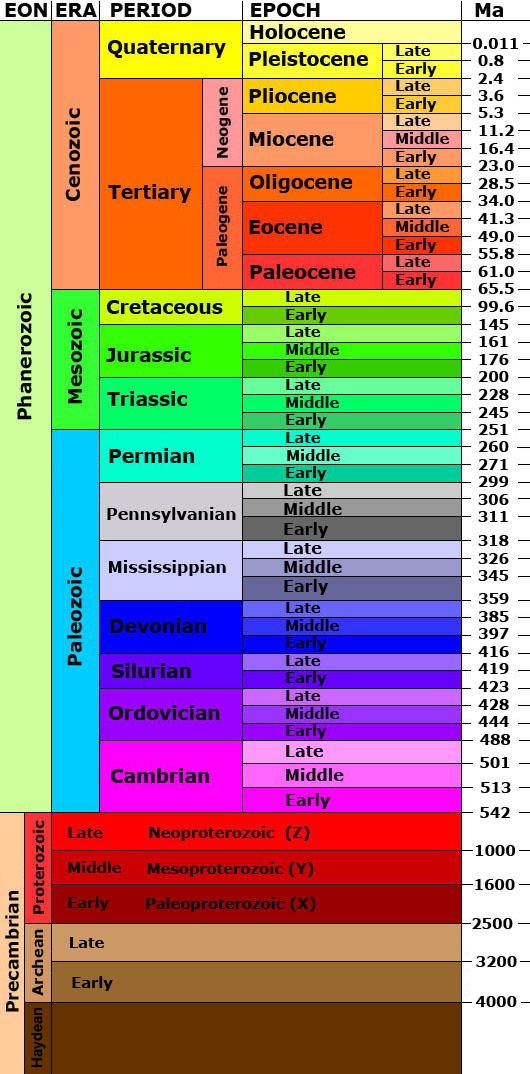
The five major Mass extinctions
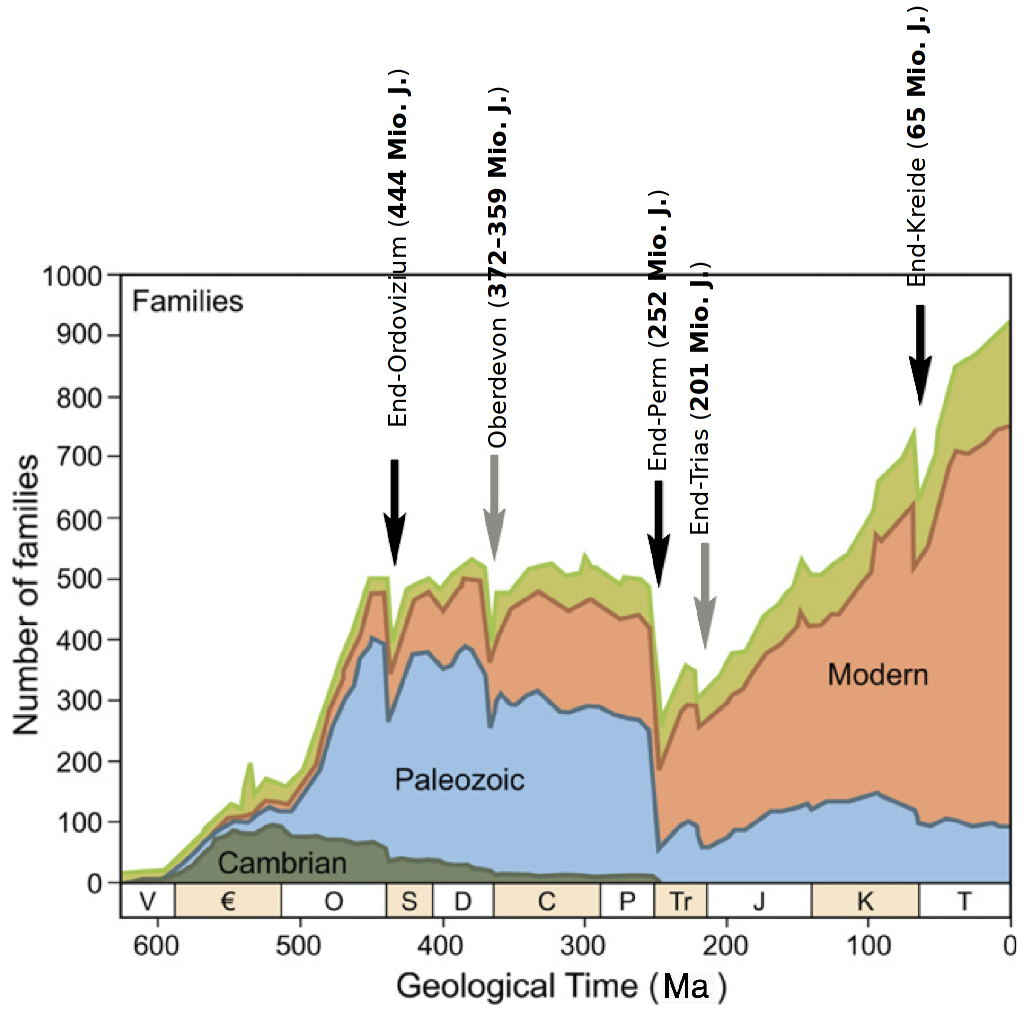
Family-level extinctions
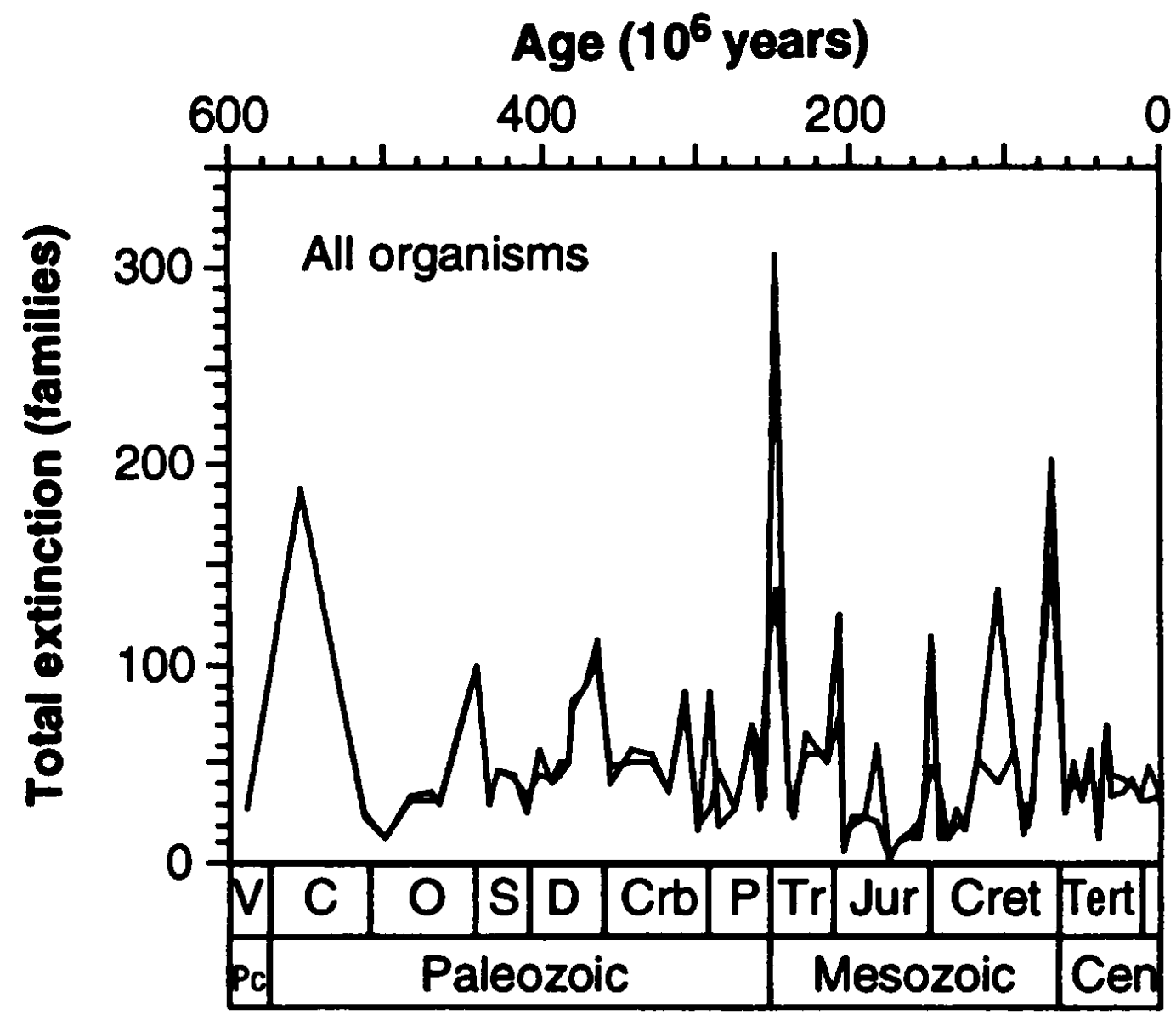
Extinction events and continental flood basalts
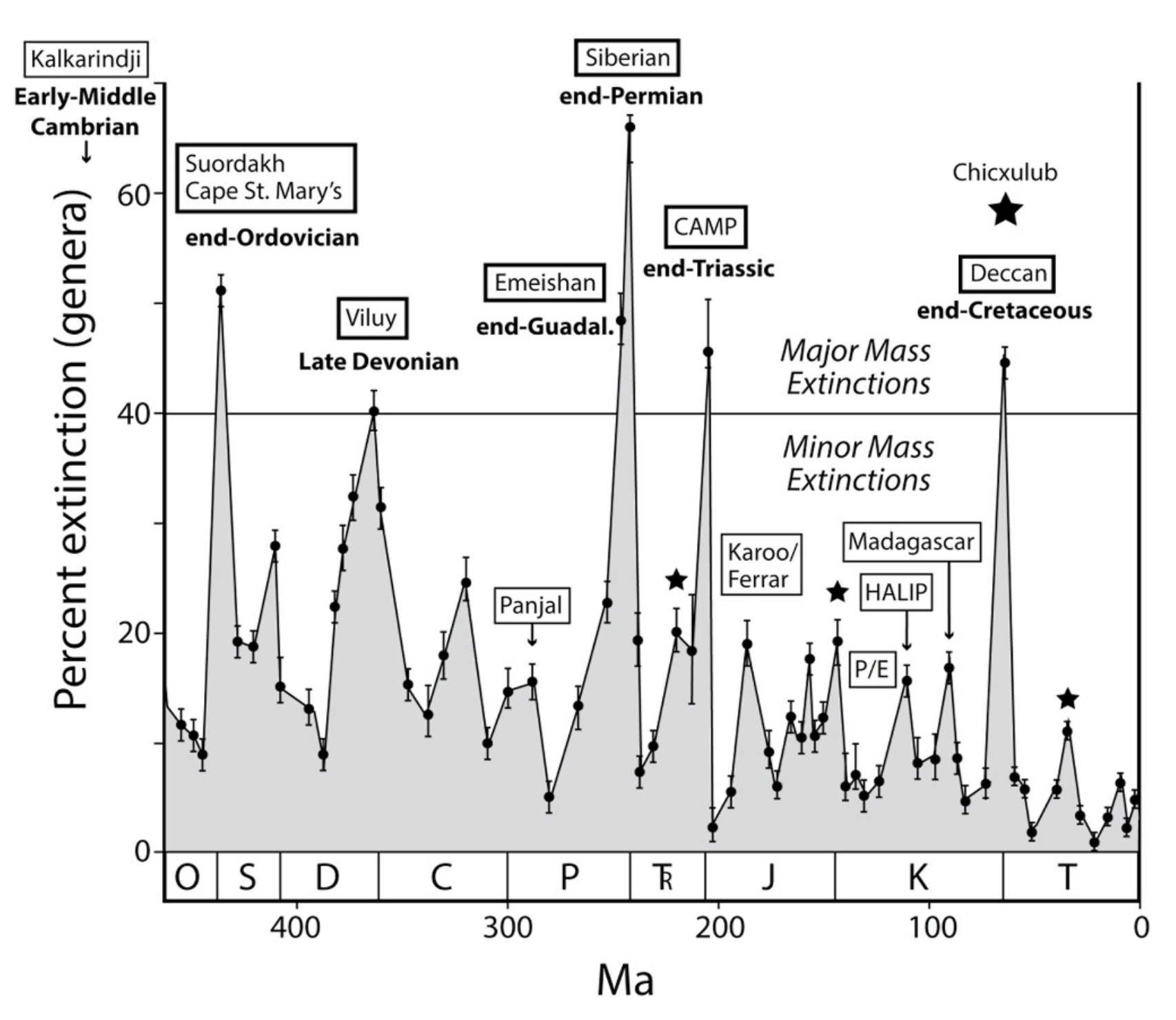
- % extinction of marine genera over the past 460 Ma
- all “major” and several “minor” mass extinctions coincide with continental flood basalts (CFBs)
- four largest impact craters are shown by stars
Extinction events and crater formation
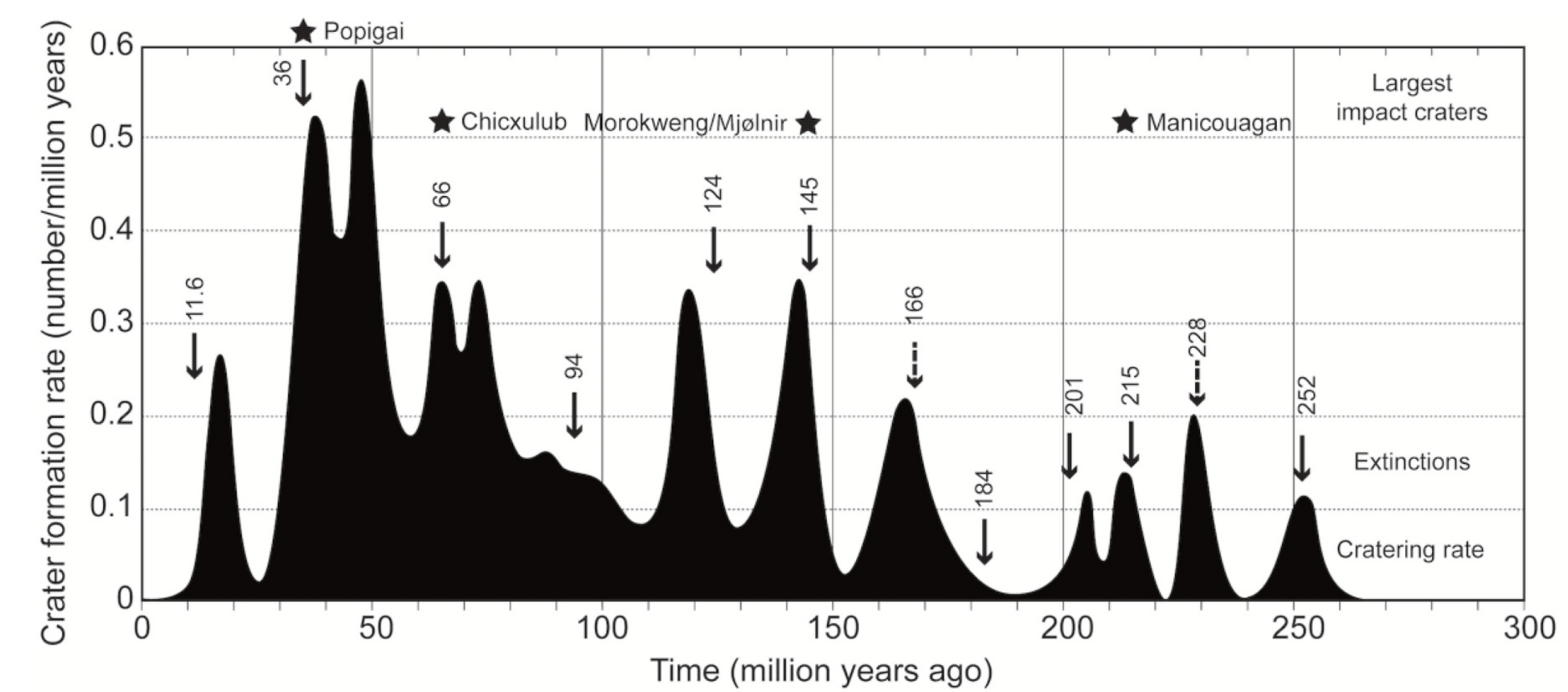
- Impact crater-formation rate (number of craters per million years) compared with times of 12 marine-mass-extinction episodes (arrows)
- spectral analysis of the ages of 37 craters yielded a statistically significant 25.8 ± 0.6 My cycle
Galactic vertical oscillation cycles
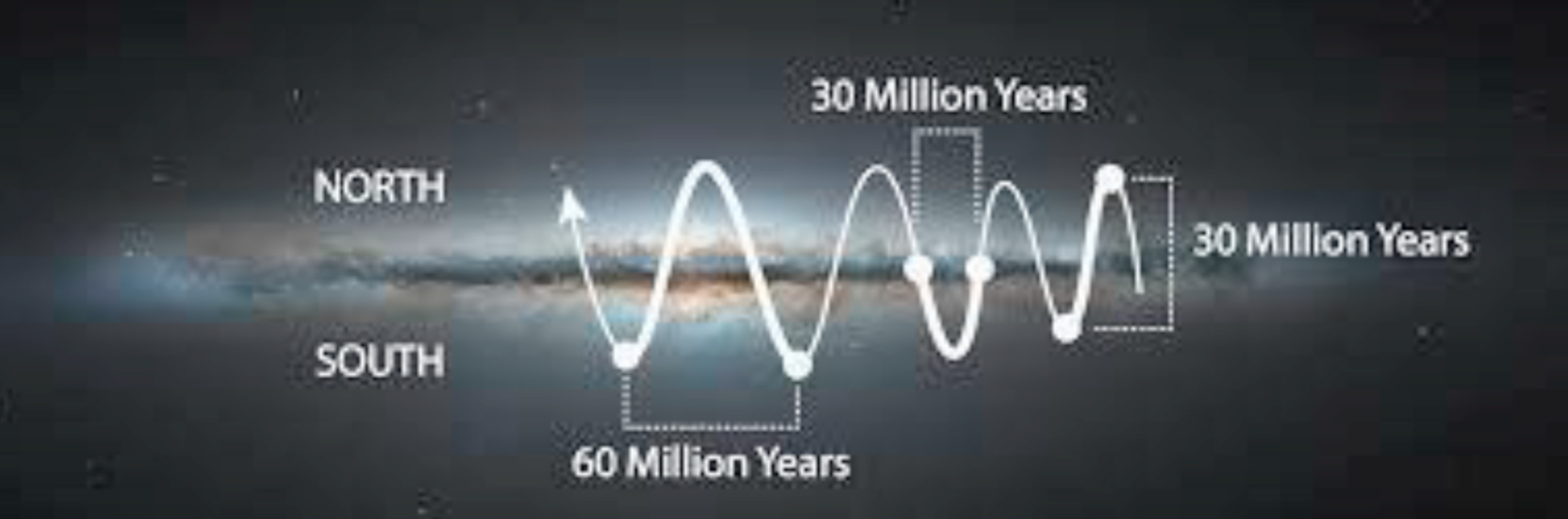
- the Solar System migrates through the mid-plane of the Milky Way
- half-period estimated at about 32 ± 3 million years
- stars, gas and dust clouds, and potentially a thin disk of dark matter concentrated in the mid-plane
- periodic gravitational perturbations of the Oort Cloud comets
- more controversial mechanism: dark matter interacts and heats up the Earth’s core
- (last crossing: 2 Ma)
End-Permian Mass Extinction (252 Ma)
(Part I – How to die)
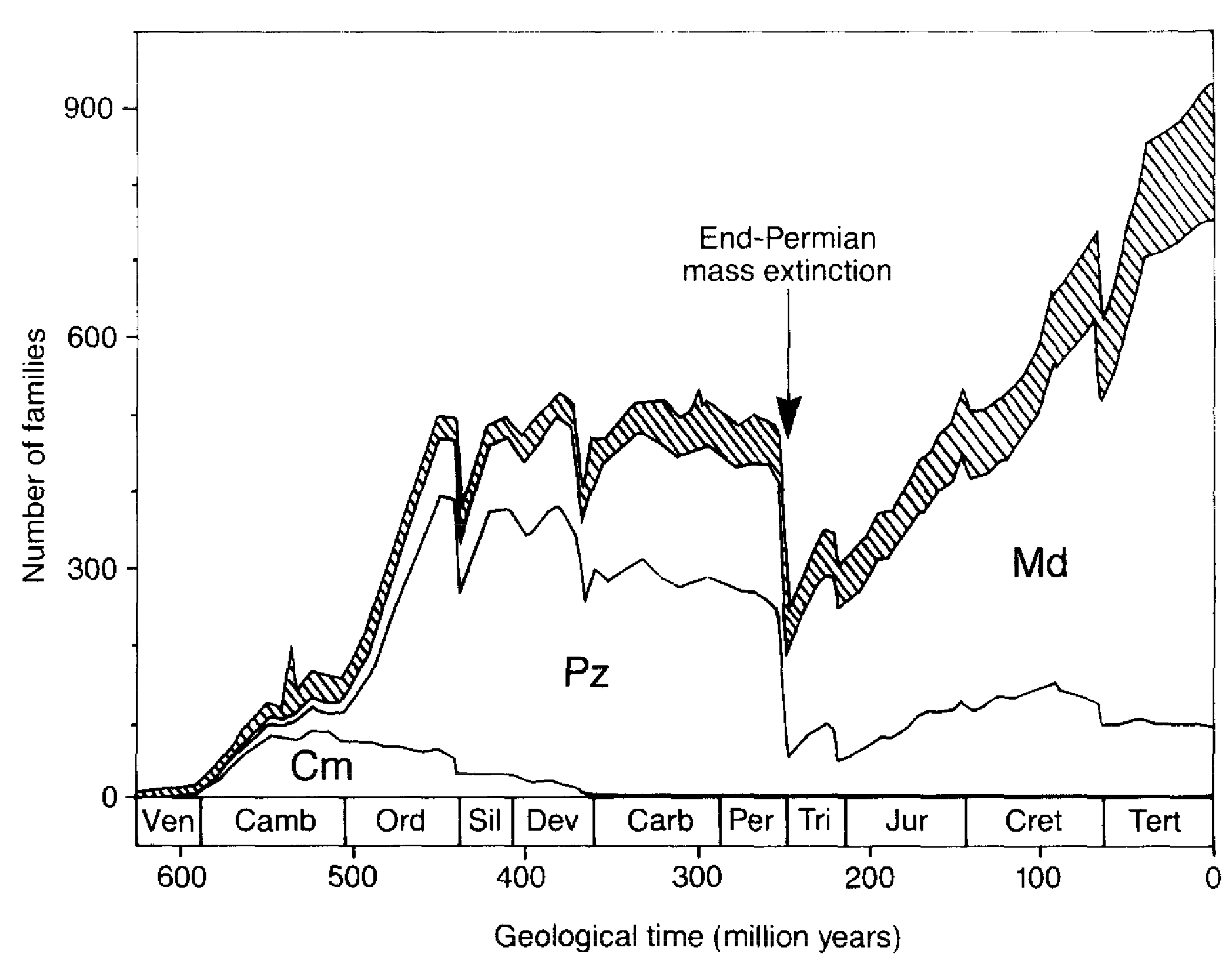
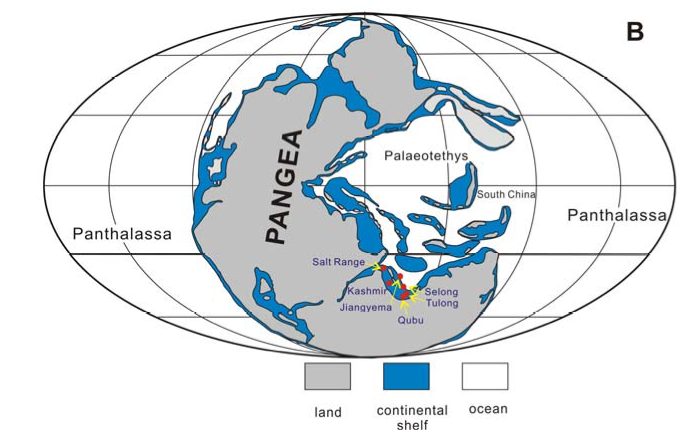
- about 95% of species disappeared
- 252 Million years ago
End-Permian Mass Extinction (252 Mia.)
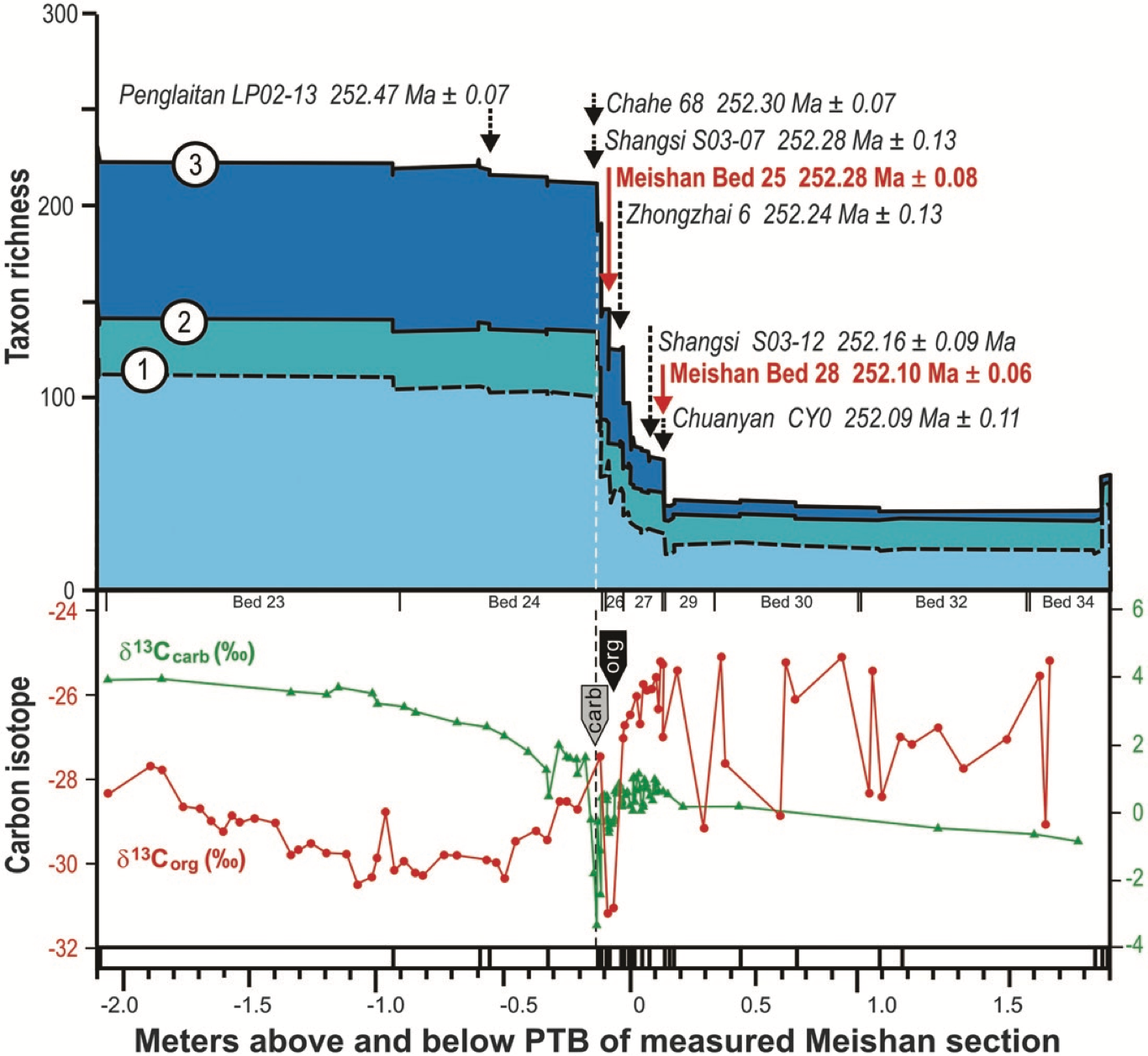
- caused by massive vulcanic eruptions in Siberia
- massive CO2 and methane increase
- ca. 6 °C global warming
- very fast extinction, less than 200,000 years, synchronous in marine and terrestrial realms
- precisely dated with the uranium-lead dating method
End-Permian Mass Extinction (252 Mia.)
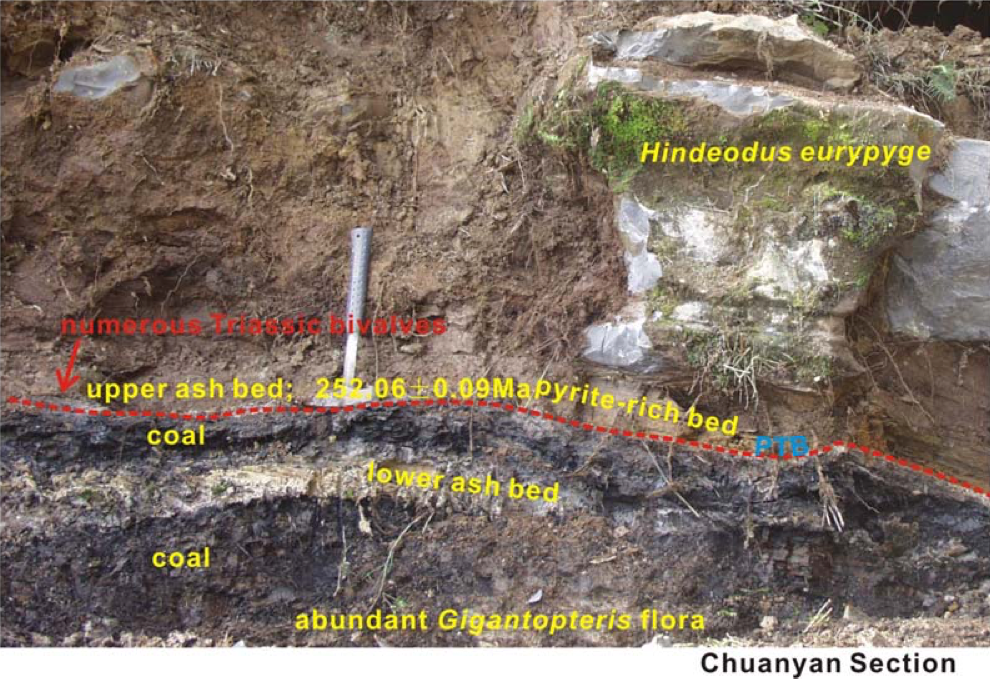
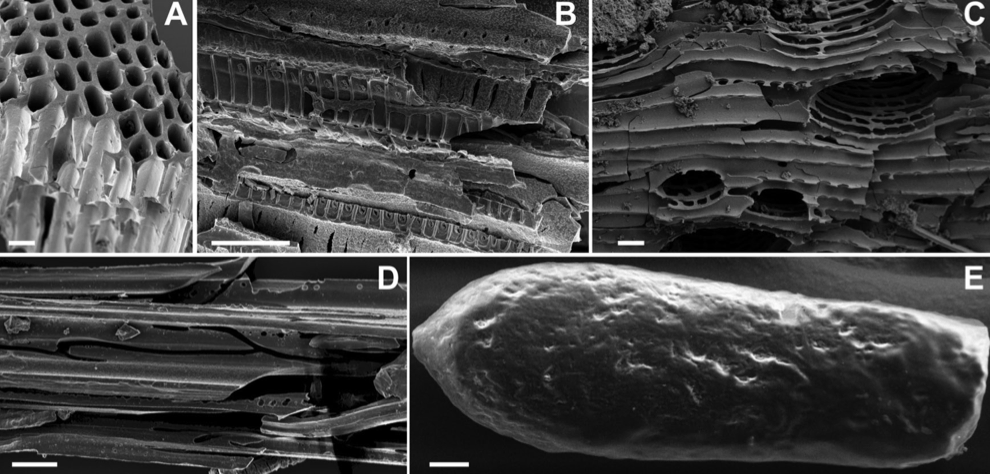
- charcoal-rich and soot-bearing layers indicate widespread wildfires on land
- globally anoxic oceans
- Anoxic waters -> sulfate-reducing bacteria -> release of H2S -> H2S poisoning
- ‘runaway greenhouse’ effect
- catastrophic soil erosion, rapid deforestation, fungal virulence
The Paleocene–Eocene Thermal Maximum (PETM)
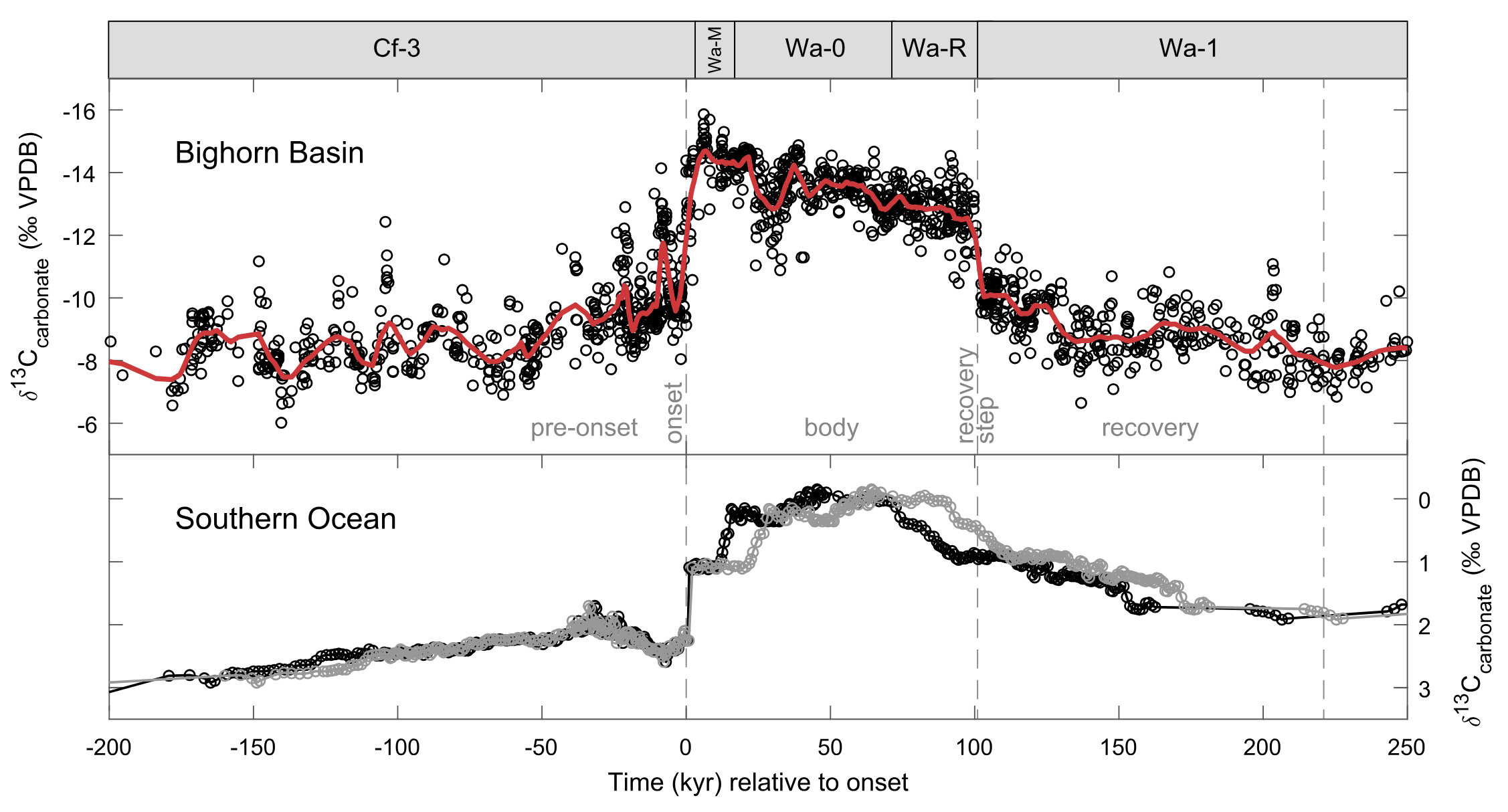
- ~56 million years ago
- massive addition of isotopically-depleted carbon to the ocean and atmosphere -> carbon isotope excursion
- ∼2000 × gigatons of carbon in the form of methane
- (human emissions: 40 × gigatons / year; cumulative: 1500 × gigatons)
- extreme global greenhouse warming event
- short duration of ~100 kyr
Ocean acidification during the PETM
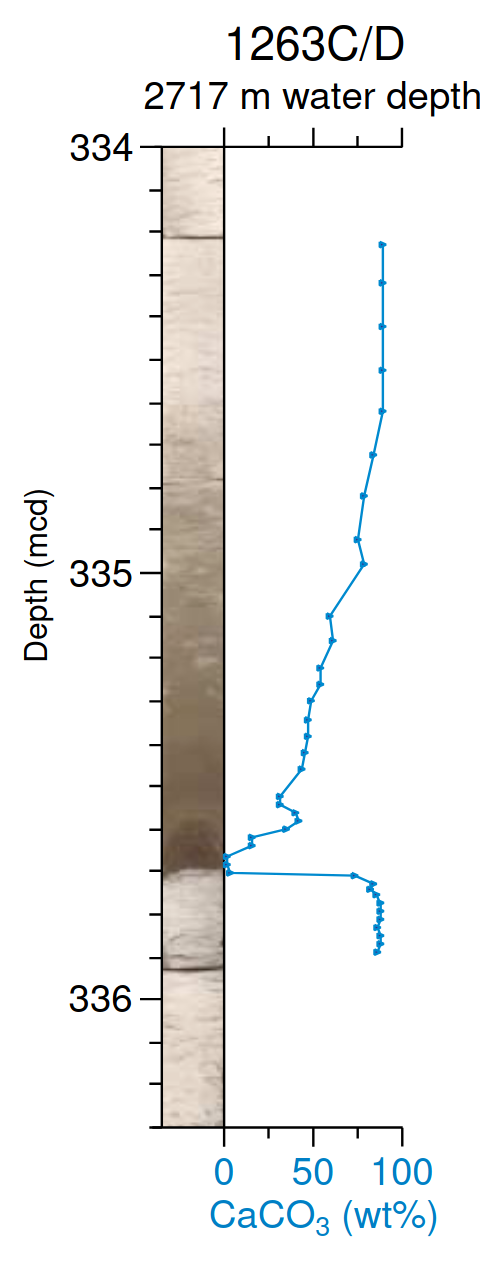
- a core photo and weight % CaCO3 content plotted versus depth across the Paleocene–Eocene boundary
Ocean acidification during the PETM
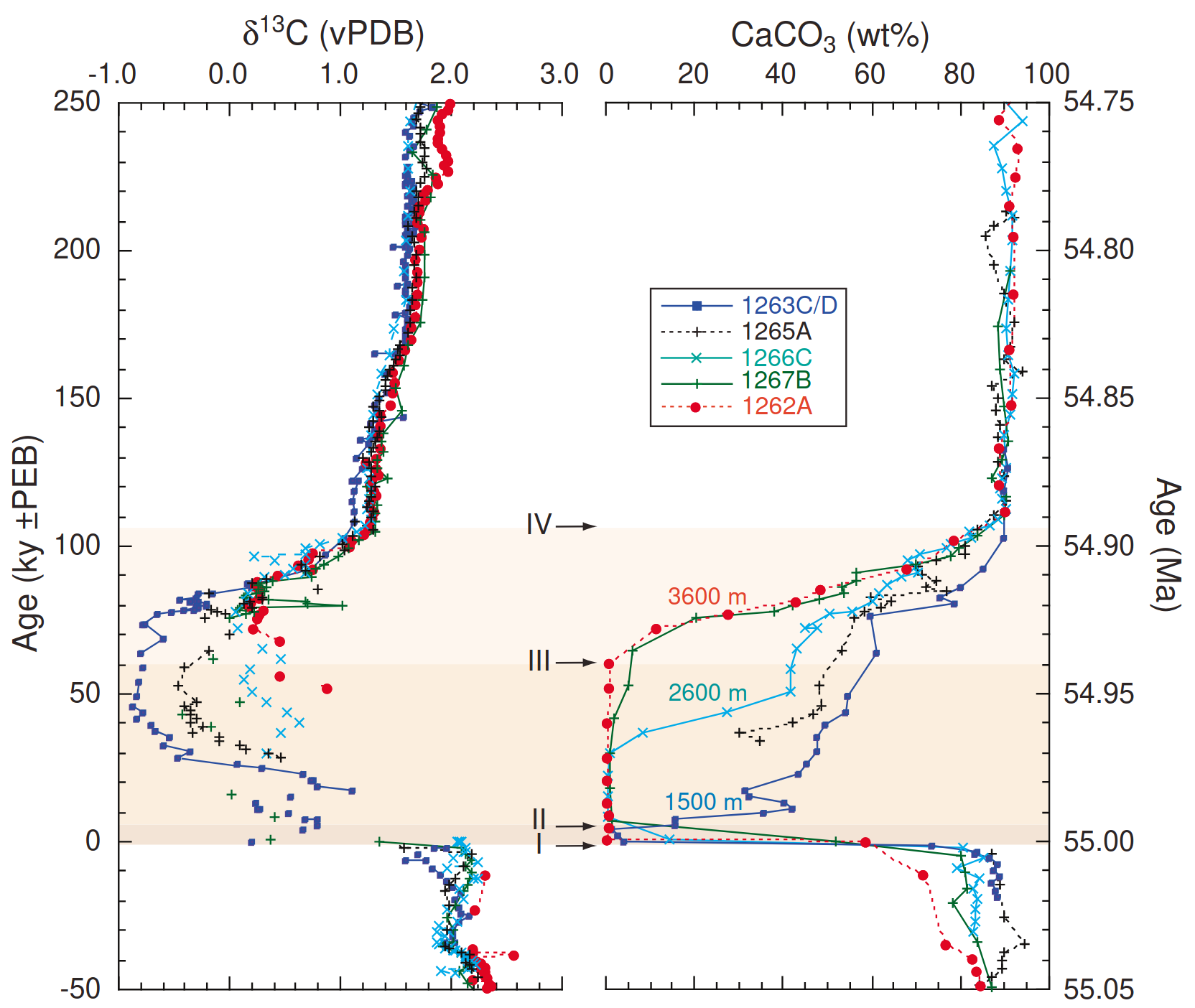
- Bulk sediment δ13C and weight % carbonate content in south Atlantic sediments
- rapid drop in carbonate content to <1%
- massive sea-floor carbonate dissolution
Collapse of a freshwater ecosystem during the PETM
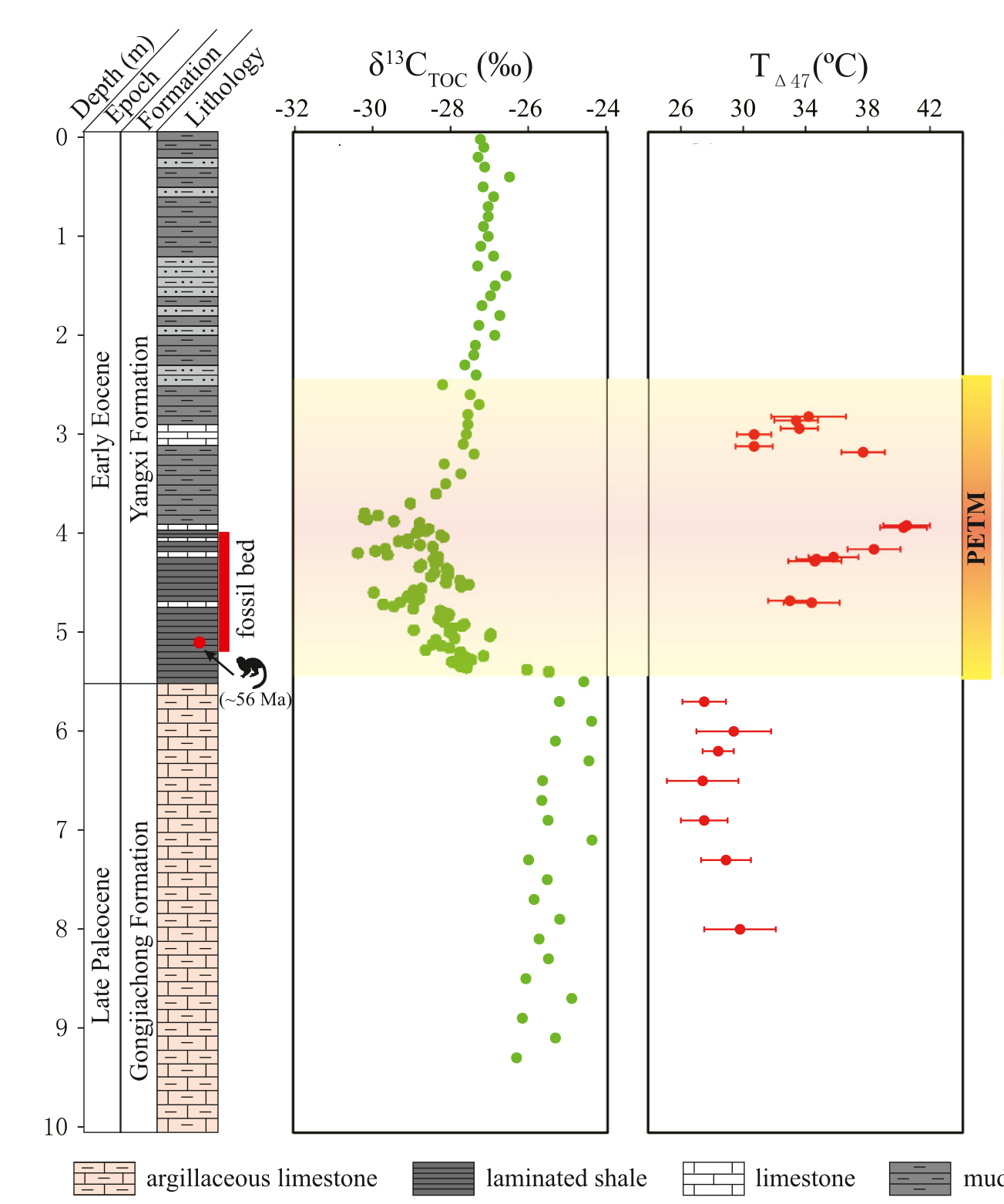
- lacustrine PETM section from the Jianghan Basin, eastern China
- negative carbon isotope excursion in organic matter
- a rapid warming by ~11 ℃
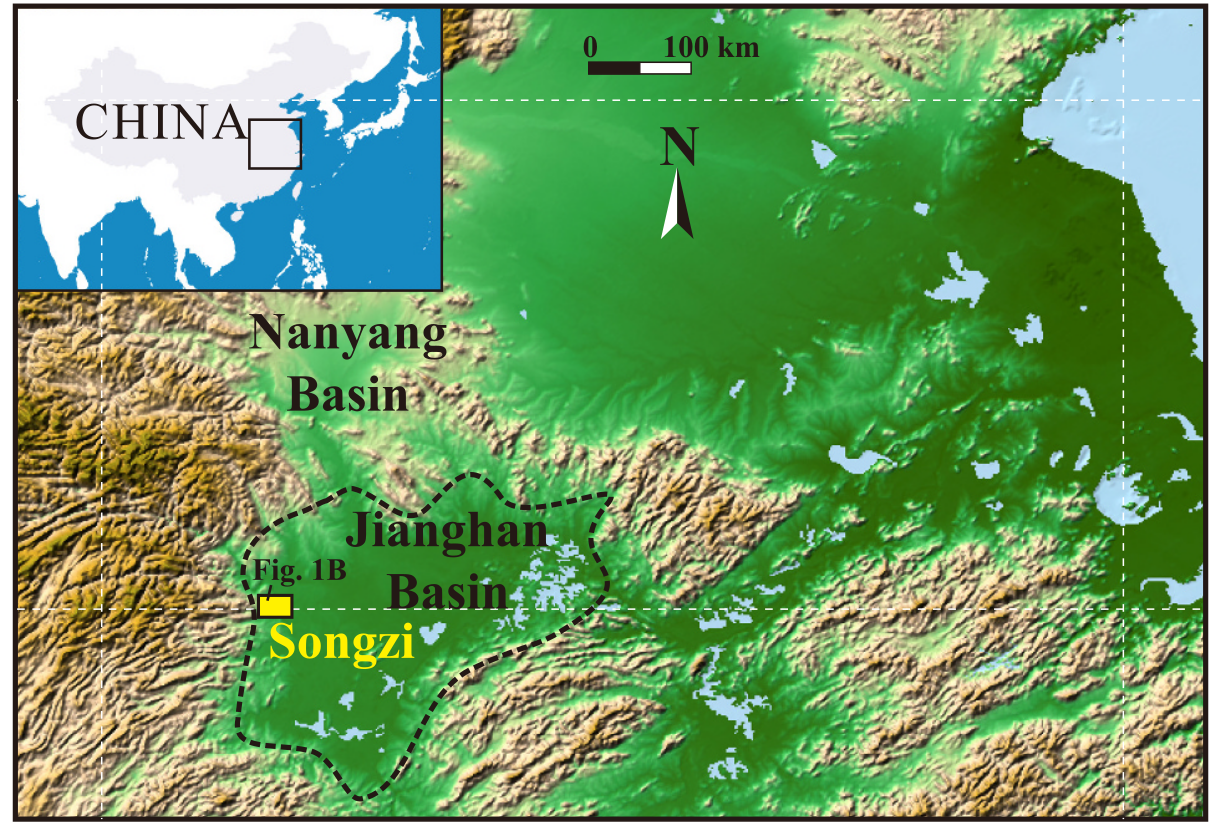
Collapse of a freshwater ecosystem during the PETM
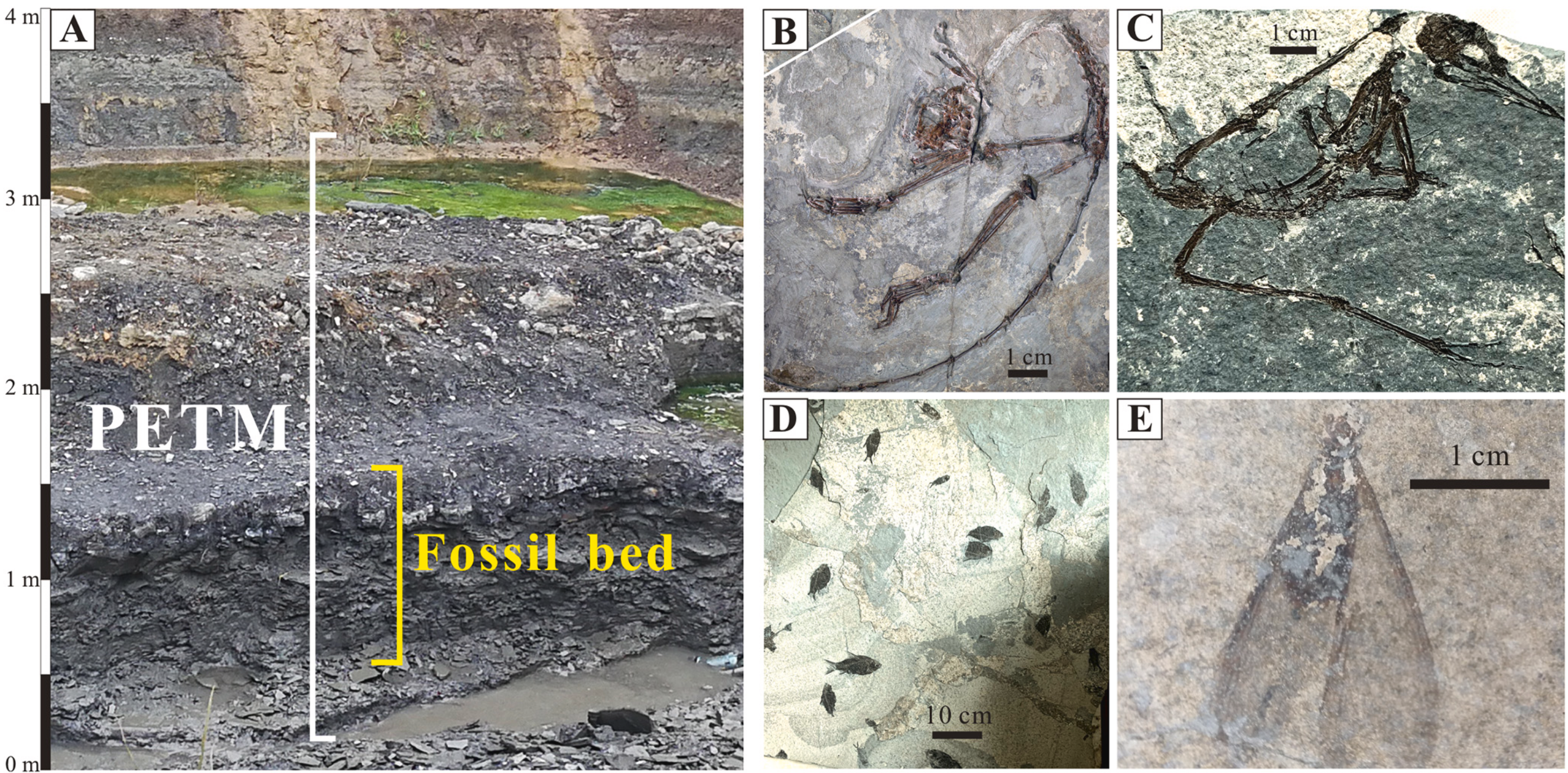
- mass mortalities of terrestrial and aquatic animals
- large numbers of fish preserved in a flattened condition on a single bedding plane
- simultaneous die-off
- hyperthermal-induced toxigenic cyanobacterial blooms as most probable cause
Cyanobacterial blooms
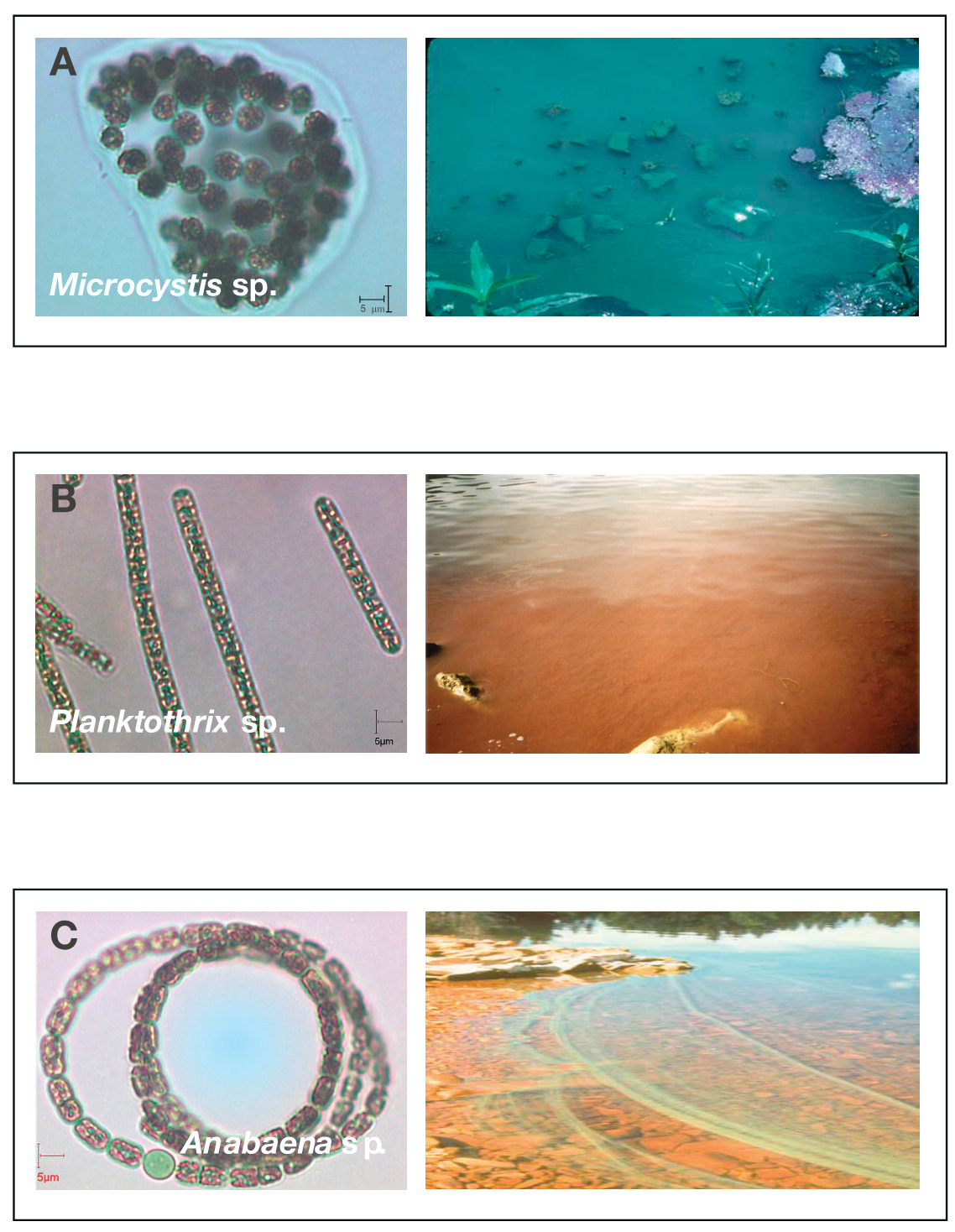
- colonial and filamentous toxigenic cyanobacteria (left panels) and their corresponding blooms
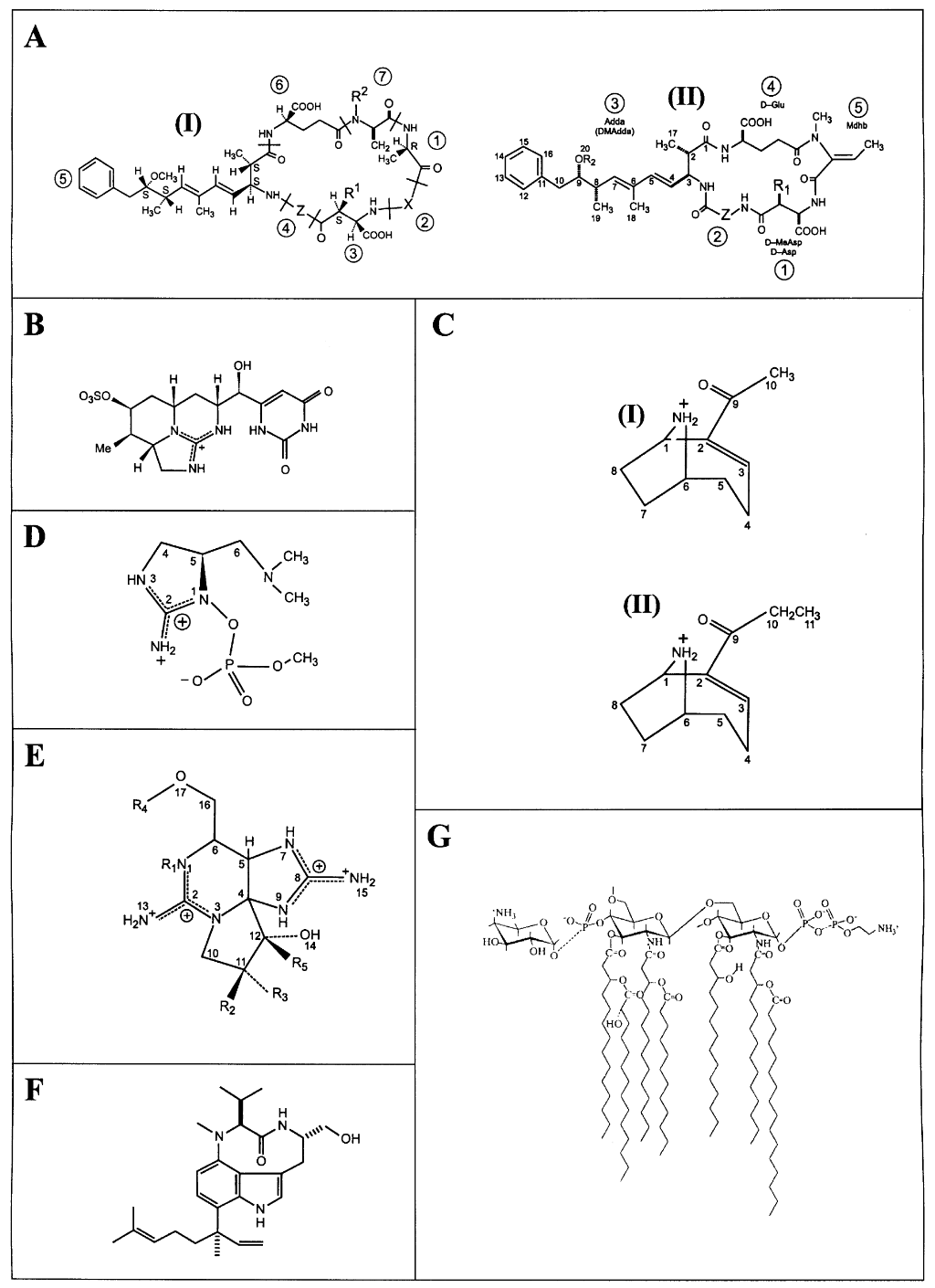
- chemical structures of cyanobacterial toxins (hepatotoxins, dermatotoxins, neurotoxins)
Mass extinctions – sometimes it is game over
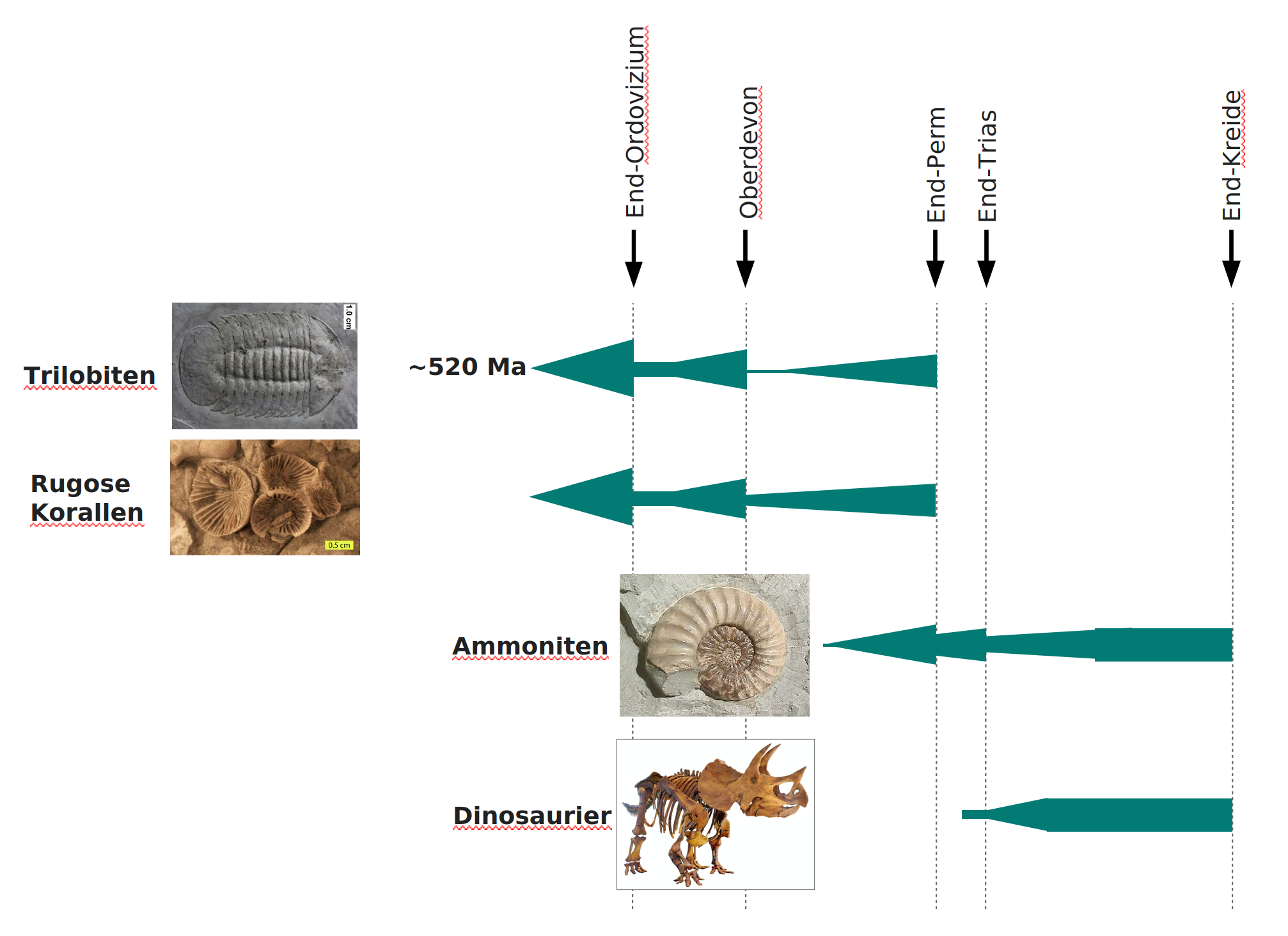
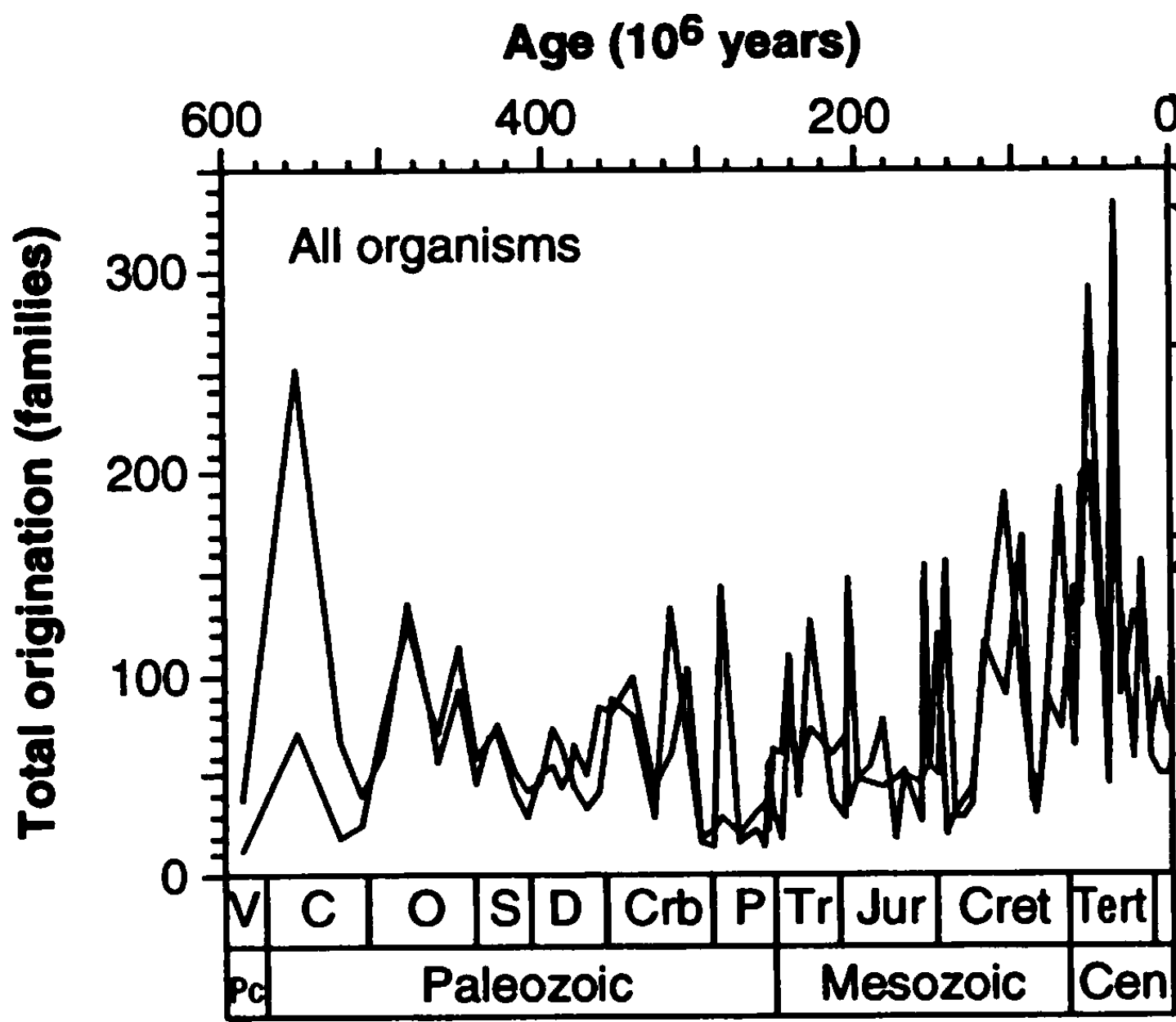
Family-level originations
(Part II – how to survive and recover)
Transient dwarfism of soil fauna during the PETM
The Lilliput Effect
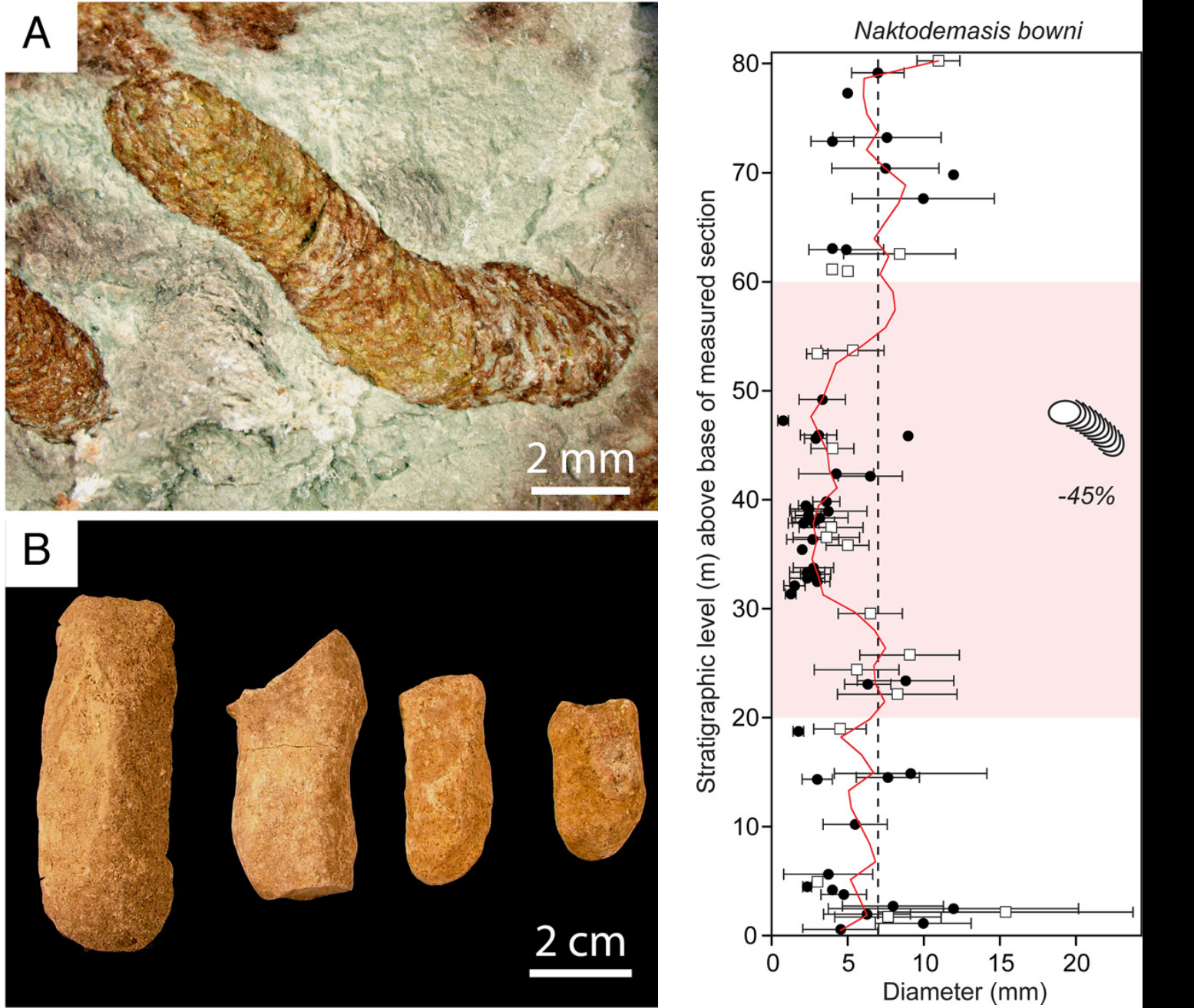
- burrow diameters are 30-46% smaller within the PETM interval
- smaller soil fauna co-occur with dwarf mammal taxa
- Lilliput effect also observed in other mass extinction events
Dwarfism in horses during the PETM
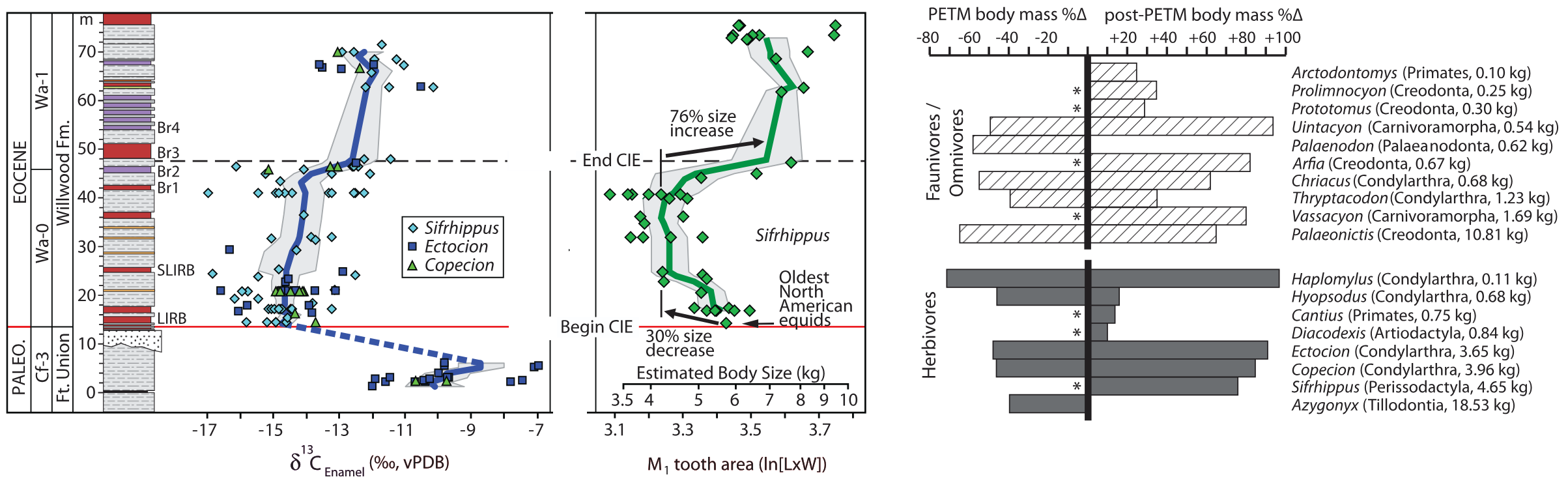
- strong dwarfind in mammals related to warming during the PETM
- first lower molar area reduced by 30%
- followed by a ~76% increase in body size during the recovery phase
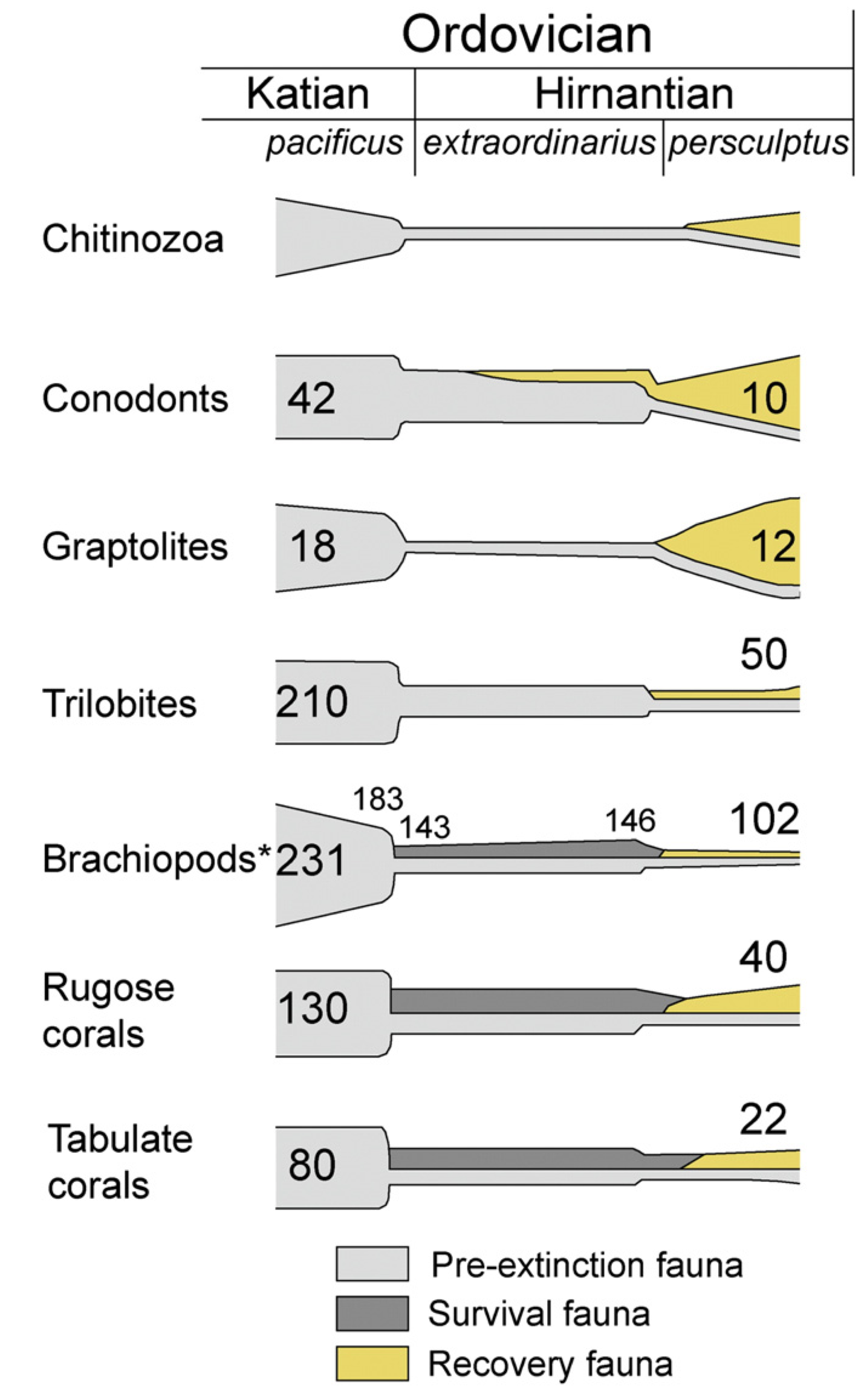
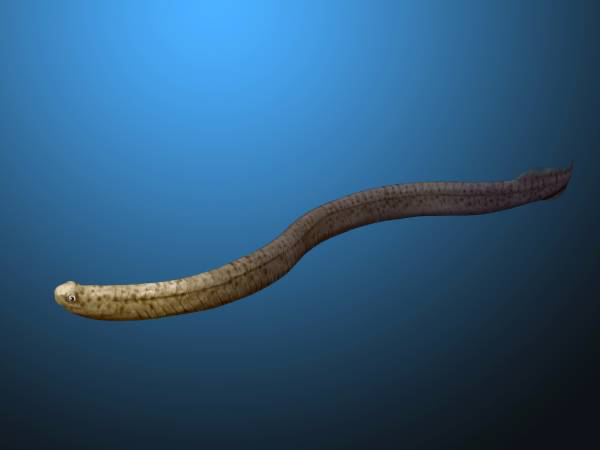
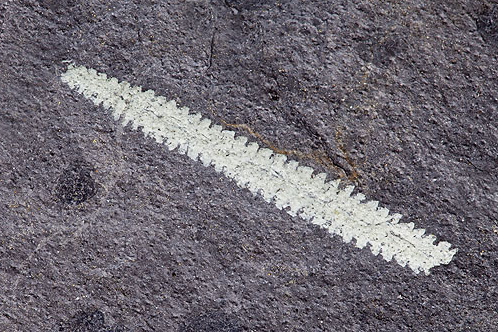
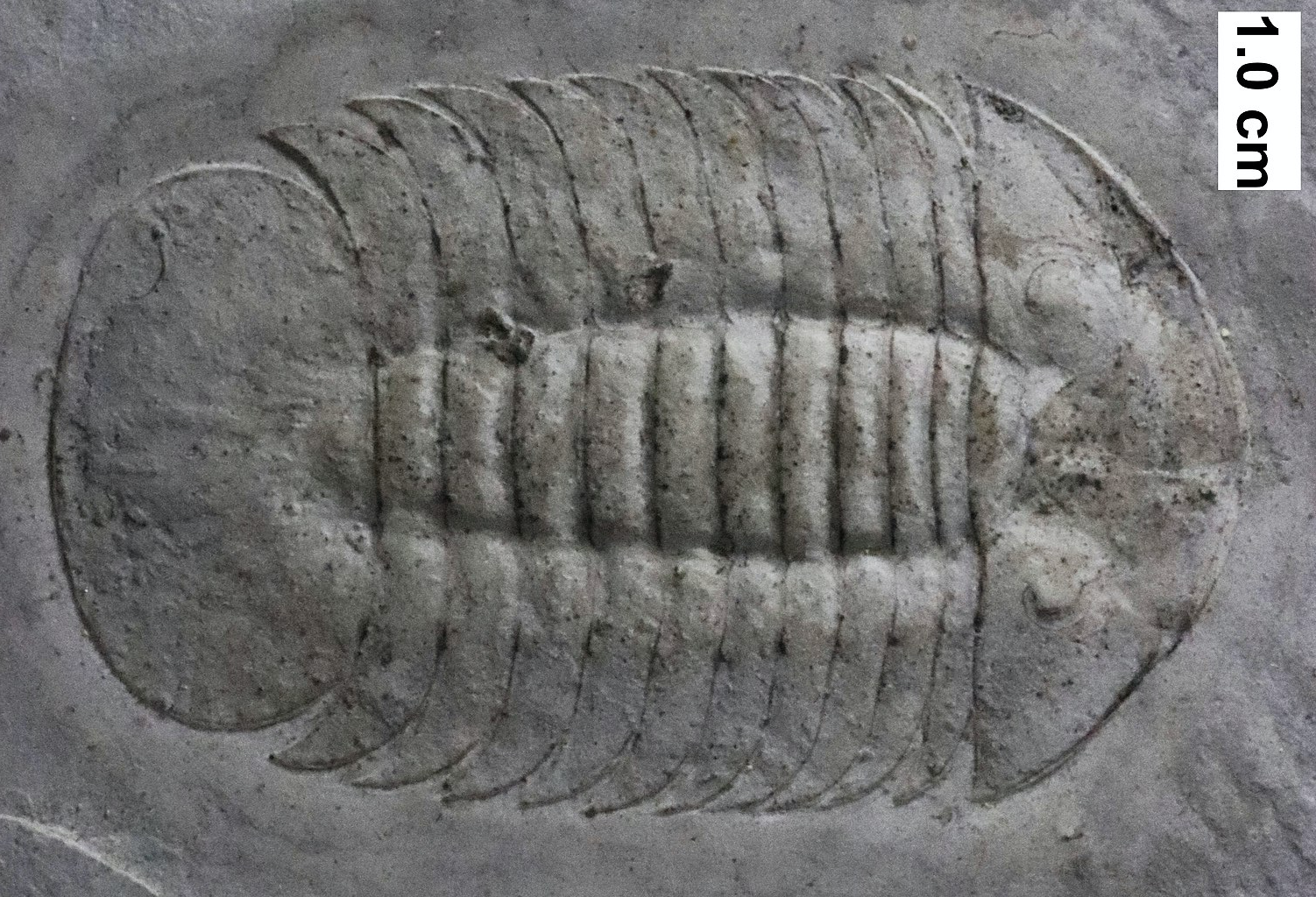
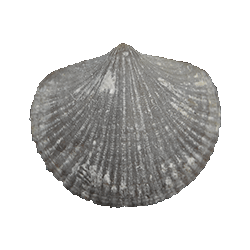
End-Ordivician extinction and recovery (444 Ma)
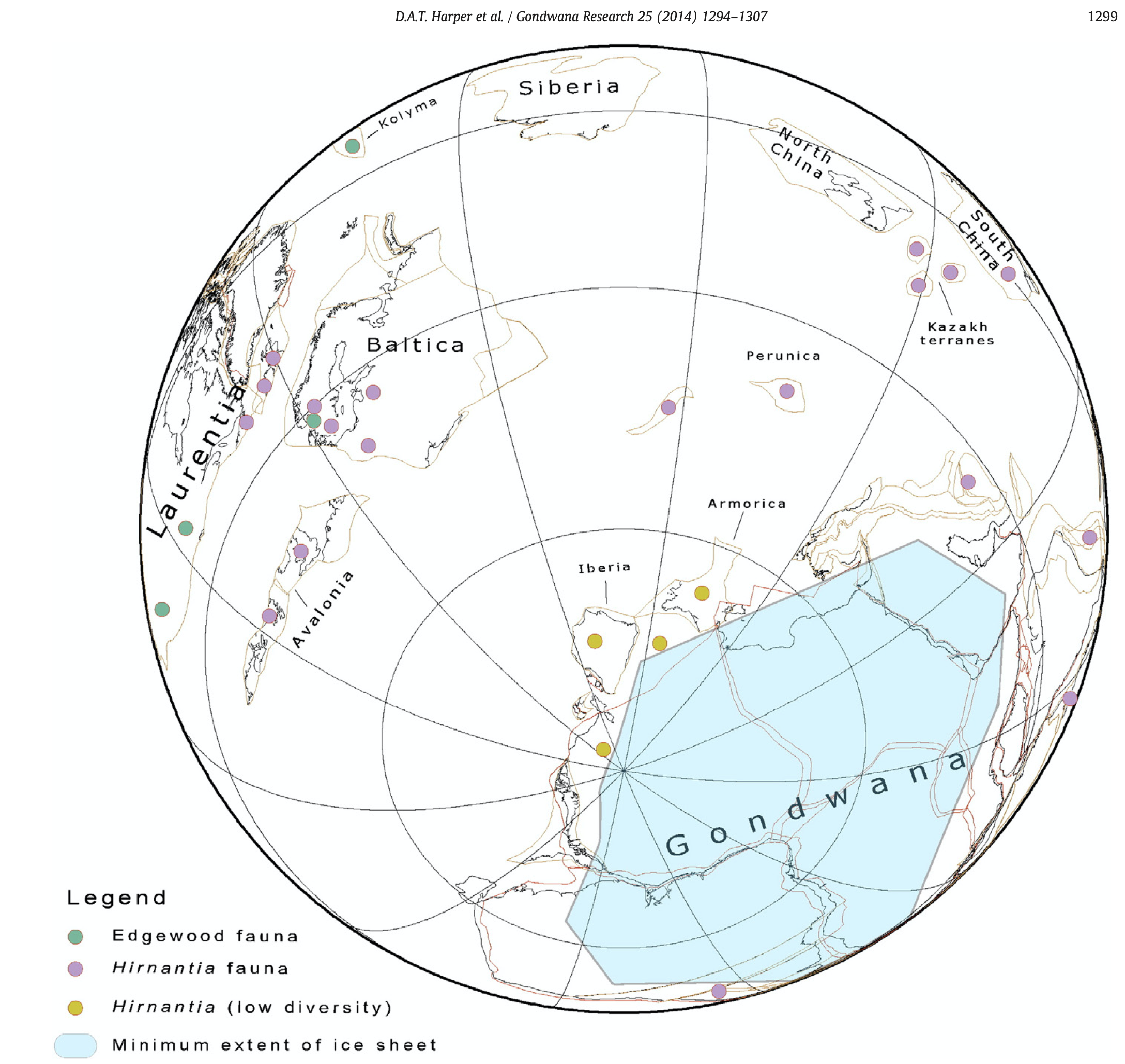
- Gigantic ice sheet on Gondwana
- Sea level 100 m lower
- Anoxic oceans
End-Cretaceous Mass Extinction (66 Mia.)
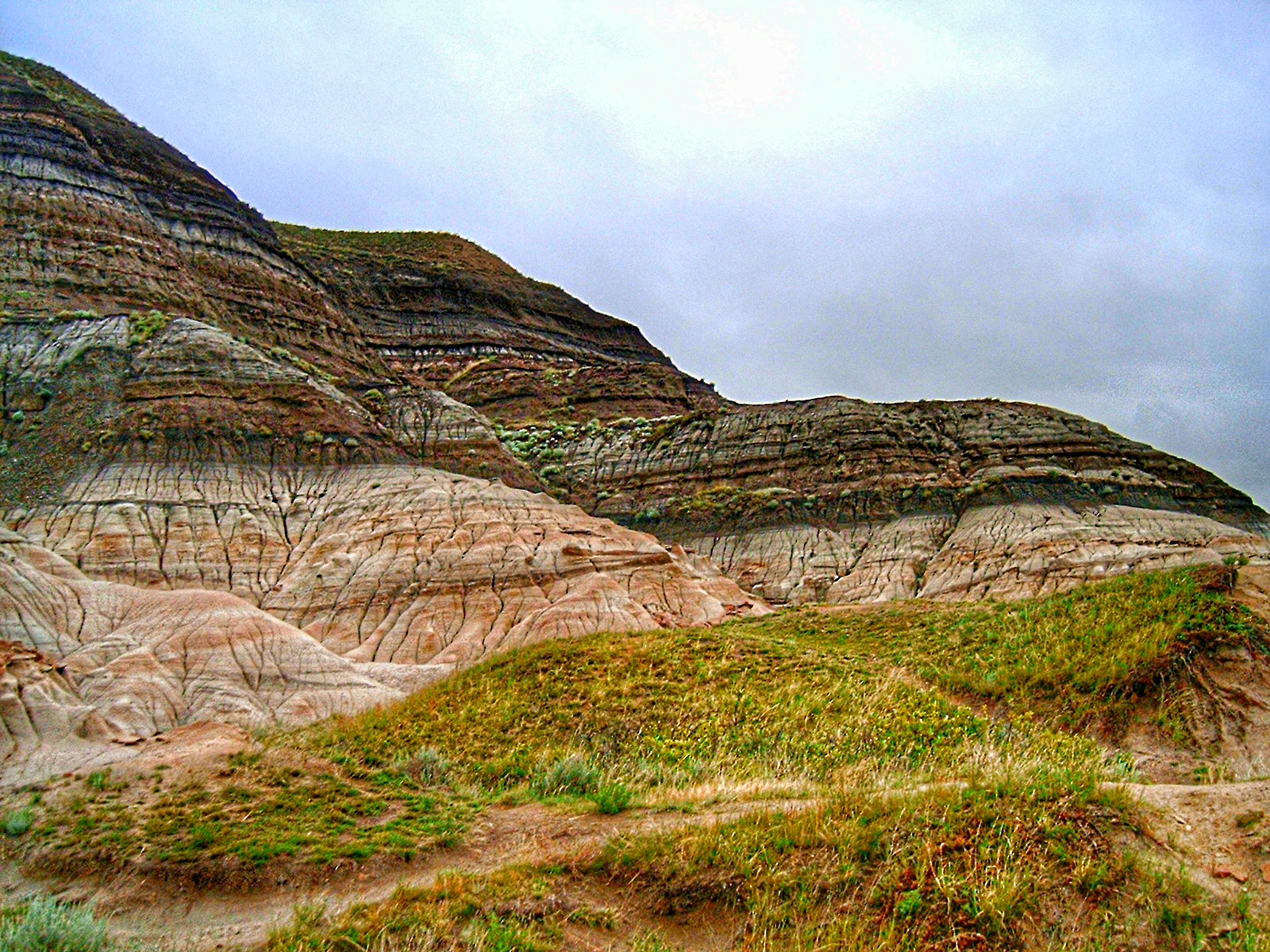
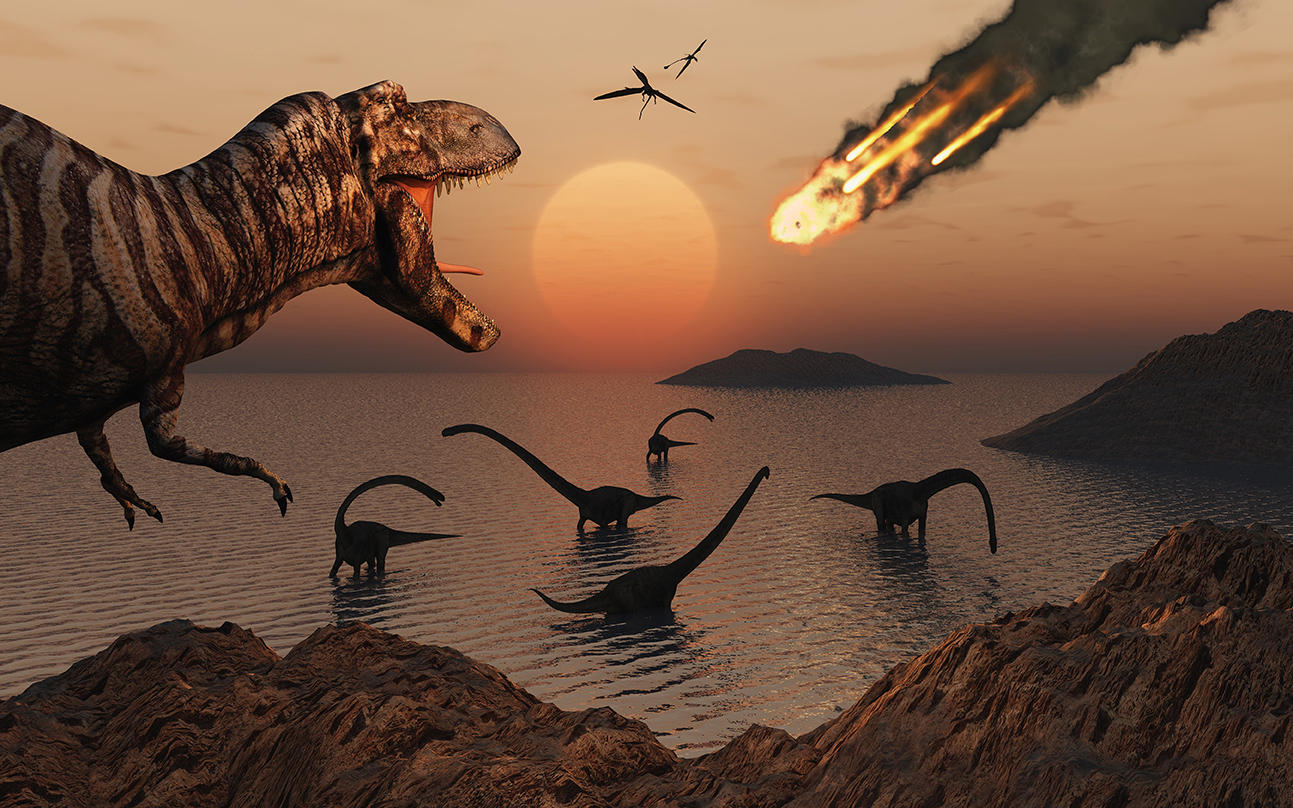
- 76% of species became extinct
- asteroid impact (to the Yucatán Peninsula)
- formation of the Chicxulub Crater
Iridium and Osmium anomalies at the K-T boundary
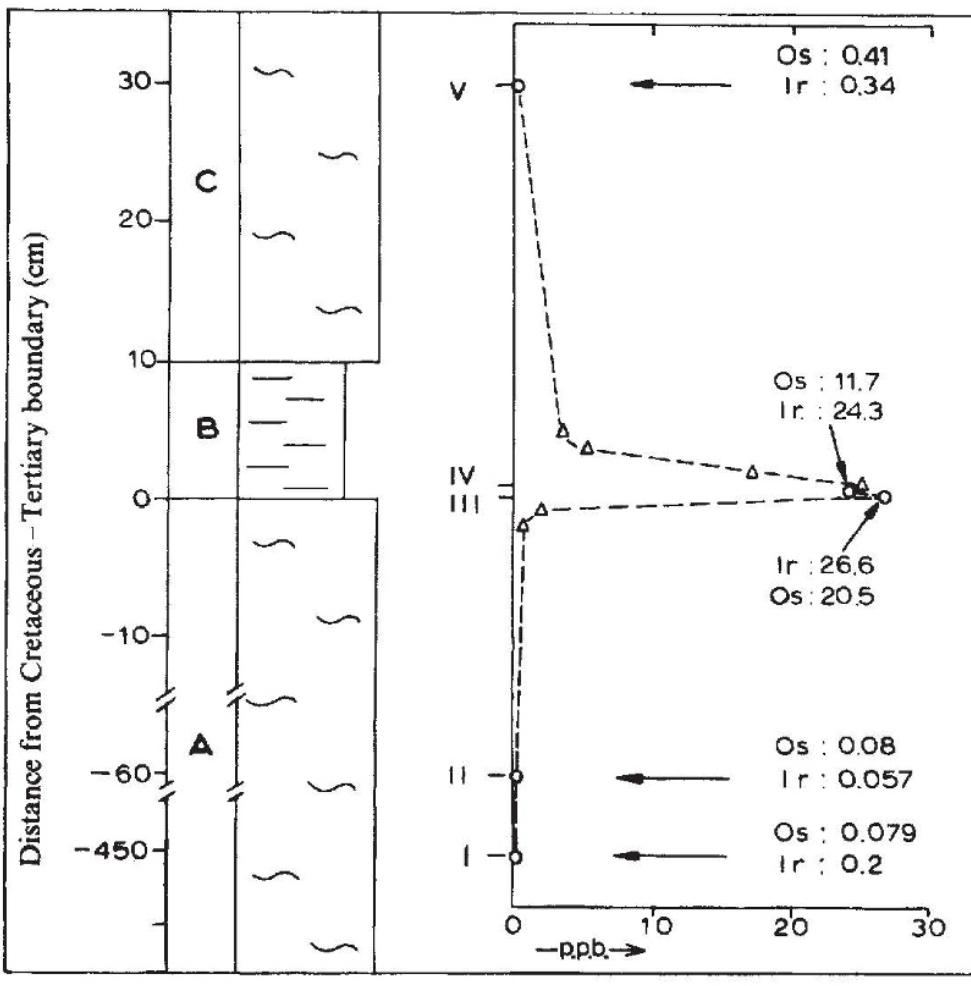
- Iridium and Osmium is rare on Earth but more abundant in asteriods
- mass extinction correlates with iridium and osmium anomalies
- ca. 10 km diameter asteroid
- Chicxulub Crater
Loss of forest cover, global growth of fern fauna
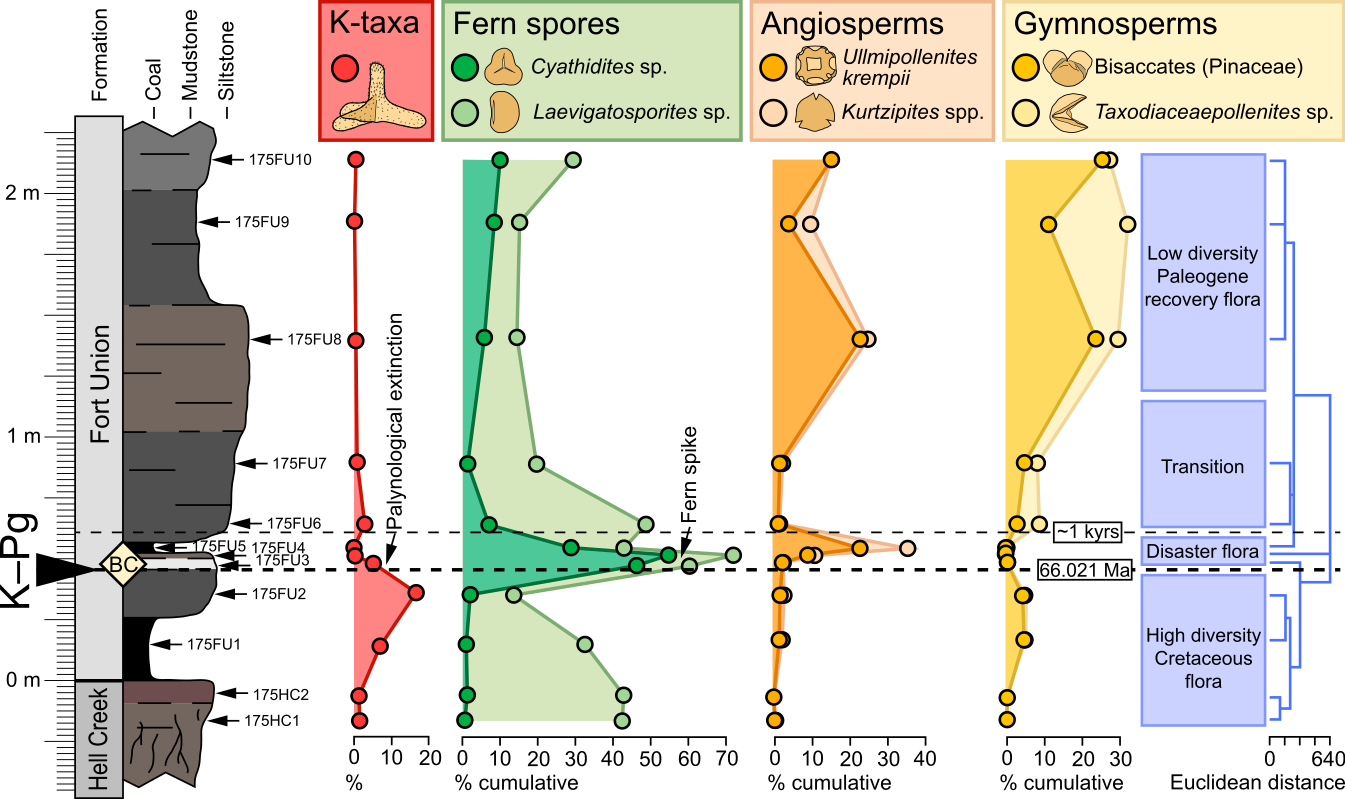
- devastation of forest habitats globally
- worldwide fern spike in the fossil record
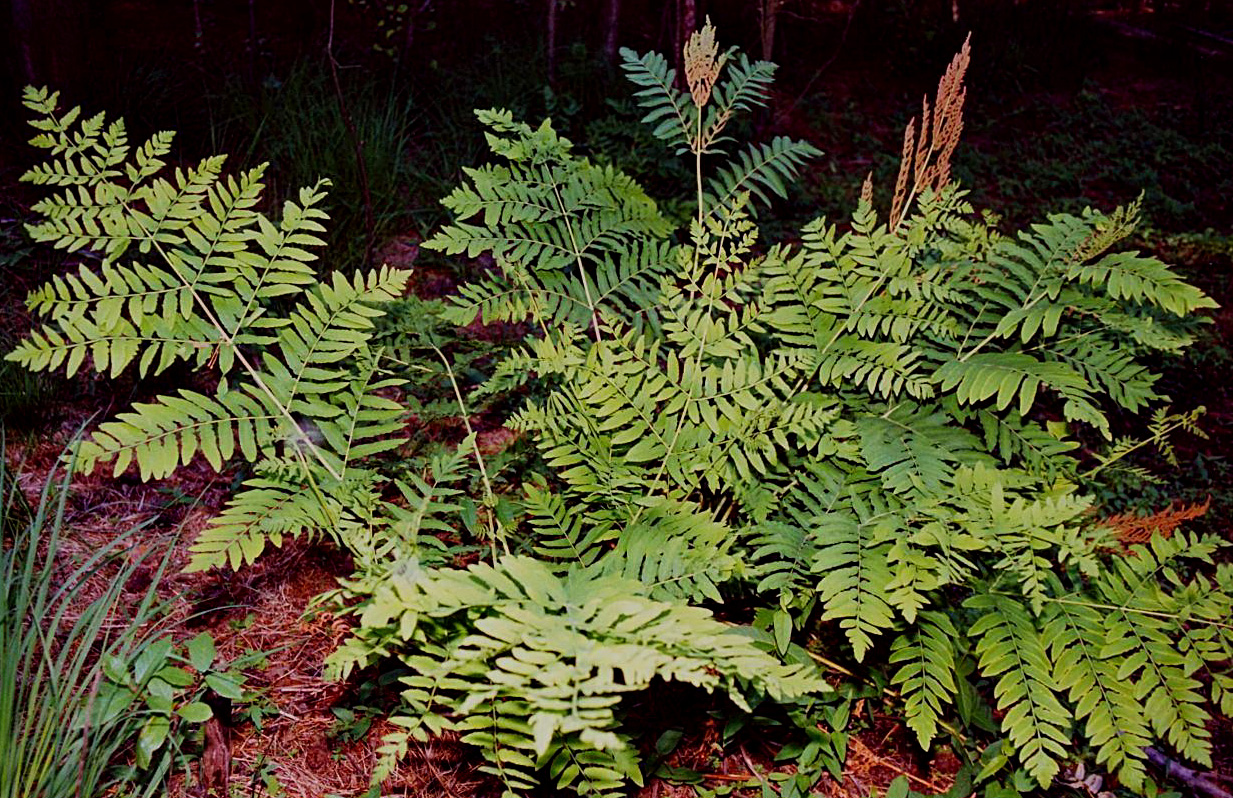
- ferns are pioneer species in ecological succession
- ‘disaster flora’
![]()
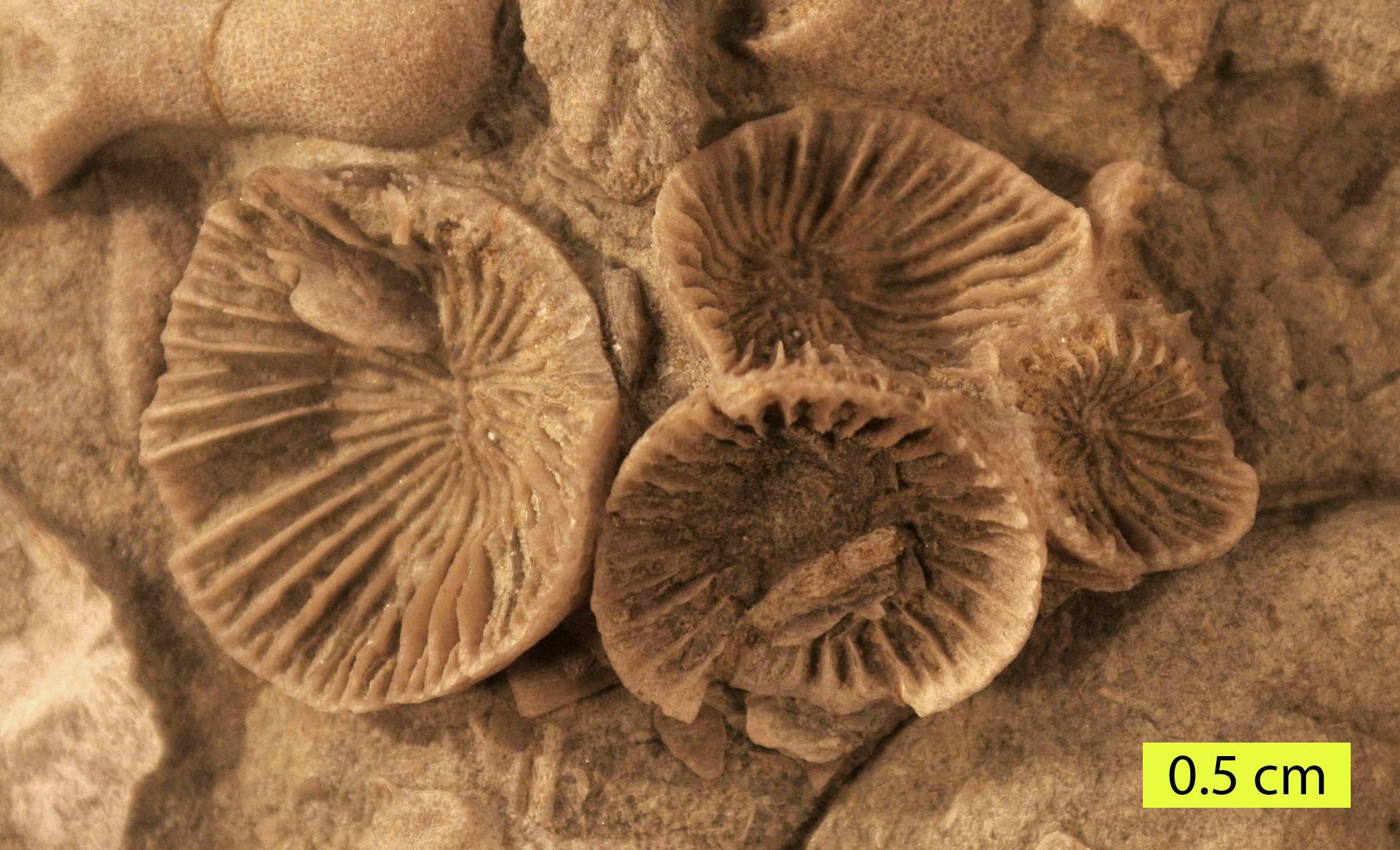
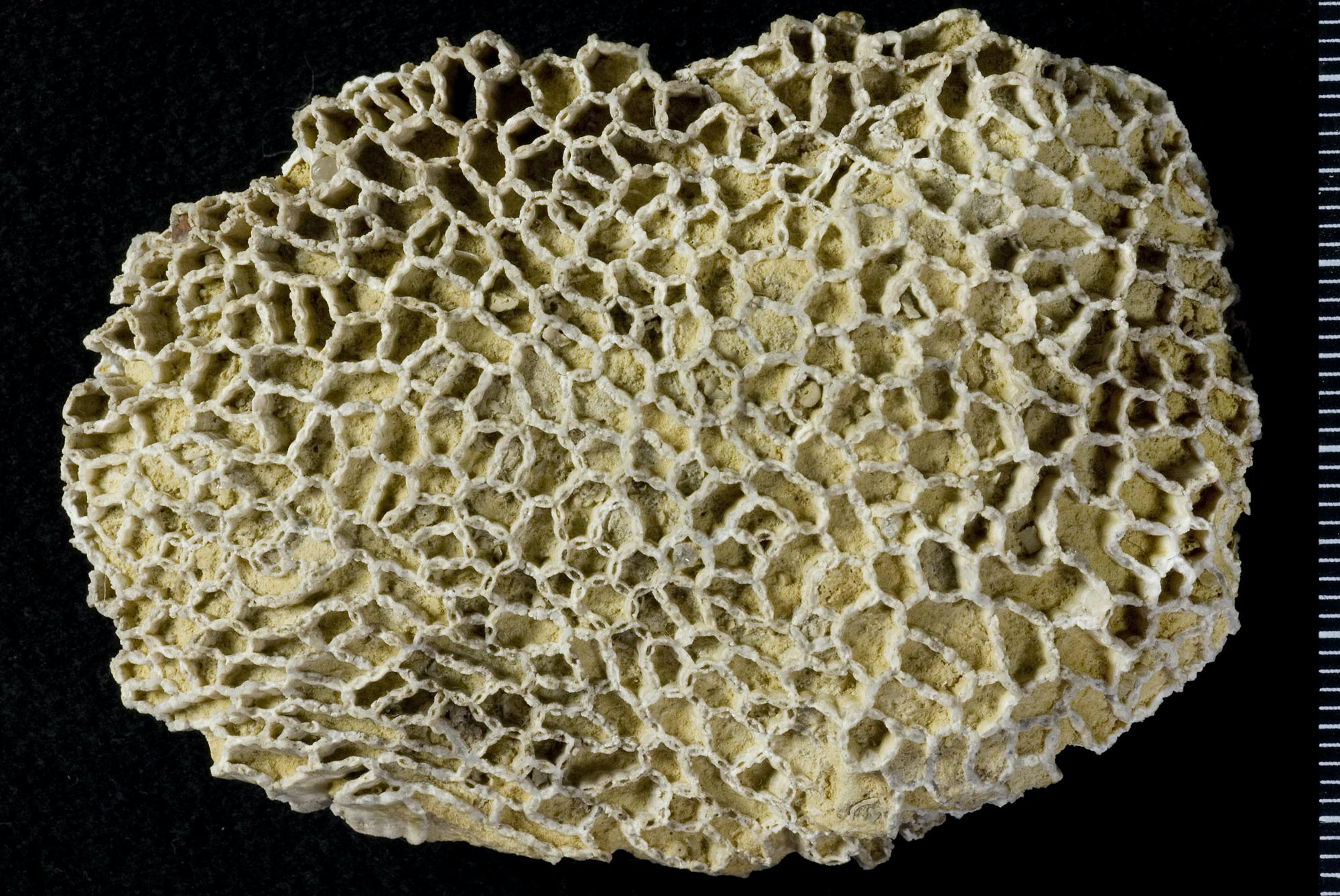
Extinction and (slow) recovery of coral reefs
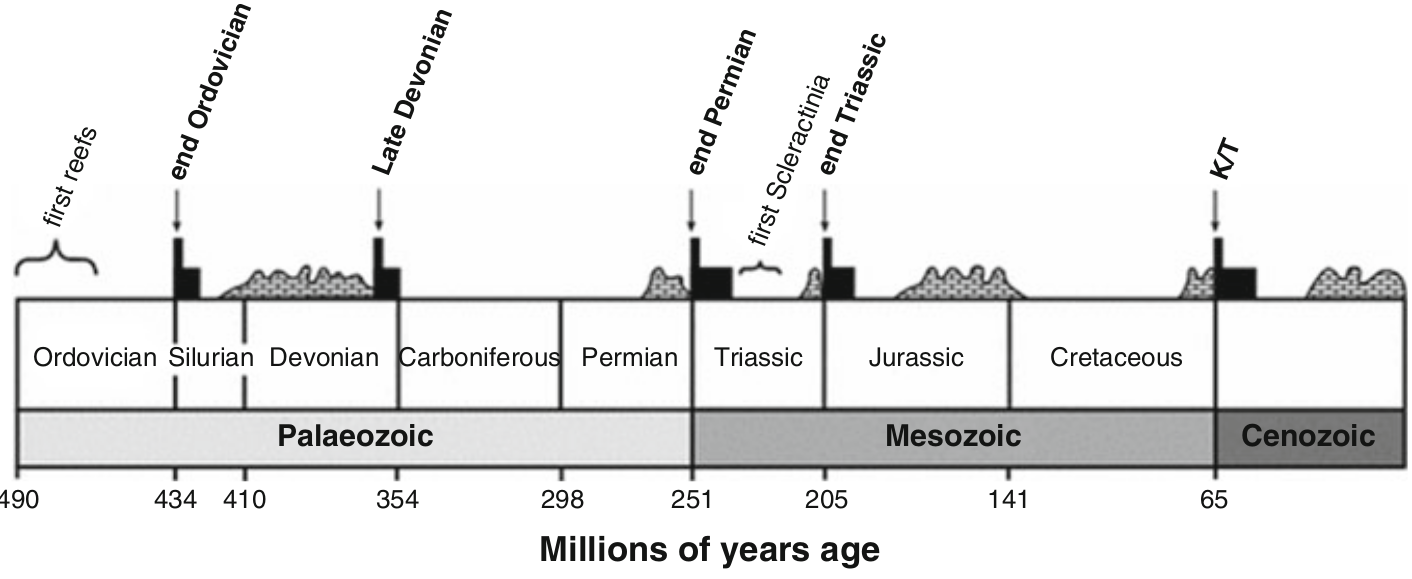 brick symbols: reefs
black intervals: post-extinction reef eclipses
- repeated global mass bleaching
- at end-Triassic 96% of coral species became extinct
- extended post-extinction reef eclipse (few to 10 million years)
- the implications are bleak for the future evolution of coral reefs
Today’s CO2 concentrations are unprecedented in the last 800,000 years
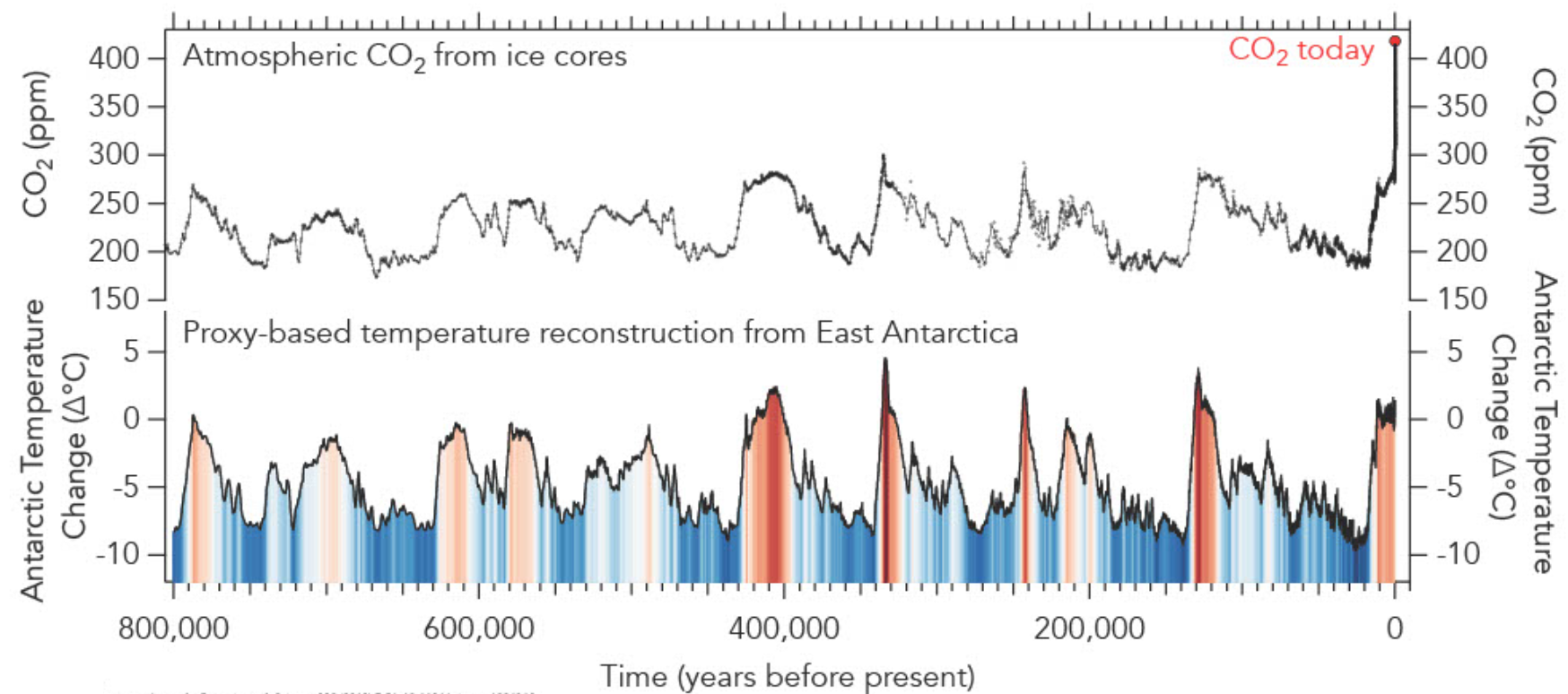
- 50% higher (424 ppm) than 800k average
Envoi
- global doomsdays happened regularly in the past
- we can map in great detail how things go wrong
- non-linear impacts
- toxic algae, carbonate depletion, H2S, fire, runaway effects, mass die-offs
- reduction in body size
- doomsdays sometimes are final (i.e. no recovery)
- recovery via ‘disaster biotas’
- diversification burst after doomsday (radiation of rats? dogs?)
- corals will need a few million years…
- still 28M good years to go until the next Galactic Doom